South Carolina merged DMH, DDSN, and DAODAS into BHDD in 2025. Find out what changed and where to get addiction or mental health treatment.
Jump to a section
In 2025, South Carolina Governor Henry McMaster signed major legislation that reshaped how the state delivers mental health and addiction services. Three separate state agencies merged into one, creating what may seem like confusion if you're trying to find help right now.
If you've been searching for behavioral health services in South Carolina and found yourself tangled in outdated agency names, conflicting phone numbers, or unclear jurisdictions, you're not alone.
What Changed: The Big Restructuring
For decades, South Carolina operated three separate state agencies:
- The Department of Mental Health (DMH)
- The Department of Disabilities and Special Needs (DDSN)
- The Department of Alcohol and Other Drug Abuse Services (DAODAS)
In 2025, these three merged into a single agency: the Department of Behavioral Health and Developmental Disabilities (BHDD). This represents one of the most significant South Carolina government restructurings in over 30 years.
The new BHDD is organized into three offices:
- Office of Mental Health
- Office of Substance Abuse Services
- Office of Intellectual and Developmental Disabilities
The restructuring is being phased in through fiscal year 2025-2026, which means some county offices and materials may still reference the old agency names.
Key Takeaways
- Three state agencies (DMH, DDSN, DAODAS) merged into BHDD in 2025
- BHDD operates through three offices: Mental Health, Substance Abuse Services, and Intellectual/Developmental Disabilities
- County-level services like the Charleston Center still operate locally and deliver care
- Start with your county's local behavioral health or alcohol and drug authority office when seeking help
- Older materials mentioning "SC DAODAS" or "SC DMH" are still circulating but refer to offices now under BHDD
Local Services Still Work, Just Under New Management
Here's what matters most if you're looking for help right now: the merger doesn't affect the day-to-day services your county provides.
County-level alcohol and drug abuse authorities, like the Charleston Center in Charleston County, continue to operate as the local service delivery arm. These offices still answer phones, still process referrals, and still connect people to treatment and support services.
How to Actually Find Help in South Carolina
Step 1: Contact your county's local behavioral health or alcohol and drug authority office. These county-level agencies are the entry point for most people.
Step 2: If you need statewide information, visit BHDD's website directly. You'll find current contact information for the Office of Substance Abuse Services, the Office of Mental Health, or the Office of Intellectual and Developmental Disabilities.
Step 3: Be prepared with basic information. When you call, have ready: your insurance, whether you're looking for inpatient or outpatient services, and any urgent needs.
Step 4: Ask about telehealth and flexible scheduling options.
If You're in Charleston County
For those in Charleston and the surrounding areas, the Charleston Center remains your county's primary local resource. If you're looking for evidence-based addiction treatment as an alternative or complement to county services, our Charleston, SC treatment center provides outpatient care for people working toward recovery.
Bottom Line
South Carolina consolidated its behavioral health agencies in 2025 to streamline care and reduce redundancy at the state level. For you, that means: start local, verify current contact information, and know that the services you're looking for are still there and still operating in your county.
Sources
- Governor Henry McMaster — Signs Behavioral Health Restructuring Bill Into Lawhttps://governor.sc.gov/news/2025-06/gov-mcmaster-signs-behavioral-health-restructuring-bill-law
- SC Daily Gazette — Combined health agency will streamline care for SChttps://scdailygazette.com/2025/06/24/combined-health-agency-will-streamline-care-for-sc-state-leaders-say/
Reviewed by
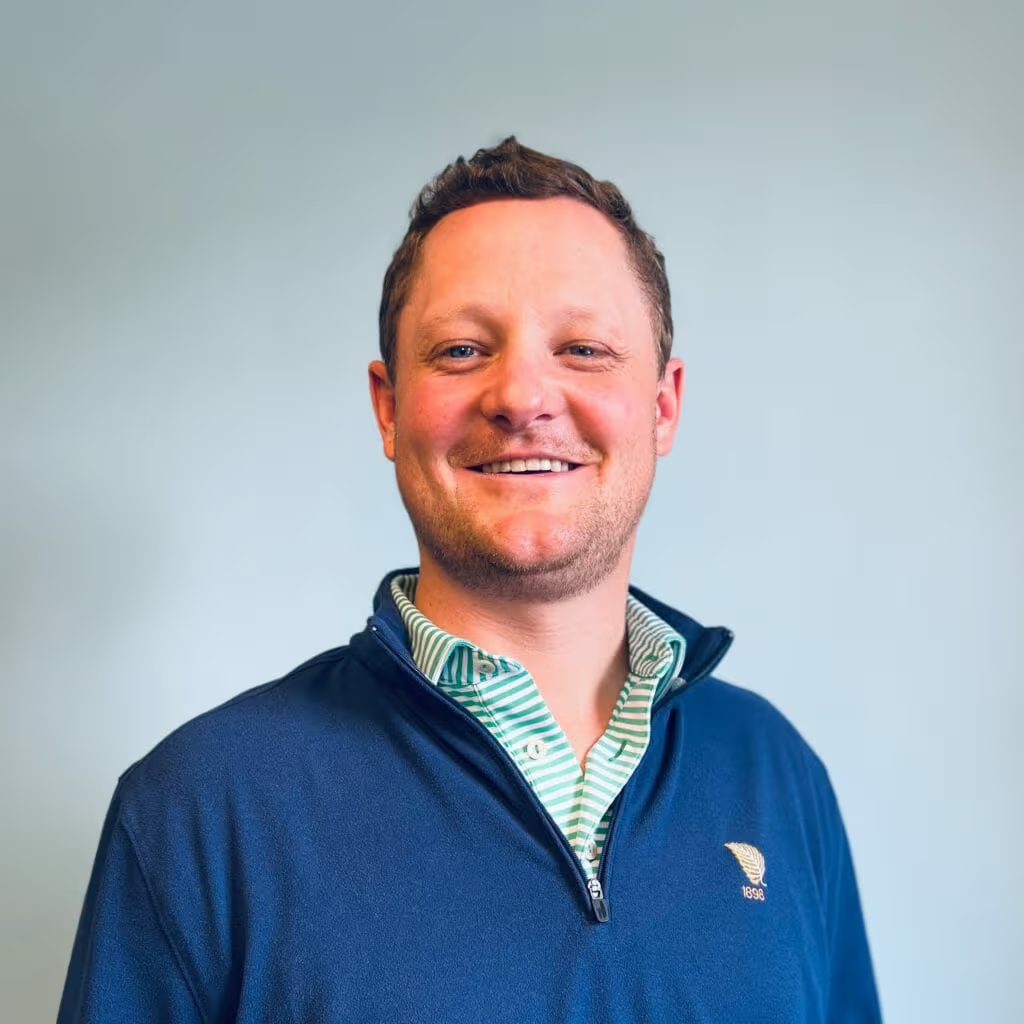
Warren PhillipsCo-Founder, LMSW · Editorial Reviewer
Warren Phillips is a Co-Founder of Lantana Recovery and a Licensed Master Social Worker (LMSW) specializing in substance abuse and mental health treatment. He previously worked in various capacities at Turnbridge Addiction Treatment and Clearpoint Recovery Center before co-founding Lantana Recovery. Warren's clinical approach draws on a strengths-based perspective, Twelve Step philosophies, Cognitive Behavioral Therapy, and Motivational Interviewing. He brings both personal and professional experience to his work — as a person in long-term recovery from alcohol and illicit substances, he has used that experience to help shape Lantana's treatment programming. Warren grew up in Memphis, TN and St. Louis, MO, attended college in Mississippi, and lived in California and Connecticut before relocating to Charleston. He now lives in Mount Pleasant with his wife, Angela, and their two young children, Hall and Sam.
Written by the Lantana Recovery Editorial Team and reviewed for clinical accuracy before publication.