Over $79M in opioid settlement funds have reached South Carolina. Here's what Charleston County did with $1.7M in 2023 grants and what transparency gaps remain.
Jump to a section
Over the past few years, a historic wave of opioid settlement funding has flowed into South Carolina and its counties, the result of multibillion-dollar settlements with pharmaceutical companies and distributors held responsible for their role in the nation's opioid crisis.
In Charleston County, the answer is more visible than in some states, but also less transparent than it could be. Here's what we know about where the settlement money has actually landed.
The South Carolina Opioid Recovery Fund: Structure and Scale
South Carolina's settlement money flows through the South Carolina Opioid Recovery Fund (SCORF), established under the SC Opioid Recovery Act (H.5182).
The funding split: 85 percent goes to political subdivisions through the Guaranteed Political Subdivision Subfund, while 15 percent remains under state discretionary control, through 2029; shifting to 50-50 in 2030. Through 2027, allocations are divided into 82 percent for the Statewide Opioid Recovery Fund and 18 percent for the Statewide Opioid Fee Fund.
A 95.5 percent opioid-remediation spending requirement applies to all disbursements, nearly every dollar must go toward actual opioid crisis response.
To date, more than $79 million has been disbursed across the 2023, 2024, and 2025 grant cycles.
Key Takeaways
- $79+ million in opioid settlement funds have been disbursed across South Carolina since 2023
- 85 percent of funds go to local governments rather than the state
- Charleston County received $1.7 million in the 2023 grant cycle
- Nearly all settlement money (95.5%) must be spent on opioid remediation
- South Carolina lacks a statewide public dashboard showing where local settlement money is being spent
What Charleston County Actually Did With the Money
In 2023, Charleston County received $1.7 million from the first settlement round. The county's public substance use disorder agency, the Charleston Center, took the lead in deploying those funds to:
- Add or strengthen 12 or more government programs and partnerships
- Hire a dedicated opioid initiative coordinator
- Expand detoxification and residential treatment capacity
Charleston County also directed settlement funds toward an overdose data dashboard and expanded Narcan distribution.
For 2024 and 2025 awards, the specific dollar amounts for Charleston County, the City of Charleston, or North Charleston are not readily available through public sources.
The Transparency Problem
According to research by the National Academy for State Health Policy (NASHP), South Carolina has no statewide public dashboard tracking opioid settlement spending at the local level.
If you want to know what's happening with settlement funds in Charleston County specifically, your best resource right now is to visit scorf.sc.gov directly.
Why This Matters for Local Treatment Access
What matters most is that these dollars are being deployed thoughtfully toward treatment, toward harm reduction, and toward supporting people in recovery.
If you or someone you care about is struggling with addiction, treatment access in Charleston has expanded. Our Charleston, SC treatment center and many other providers across the county are part of that growing network.
Keep asking where your opioid settlement money is going. Hold your local leaders accountable for how it's spent.

Sources
- NASHP—State Opioid Settlement Spending Decisions: South Carolinahttps://nashp.org/state-tracker/state-opioid-settlement-spending-decisions/south-carolina/
- SC Opioid Recovery Fund (SCORF)—2023 Annual Reporthttps://scorf.sc.gov/files/scorf_2023_annual_report_for_publication.pdf
Reviewed by
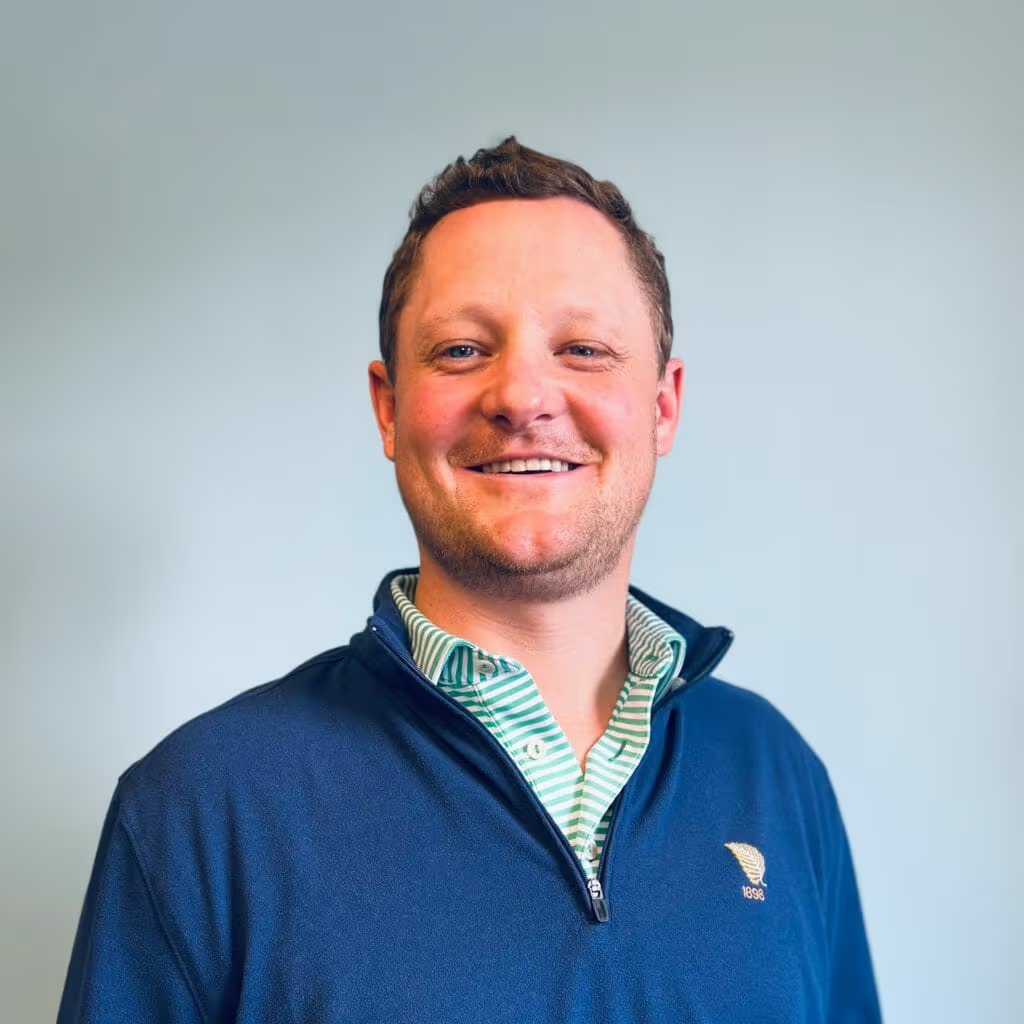
Warren PhillipsCo-Founder, LMSW · Editorial Reviewer
Warren Phillips is a Co-Founder of Lantana Recovery and a Licensed Master Social Worker (LMSW) specializing in substance abuse and mental health treatment. He previously worked in various capacities at Turnbridge Addiction Treatment and Clearpoint Recovery Center before co-founding Lantana Recovery. Warren's clinical approach draws on a strengths-based perspective, Twelve Step philosophies, Cognitive Behavioral Therapy, and Motivational Interviewing. He brings both personal and professional experience to his work — as a person in long-term recovery from alcohol and illicit substances, he has used that experience to help shape Lantana's treatment programming. Warren grew up in Memphis, TN and St. Louis, MO, attended college in Mississippi, and lived in California and Connecticut before relocating to Charleston. He now lives in Mount Pleasant with his wife, Angela, and their two young children, Hall and Sam.
Written by the Lantana Recovery Editorial Team and reviewed for clinical accuracy before publication.