
Does nicotine cause hair loss? Learn the mechanisms linking smoking and vaping to hair thinning, and what quitting can do to help.
Jump to a section
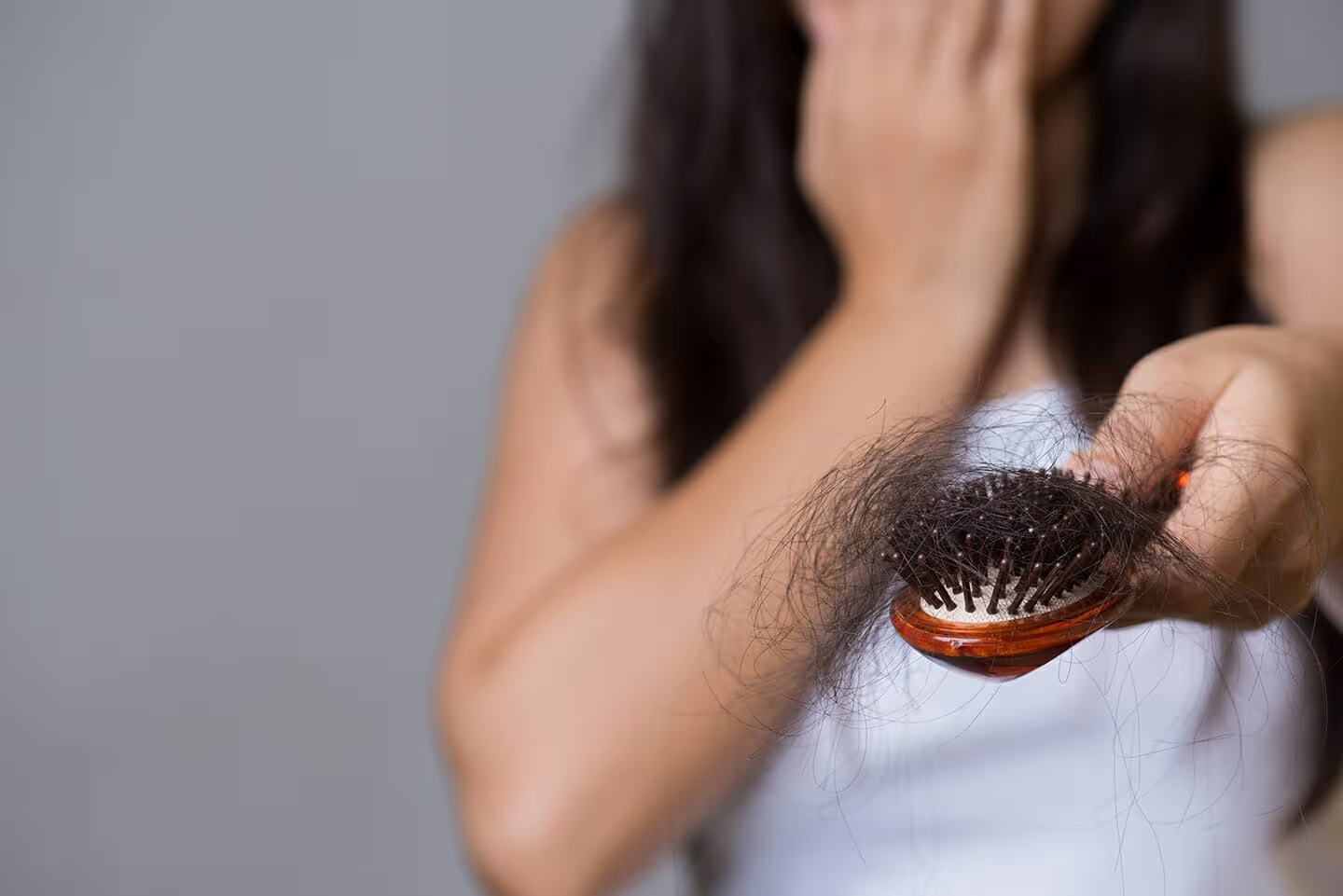
Nicotine use, particularly through smoking, is linked to hair thinning and hair loss through several documented mechanisms — reduced blood flow to hair follicles, oxidative stress, and hormonal effects among them. This article covers what the evidence shows and what quitting can do to help.
Key Takeaways on Nicotine and Hair Loss
- Smoking is linked to hair thinning through reduced blood flow, oxidative stress, and toxin exposure to hair follicles.
- Nicotine's vasoconstricting effect reduces the nutrient supply hair follicles need for healthy growth.
- Quitting smoking or vaping can support improved circulation and reduce ongoing follicle damage.
- Hair loss from smoking is generally gradual and multifactorial, not an isolated single-cause effect.
How Nicotine Affects Hair Growth
Reduced blood flow to follicles
Nicotine constricts blood vessels, reducing blood flow throughout the body — including to hair follicles, which depend on adequate circulation for the nutrients and oxygen healthy hair growth requires.
Oxidative stress
Smoking generates significant oxidative stress throughout the body, damaging cells including those responsible for hair growth over time.
Hormonal effects
Smoking has been linked to hormonal changes that can affect hair growth cycles, contributing to premature thinning in some smokers.
Direct toxin exposure
Beyond nicotine itself, the broader chemical exposure from smoking introduces toxins that can directly stress hair follicle health.
Does Vaping Carry the Same Risk?
Nicotine's vasoconstricting effect applies regardless of delivery method, meaning vaping isn't necessarily protective for hair health even though it avoids some of combustion smoking's other health effects — the nicotine mechanism relevant to hair loss is present either way.
Can Hair Loss From Smoking Be Reversed?
Quitting smoking supports improved circulation and reduces ongoing oxidative stress and toxin exposure to hair follicles, which can support healthier hair growth going forward — though the degree of reversal varies by individual and how long the damage occurred.
Other Factors Worth Considering
Hair loss is multifactorial — genetics, age, hormones, nutrition, and stress all play a role alongside smoking. If hair loss is a significant concern, a dermatologist can help identify how much smoking is actually contributing versus other factors.
Getting Support to Quit
Hair health is one of many reasons to quit smoking, alongside the more significant cardiovascular and cancer risks nicotine carries. Lantana Recovery's nicotine addiction treatment program and our guide to quitting nicotine can help you approach cessation with real support rather than willpower alone.
FAQ: Nicotine and Hair Loss
Does nicotine definitely cause hair loss?
Will quitting smoking regrow lost hair?
Is vaping better than smoking for hair health?
Bottom Line
Nicotine use, especially smoking, is linked to hair thinning through reduced blood flow, oxidative stress, and toxin exposure. Quitting supports better circulation and reduces ongoing damage — one of many good reasons to stop. Various approaches can help with the quitting process itself — see naltrexone for smoking cessation, using Xanax to quit smoking, and NAC as a quitting aid for a range of medication-assisted options.
Sources
- NIH — Smoking and Hair Loss Researchhttps://www.ncbi.nlm.nih.gov/pmc/
- NIDA — Nicotine Addiction and Health Effectshttps://nida.nih.gov/publications/drugfacts/cigarettes-other-tobacco-products
Reviewed by
Alan GoodstatCCO / Board Member
Alan holds a postgraduate degree in social work from Columbia University in New York City and is a licensed clinical social worker in Florida, Texas, South Carolina, Connecticut, and Arizona. With over 35 years of experience, he has held leadership positions in both privately held organizations and private equity portfolio companies. At Lantana Recovery, Alan serves as a board member, where he plays a key role in overseeing compliance and regulatory governance for the Board. In addition, he is the Vice President of Mergers & Acquisitions, Integration, and Compliance for T&R Recovery Group, a national provider of mental health and substance abuse services. Previously, he spent 18 years at Lakeview Health, a portfolio company of Trinity Hunt Partners and The Riverside Company, where he held key executive roles, including Chief Operating Officer, Senior Vice President, and Chief Compliance Officer. Alan’s expertise in compliance, operational strategy, and behavioral healthcare leadership continues to drive excellence in the industry.
Written by the Lantana Recovery Editorial Team and reviewed for clinical accuracy before publication.