Charleston's drinking rate has climbed to 25.6%, outpacing state and national averages. Explore the data and what it means for local health.
Jump to a section
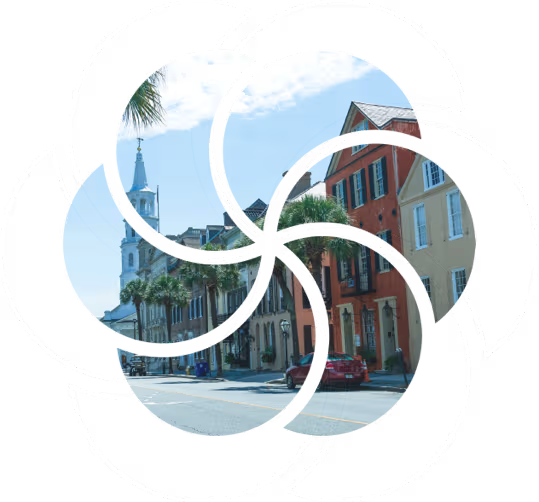
Charleston has earned a reputation as a vibrant, social city. Waterfront restaurants, rooftop bars, and a thriving hospitality scene define much of the local culture. But a closer look at the data reveals something worth paying attention to: Charleston residents are drinking more than most Americans, and that gap is widening.
According to the 2025 County Health Rankings, 25.6% of Charleston County adults reported excessive drinking, defined as binge drinking or heavy drinking in the past 30 days. That's a meaningful jump from approximately 23% found in a 2018 Post and Courier investigation.
Key Takeaways
- Charleston's excessive drinking rate stands at 25.6%, compared to South Carolina's statewide binge-drinking rate of 20.52%.
- Young adults ages 18–25 in South Carolina binge drink at 29.17%, the highest rate among all age groups.
- Over 55% of South Carolinians don't perceive "great risk" from weekly binge drinking, despite medical evidence to the contrary.
- Charleston's tourism and hospitality economy may normalize frequent alcohol consumption as part of daily social and work life.
Charleston's Standing: Local vs. State vs. Nation
South Carolina's statewide binge-drinking rate of 20.52% is already above the national average. But Charleston County specifically exceeds even that state figure by more than 5 percentage points.
Young adults make up a significant part of this story. Among South Carolinians ages 18–25, the binge-drinking rate reaches 29.17%, higher than any other age group.
What's particularly notable is the direction of change. The 2018 "Drinking City" investigation documented that Charleston had long outpaced both its Southeast peers and national averages. Seven years later, the rate has continued climbing rather than stabilizing or declining.
The Perception Gap: Why Risk Recognition Lags Reality
Here's a pattern that deserves attention: 44.64% of South Carolinians perceive "great risk" from having 5 or more drinks once or twice a week. That means roughly 55% do not see weekly binge drinking as a significant health concern, even though medical research consistently links regular binge drinking to liver disease, heart problems, certain cancers, and alcohol use disorder.
This perception gap is real and consequential. When a majority of people in a community don't view a behavior as risky, that behavior becomes normalized.
The Hospitality Factor: Context Without Judgment
Charleston's economy is substantially built on tourism, hospitality, and dining. In this context, frequent drinking isn't just a personal habit, it's embedded in how the city functions.
This isn't about blaming the hospitality industry or shaming residents. But cultural and economic structures shape behavior. What begins as social drinking can gradually become the default without anyone quite realizing the change happened.
When Drinking Becomes a Concern
Some signs that drinking may have crossed from social into problematic territory include:
- Drinking more than you intend to, or more frequently than you planned
- Continued drinking despite experiencing negative consequences
- Failed attempts to cut back or quit
- Drinking as the primary way to cope with stress, anxiety, or low mood
- Neglecting responsibilities or hobbies in favor of drinking
- Needing more alcohol to feel the same effect
Charleston Doesn't Have to Accept This Trajectory
If you or someone you care about is struggling with alcohol, Lantana Recovery treats alcohol use disorder for adults in South Carolina from our Charleston, SC treatment center. Recovery starts with honest recognition, of the trends, of the risk, and of the possibility of change.
Sources
- County Health Rankings — Charleston County, South Carolina (2025)https://www.countyhealthrankings.org/health-data/south-carolina/charleston
- SAMHSA, 2022–2023 National Surveys on Drug Use and Health, South Carolina state estimateshttps://www.samhsa.gov/data/sites/default/files/reports/rpt56188/2023-nsduh-sae-state-tables_0/2023-nsduh-sae-state-tabs-south-carolina.pdf
Reviewed by
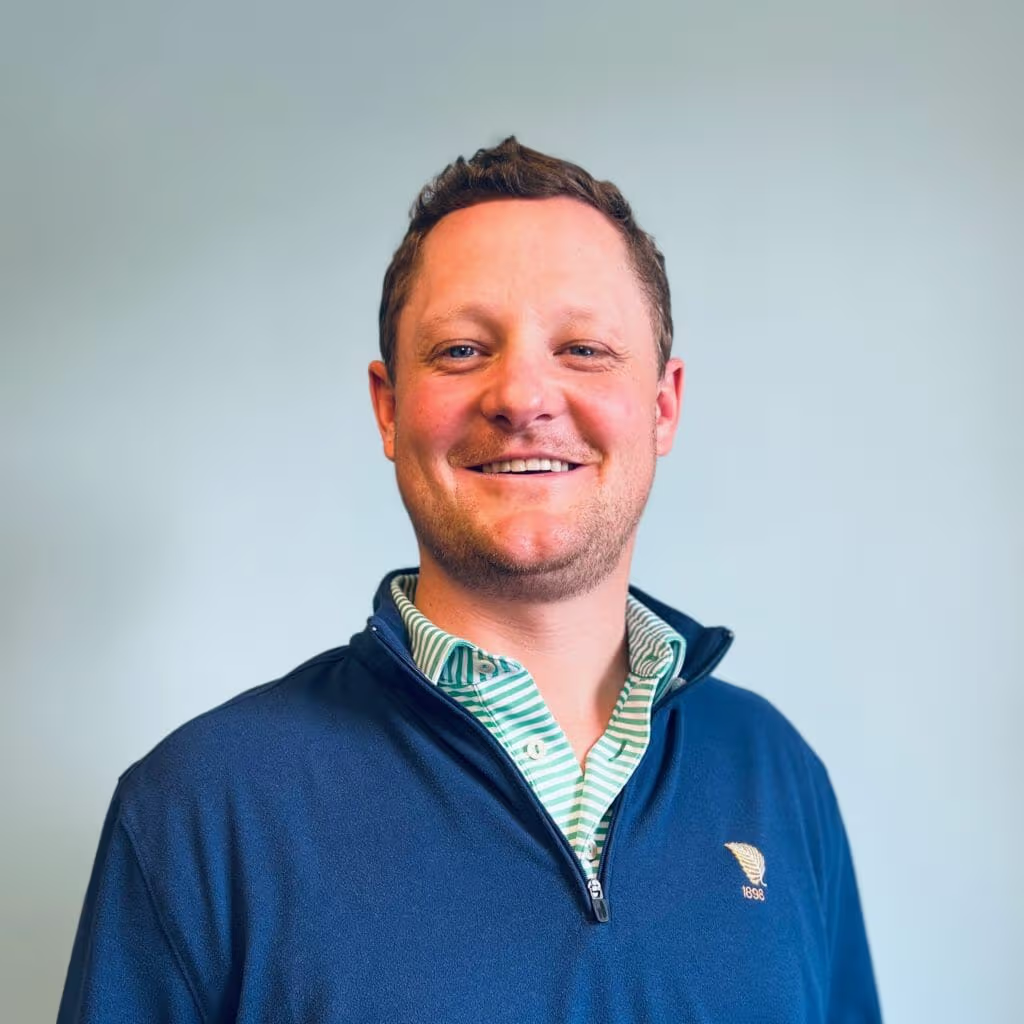
Warren PhillipsCo-Founder, LMSW · Editorial Reviewer
Warren Phillips is a Co-Founder of Lantana Recovery and a Licensed Master Social Worker (LMSW) specializing in substance abuse and mental health treatment. He previously worked in various capacities at Turnbridge Addiction Treatment and Clearpoint Recovery Center before co-founding Lantana Recovery. Warren's clinical approach draws on a strengths-based perspective, Twelve Step philosophies, Cognitive Behavioral Therapy, and Motivational Interviewing. He brings both personal and professional experience to his work — as a person in long-term recovery from alcohol and illicit substances, he has used that experience to help shape Lantana's treatment programming. Warren grew up in Memphis, TN and St. Louis, MO, attended college in Mississippi, and lived in California and Connecticut before relocating to Charleston. He now lives in Mount Pleasant with his wife, Angela, and their two young children, Hall and Sam.
Written by the Lantana Recovery Editorial Team and reviewed for clinical accuracy before publication.