Practical guide to substance use treatment access in South Carolina without Medicaid expansion. Covers marketplace, county services, and sliding scale options.
Jump to a section
South Carolina has not expanded Medicaid under the Affordable Care Act. This means that working adults without disabilities or dependent children often cannot qualify for SC Medicaid, regardless of how much they earn. The result is a coverage gap. Roughly 105,000 South Carolinians make too much to qualify for state Medicaid but too little to afford marketplace insurance without help.
If you are struggling with substance use disorder and do not have insurance through your employer, a spouse, or a government program, you still have options. This guide walks you through four realistic paths to affordable treatment in South Carolina, including free resources available now.
Key Takeaways
- 76% of South Carolinians who need substance use disorder treatment do not receive it, according to SAMHSA data.
- SC Medicaid expansion remains pending in the legislature (H.3109), leaving a coverage gap for working adults.
- Free help is available: county alcohol and drug abuse authorities offer sliding-scale services regardless of insurance status.
- The federal ACA marketplace (healthcare.gov) offers subsidized plans to people with incomes between 100-400% of the federal poverty level.
- South Carolina's Opioid Recovery Fund has distributed over 79 million dollars to local treatment programs since 2023.
- You can call any treatment provider to ask about self-pay rates and sliding-scale options; insurance verification is typically free and takes minutes.

Understanding the Coverage Gap in South Carolina
SC Medicaid covers pregnant women, parents with dependent children, elderly adults, and people with disabilities. Non-disabled, childless working adults are not eligible, regardless of income.
Federal data shows that 76% of South Carolinians needing substance use disorder treatment do not receive it. The barriers are real: cost, access, and stigma all play a role. But practical pathways exist right now, even without Medicaid expansion.
Option 1: The ACA Marketplace and Subsidies
If you are uninsured and fall into the income gap, the first place to check is healthcare.gov during open enrollment (November 1 through January 15 each year). You may qualify for a subsidy even if your income is above the state Medicaid limit.
Who qualifies: You typically qualify for a marketplace subsidy if your household income is between 100% and 400% of the federal poverty level.
How to apply: Go to healthcare.gov and enter your information. You can also call 1-800-318-2596 for help by phone.
Option 2: County Alcohol and Drug Abuse Authorities
Every South Carolina county has an alcohol and drug abuse authority (DAA) that offers treatment services on a sliding-scale basis. This means your fee is based on what you can afford to pay, regardless of whether you have insurance.
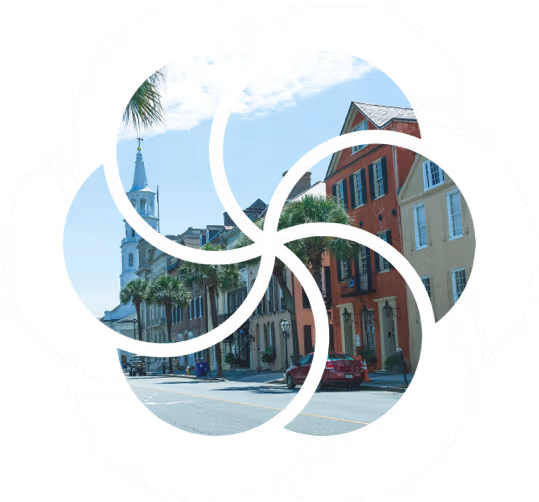
In the Charleston area, the Charleston Center serves Beaufort, Berkeley, Charleston, Colleton, Dorchester, and Hampton counties. The Center received 1.7 million dollars in grant funding in 2023 to expand detoxification and residential capacity specifically for opioid-use disorder, and to hire a dedicated opioid-response coordinator.
How to find your county DAA: Contact your South Carolina Department of Health and Environmental Control (DHEC) office or call 211 and ask for the alcohol and drug abuse authority in your county.
Option 3: South Carolina Opioid Recovery Fund Programs
The SC Opioid Recovery Fund (SCORF) is a state pot of money designed to support opioid-remediation services. Since 2023, SCORF has distributed over 79 million dollars to treatment providers, community organizations, and county-level programs across South Carolina.
How this helps you: You do not apply directly to SCORF. But when you call your county DAA or a treatment provider, you are accessing services that are being subsidized by SCORF grants.
Option 4: Call Treatment Providers Directly About Sliding Scale
If you have a specific treatment provider in mind, call them directly and ask three questions:
- Do you accept uninsured patients on a sliding-scale fee basis?
- Can you verify my insurance eligibility at no cost, even if I do not think I have coverage?
- What is the fastest way to schedule an intake assessment?
A note on opioid overdose prevention: While you are arranging longer-term treatment, know that free opioid overdose safety kits (containing naloxone and fentanyl/xylazine test strips) are available at any South Carolina health department, no questions asked.
Taking the Next Step
Getting treatment does not require perfect insurance coverage or a large amount of money upfront. Lantana Recovery's Charleston, SC treatment center treats adults in South Carolina regardless of where you are in this process.
Disclaimer: This article is for informational purposes only and is not legal or financial advice. Medicaid eligibility rules and health insurance laws change periodically. Confirm current eligibility thresholds and program details directly with the relevant agencies or providers.

Sources
- SC Legislature Online - Bill H.3109 (Medicaid Expansion)https://www.scstatehouse.gov/sess126_2025-2026/bills/3109.htm
- SC DAODAS - Overdose Death Preventionhttps://www.daodas.sc.gov/services/prevention/overdose-death-prevention/
Reviewed by
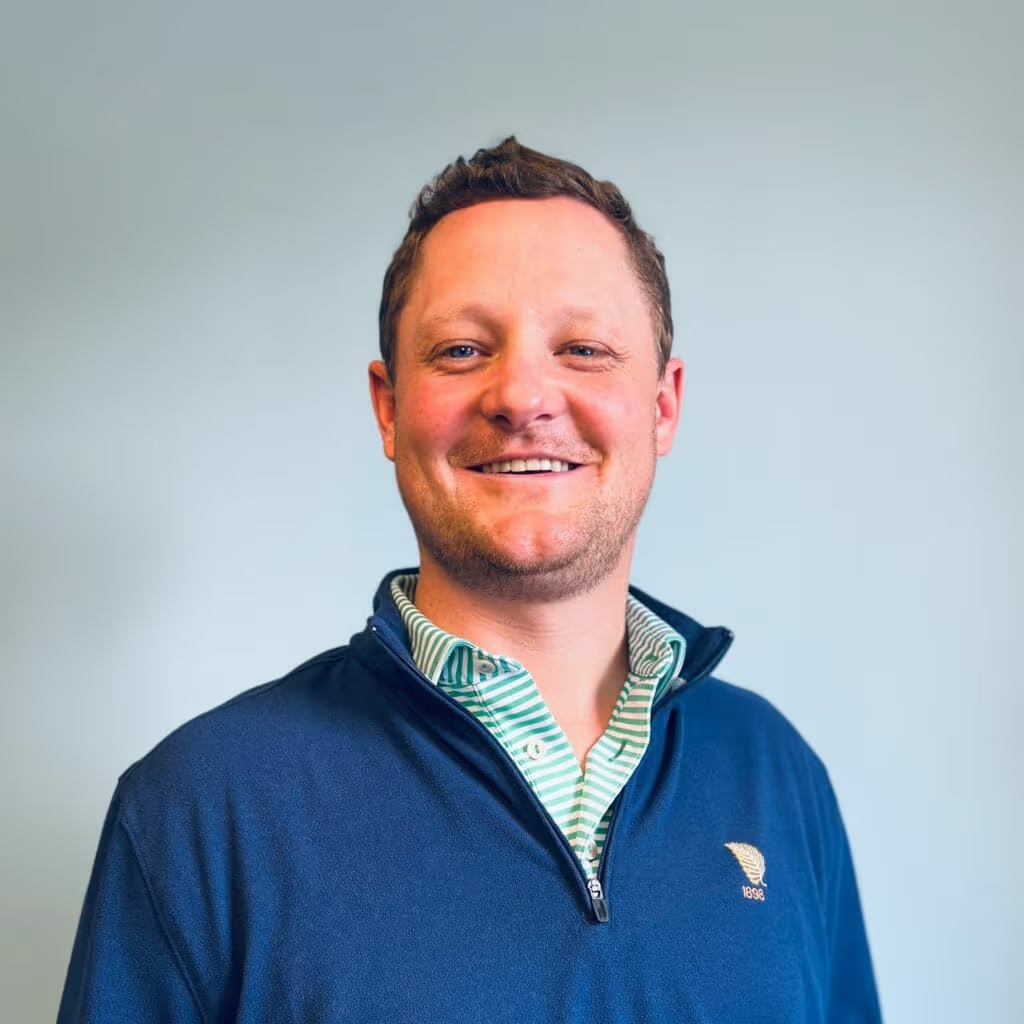
Warren PhillipsCo-Founder, LMSW · Editorial Reviewer
Warren Phillips is a Co-Founder of Lantana Recovery and a Licensed Master Social Worker (LMSW) specializing in substance abuse and mental health treatment. He previously worked in various capacities at Turnbridge Addiction Treatment and Clearpoint Recovery Center before co-founding Lantana Recovery. Warren's clinical approach draws on a strengths-based perspective, Twelve Step philosophies, Cognitive Behavioral Therapy, and Motivational Interviewing. He brings both personal and professional experience to his work — as a person in long-term recovery from alcohol and illicit substances, he has used that experience to help shape Lantana's treatment programming. Warren grew up in Memphis, TN and St. Louis, MO, attended college in Mississippi, and lived in California and Connecticut before relocating to Charleston. He now lives in Mount Pleasant with his wife, Angela, and their two young children, Hall and Sam.
Written by the Lantana Recovery Editorial Team and reviewed for clinical accuracy before publication.