HUSKY covers all 3 FDA medications for opioid addiction at no cost. Learn what's covered, telehealth options, and how to qualify.
Jump to a section
Understanding HUSKY Health in Connecticut
HUSKY Health is Connecticut's Medicaid program, the state's insurance for individuals and families with limited income. When Connecticut expanded Medicaid under the Affordable Care Act, HUSKY added new categories of coverage.
There are three main HUSKY categories: HUSKY A (children and families), HUSKY D (working-age adults through ACA expansion), and HUSKY C (seniors and people with disabilities). If your household income is below 100% of the federal poverty level, you get zero premiums, zero deductibles, and zero co-pays for medical, dental, vision, and behavioral health services, including addiction treatment.
Key Takeaways
- All three FDA-approved medications for opioid addiction are covered by HUSKY Health at no cost (if you qualify).
- You do not need a referral from your primary care doctor to access outpatient addiction treatment services.
- HUSKY covers telehealth for substance use disorder treatment at the same level as in-person visits.
- As of January 2025, the DEA permanently allows buprenorphine to be started via telehealth, including audio-only calls.
- If your income is below 100% of the federal poverty level, there are no out-of-pocket costs for covered services.

What Addiction Treatment Does HUSKY Cover?
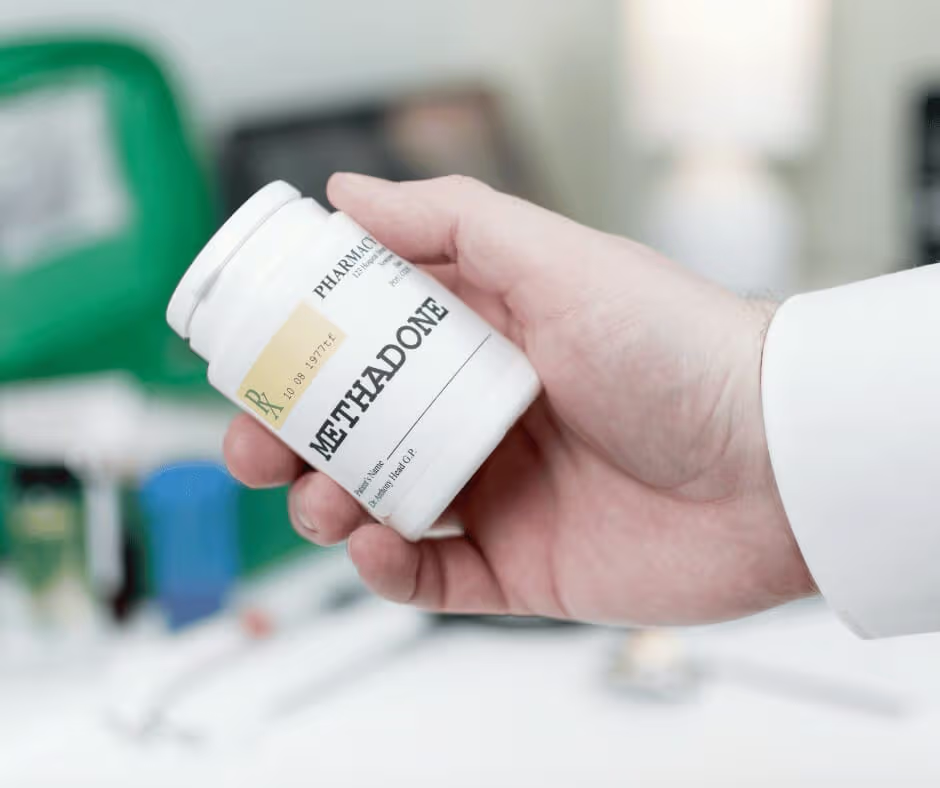
HUSKY Health covers three medications proven to treat opioid use disorder (OUD): Methadone, a synthetic opioid given daily at a clinic; Buprenorphine/naloxone, prescribed in office-based settings or via telehealth; and Naltrexone, available as a daily pill or monthly injection.
Beyond medication, HUSKY covers outpatient counseling, group therapy, case management, and other services. You do not need your primary care doctor to refer you to addiction treatment. HUSKY members can self-refer directly to any HUSKY-participating outpatient substance use disorder program.
Telehealth and the January 2025 DEA Rule Change
Connecticut reimburses telehealth for substance use disorder treatment at full parity with in-person visits.
In January 2025, the DEA finalized a permanent rule allowing buprenorphine to be started via telehealth, including audio-only phone calls, without an in-person evaluation first. The new rule allows up to six months of audio-only telehealth initiation and follow-up, particularly meaningful for people in Litchfield County and other areas where the nearest addiction treatment clinic is an hour or more away.
Is Telehealth Right for Me?
Telehealth works well for many people, especially those managing mild to moderate opioid use disorder. Telehealth is not ideal for everyone, if you have severe withdrawal symptoms, are in crisis, or are using multiple substances, you may benefit from an in-person evaluation.
How to Find Out If You Qualify
- Visit the Connecticut Department of Social Services website or call them to apply.
- Visit the HUSKY Health website directly to learn about current eligibility thresholds and to find participating providers.
- Have information handy: your household income, Social Security numbers for everyone in your household, and proof of residency.
Note: Medicaid rules and eligibility thresholds can change. We recommend confirming the latest details directly with the Connecticut Department of Social Services or HUSKY Health's official resources before applying.
Next Steps: Taking Action
- Check your eligibility: Contact the CT Department of Social Services or go online.
- Choose a provider: Look for a HUSKY-participating substance use disorder program. Our New Milford, CT treatment center works with HUSKY members and can walk you through the coverage process.
- Schedule an appointment: Many programs, including ours, now offer telehealth intake appointments.
- Start treatment: Once you're enrolled, medication and therapy can begin immediately.
Recovery is possible. HUSKY Health is designed to remove financial barriers so cost is never the reason someone doesn't get help.

Sources
- Connecticut Department of Social Services — HUSKY Healthhttps://portal.ct.gov/dss/health-and-addiction-services/health-service-center/huskyhealthct
- HUSKY Health — Medications for Substance Use Disordershttps://www.huskyhealthct.org/
- DEA — Telemedicine for Opioid Treatment (January 2025 Final Rule)https://www.dea.gov/drug-scheduling/telemedicine

Reviewed by
Warren PhillipsCo-Founder, LMSW · Editorial Reviewer
Warren Phillips is a Co-Founder of Lantana Recovery and a Licensed Master Social Worker (LMSW) specializing in substance abuse and mental health treatment. He previously worked in various capacities at Turnbridge Addiction Treatment and Clearpoint Recovery Center before co-founding Lantana Recovery. Warren's clinical approach draws on a strengths-based perspective, Twelve Step philosophies, Cognitive Behavioral Therapy, and Motivational Interviewing. He brings both personal and professional experience to his work — as a person in long-term recovery from alcohol and illicit substances, he has used that experience to help shape Lantana's treatment programming. Warren grew up in Memphis, TN and St. Louis, MO, attended college in Mississippi, and lived in California and Connecticut before relocating to Charleston. He now lives in Mount Pleasant with his wife, Angela, and their two young children, Hall and Sam.
Written by the Lantana Recovery Editorial Team and reviewed for clinical accuracy before publication.