Understand Connecticut's Good Samaritan Law, naloxone access, and immunity protections when calling 911 for an overdose. Legal facts, plainly explained.
Jump to a section
If you've ever hesitated to call 911 during an overdose because you feared legal consequences, you're not alone. Connecticut's Good Samaritan Law removes that barrier by providing clear legal immunity to anyone who calls for help.
Key Takeaways
- Connecticut's Good Samaritan Law (Connecticut General Statutes § 21a-279(d)) protects the caller, anyone assisting, and the person who overdosed from criminal and civil liability.
- Anyone acting with reasonable care may administer naloxone in good faith without fear of legal consequences.
- Connecticut's naloxone access works through pharmacy-specific standing orders rather than a single statewide order; ask your local pharmacy if they participate.
- If you witness an overdose, call 911 immediately. The law has your back.
Who Does the Law Protect?
Connecticut General Statutes § 21a-279(d) provides immunity to three groups: the person who calls 911 (you cannot be arrested or prosecuted for making the call), anyone who assists (people who help the overdose victim are protected), and the overdose victim themselves (cannot be prosecuted for their own overdose or drug possession revealed because they sought help).
Immunity for Naloxone Administration
Connecticut law protects anyone who administers naloxone in good faith with reasonable care. Trained and certified pharmacists may also prescribe naloxone under a Connecticut Department of Consumer Protection (DCP)-approved certification program.
How Naloxone Access Works in Connecticut
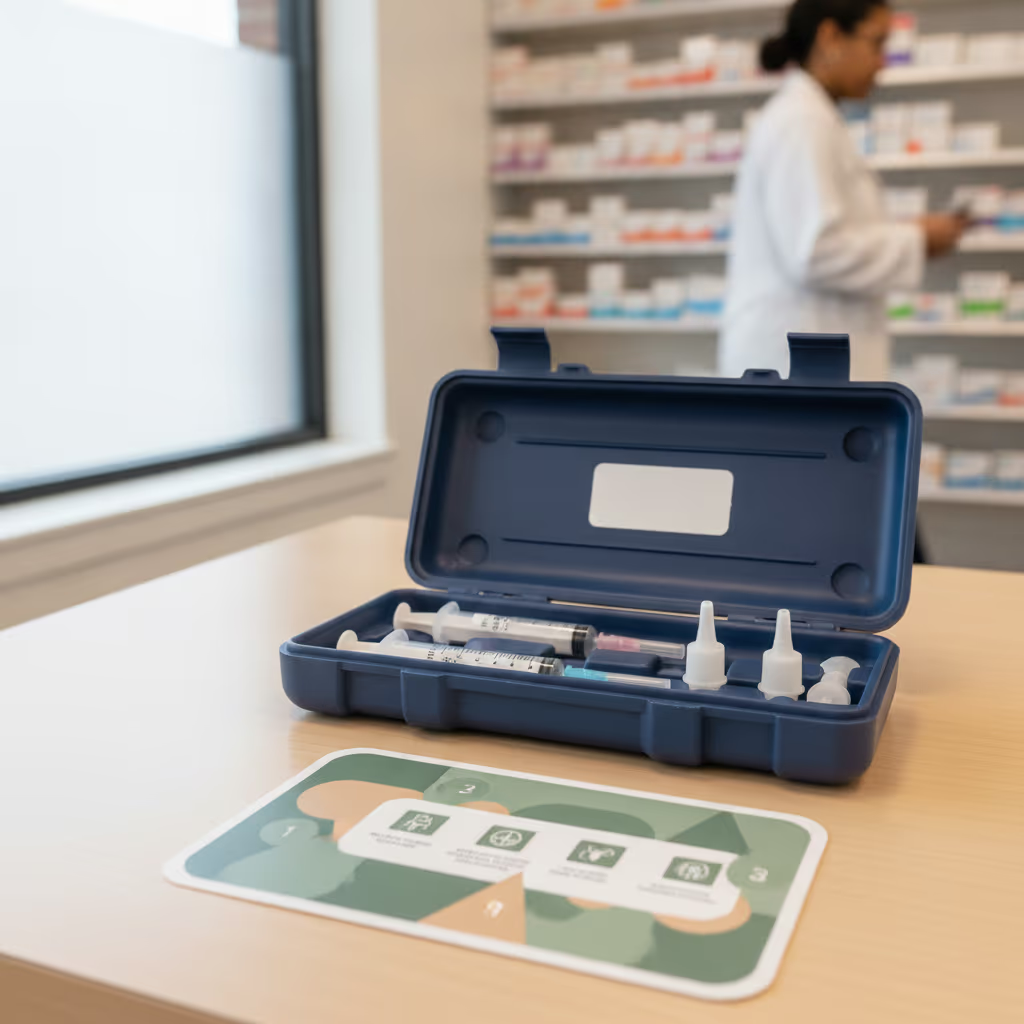
Unlike some states with a single statewide standing order, Connecticut takes a different approach: individual prescribers may enter into standing orders with specific pharmacies, allowing those pharmacies to dispense naloxone directly to the at-risk person or to a family member or friend.
Note: standing orders in Connecticut apply to intranasal or auto-injector naloxone only. Ask your local pharmacy directly whether they participate in a standing-order naloxone program.
What to Do If You Witness an Overdose
- Call 911 immediately. You are legally protected by Connecticut's Good Samaritan Law.
- Administer naloxone if it's available, and you know how to use it.
- Stay with the person and provide basic care until emergency responders arrive.
- Be honest with first responders about what happened. You won't face arrest or criminal charges for calling for help.
If you don't have naloxone on hand, resources like the Yale Community Health Van, which operates harm reduction outreach across Torrington, Winsted, Waterbury, New Milford, and Danbury, provide naloxone training and distribution.
After the Emergency: Recovery Support
Surviving an overdose is a critical moment. If you or someone you care about has experienced an overdose, our New Milford, CT treatment center provides comprehensive outpatient addiction treatment designed to support lasting recovery.
Disclaimer: This article is a summary of Connecticut law provided for informational purposes only. It is not legal advice. For questions about your specific situation, consult an attorney licensed to practice in Connecticut.
Sources
- Connecticut General Statutes § 21a-279(d)https://www.cga.ct.gov/current/pub/chap_420e.htm
- Connecticut General Assembly Office of Legislative Research Report 2025-R-0101https://www.cga.ct.gov/2025/rpt/pdf/2025-R-0101.pdf
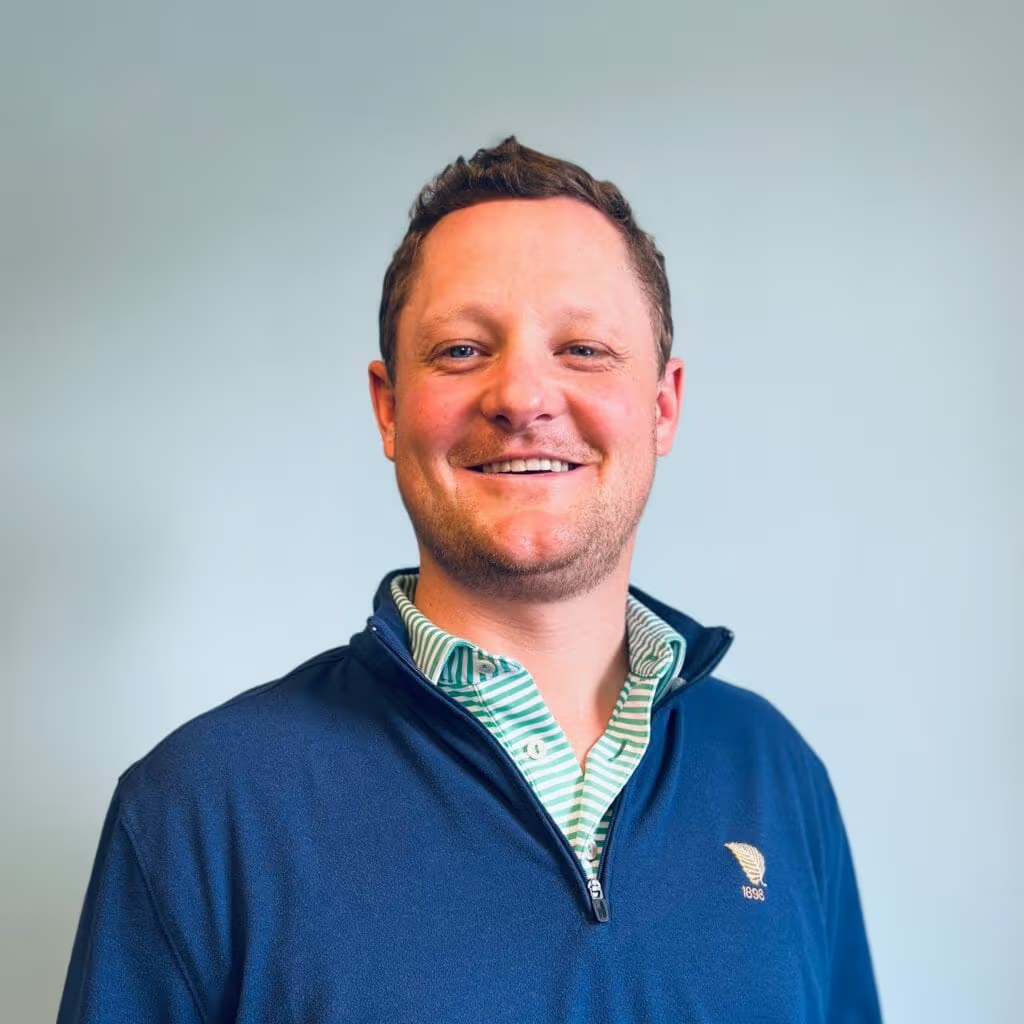
Reviewed by
Warren PhillipsCo-Founder, LMSW · Editorial Reviewer
Warren Phillips is a Co-Founder of Lantana Recovery and a Licensed Master Social Worker (LMSW) specializing in substance abuse and mental health treatment. He previously worked in various capacities at Turnbridge Addiction Treatment and Clearpoint Recovery Center before co-founding Lantana Recovery. Warren's clinical approach draws on a strengths-based perspective, Twelve Step philosophies, Cognitive Behavioral Therapy, and Motivational Interviewing. He brings both personal and professional experience to his work — as a person in long-term recovery from alcohol and illicit substances, he has used that experience to help shape Lantana's treatment programming. Warren grew up in Memphis, TN and St. Louis, MO, attended college in Mississippi, and lived in California and Connecticut before relocating to Charleston. He now lives in Mount Pleasant with his wife, Angela, and their two young children, Hall and Sam.
Written by the Lantana Recovery Editorial Team and reviewed for clinical accuracy before publication.