Track where Connecticut's opioid settlement money goes in Western CT. CCAR centers, housing support, ED recovery coaches explained.
Jump to a section
Over the past five years, Connecticut has received a substantial portion of the nation's opioid settlement funds. Connecticut's share flows through the state's Opioid Settlement Advisory Committee (OSAC), which decides how to allocate the money to address addiction, recovery, and prevention across the state.
Key Takeaways
- Connecticut OSAC approved $58.6 million over four years for housing support for unhoused people with opioid use disorder, starting in January 2025.
- $2.16 million was allocated to continue Emergency Department Recovery Coach programs at seven acute-care hospitals statewide, approved in March 2025.
- Recovery Community Centers in Torrington and Danbury, both within Region 5 that includes New Milford, received $6,059,891 in five-year funding (July 2025 through June 2030).
- A Yale-maintained public tracker allows residents to monitor settlement allocations in real time.
What the Opioid Settlement Actually Is
The opioid settlement represents a series of ongoing payments negotiated as part of lawsuits against companies like Purdue Pharma and major pharmaceutical distributors. The state legislature designated OSAC to make allocation decisions.
Major Allocations Hitting Western Connecticut
Housing Support ($58.6 million): In January 2025, OSAC approved the largest single allocation to date: $58.6 million over four years dedicated to housing support for people experiencing homelessness and opioid use disorder.
Emergency Department Recovery Coaches ($2.16 million): Approved in March 2025, this funding continues a program placing trained peer recovery coaches in emergency departments at seven Connecticut acute-care hospitals.
Recovery Community Centers in Torrington and Danbury ($6,059,891): On May 13, 2025, OSAC approved continued funding for the Connecticut Community for Addiction Recovery (CCAR) network. CCAR operates Recovery Community Centers in Torrington and Danbury, both of which fall within DMHAS Region 5, the region that includes New Milford. The approved allocation of $6,059,891 will fund these centers and an expansion of extended-hours programming and services for young adults in recovery through June 30, 2030.
A Fair Look at Distribution Pace
News coverage, including reporting in the Hartford Business Journal, has noted that Connecticut's distribution of opioid settlement funds has sometimes been slower than expected. OSAC must design programs, issue requests for proposals, and evaluate applicants before releasing funds, which can create delays.
How to Follow the Money
The Yale Program in Addiction Medicine maintains a detailed allocations tracker that anyone can access online, documenting OSAC votes, approved allocations, programs receiving funding, and amounts.
Why This Matters Locally
Western Connecticut, including New Milford, has been hard hit by the opioid crisis. The CCAR Recovery Community Center funding in Torrington and Danbury means that people in our region have access to peer-led recovery support without traveling long distances.
If you or a loved one is seeking treatment for opioid use disorder or any substance use condition in Western Connecticut, resources exist locally. Our New Milford, CT treatment center provides evidence-based outpatient care, and the broader network of state-funded programs offers additional support.
Sources
- Connecticut Opioid Settlement Advisory Committee — Meeting Minutes, May 13, 2025https://portal.ct.gov/-/media/dmhas/publications/osac/opioid-settlement-advisory-committee-osac-meeting-minutes-51225.pdf
- Yale Program in Addiction Medicine — Connecticut Opioid Settlement Allocations Trackerhttps://medicine.yale.edu/internal-medicine/genmed/addictionmedicine/policy/connecticut-opioid-response-core-initiative/allocations-tracker/
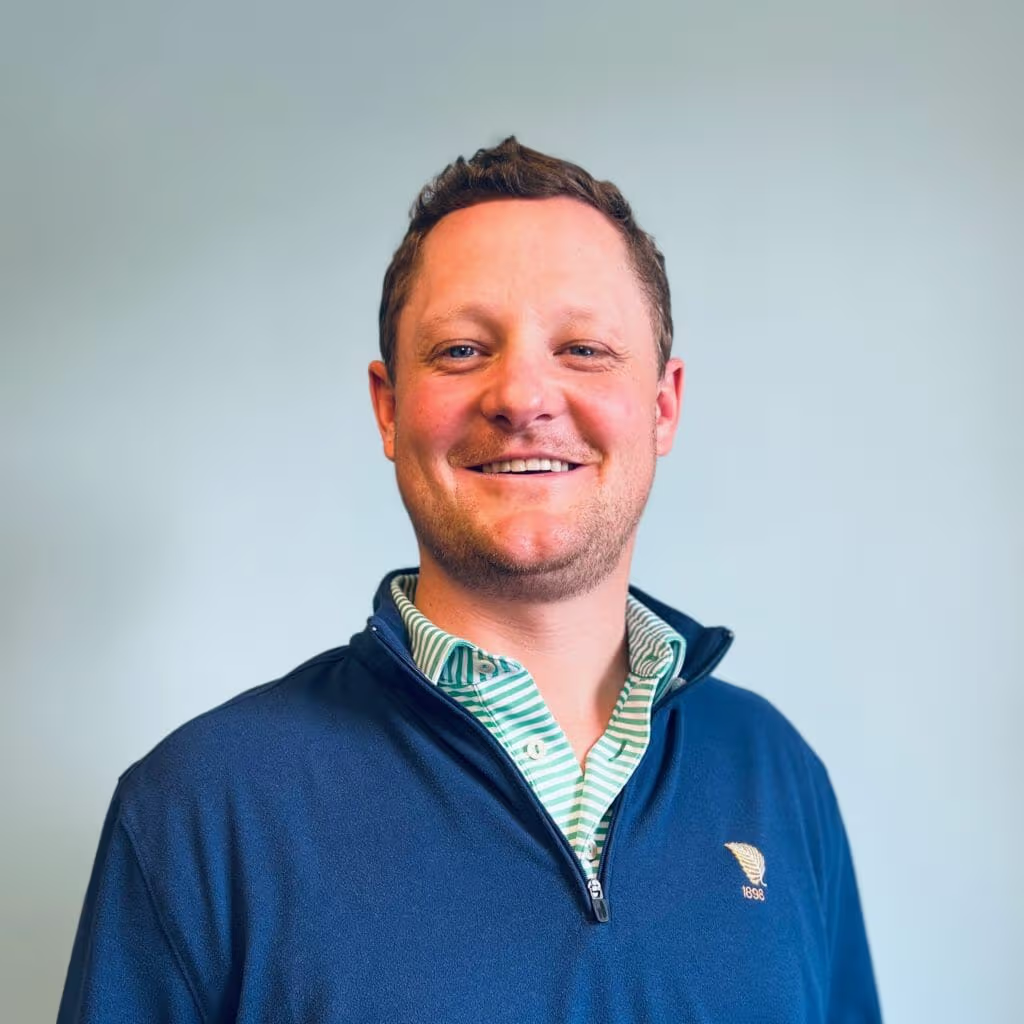
Reviewed by
Warren PhillipsCo-Founder, LMSW · Editorial Reviewer
Warren Phillips is a Co-Founder of Lantana Recovery and a Licensed Master Social Worker (LMSW) specializing in substance abuse and mental health treatment. He previously worked in various capacities at Turnbridge Addiction Treatment and Clearpoint Recovery Center before co-founding Lantana Recovery. Warren's clinical approach draws on a strengths-based perspective, Twelve Step philosophies, Cognitive Behavioral Therapy, and Motivational Interviewing. He brings both personal and professional experience to his work — as a person in long-term recovery from alcohol and illicit substances, he has used that experience to help shape Lantana's treatment programming. Warren grew up in Memphis, TN and St. Louis, MO, attended college in Mississippi, and lived in California and Connecticut before relocating to Charleston. He now lives in Mount Pleasant with his wife, Angela, and their two young children, Hall and Sam.
Written by the Lantana Recovery Editorial Team and reviewed for clinical accuracy before publication.