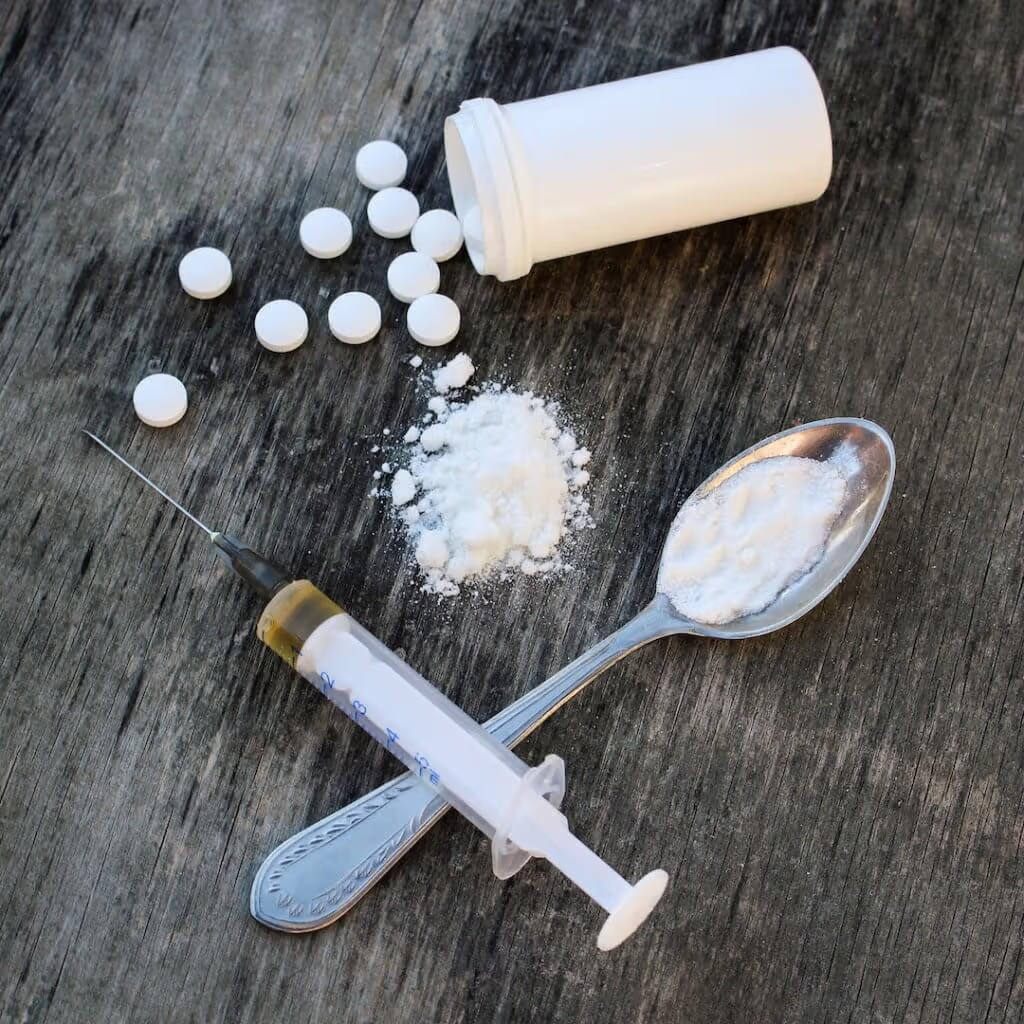
Xylazine peaked in 2024 then fell to 13.7% of CT overdoses in 2025. But carfentanil deaths tripled. Understand what's in the supply and how to stay safe.
Jump to a section
Connecticut's illicit drug supply doesn't stay static. In 2025, some trends we saw in 2024 reversed sharply while others accelerated in alarming directions. Understanding what's actually in the current supply is a real harm-reduction tool, not a moral statement.
Key Takeaways
- Fentanyl's share of Connecticut overdose deaths has declined for three consecutive years: from 85.3% (2022) to 75.9% (2024) to a preliminary 69.9% (2025), the lowest since 2019.
- Xylazine (tranq) peaked in 2024 at 34.7% of overdose deaths but dropped sharply to 13.7% in 2025.
- Carfentanil deaths nearly tripled in two years: from 10 deaths in 2024 to 29 in 2025.
- Designer benzodiazepines and medetomidine, a novel adulterant, remain emerging threats to monitor.
- 2025 data is preliminary and will revise as toxicology results finalize over the coming months.
Fentanyl's Grip Loosens, Slightly
For the past three years, Connecticut has watched fentanyl's dominance in overdose deaths decline incrementally. In 2022, fentanyl was involved in 85.3% of all overdose deaths. By 2024, that share had fallen to 75.9%. Preliminary 2025 data shows a further drop to 69.9%, the lowest proportion since 2019.
Xylazine's Sharp Reversal: Peak and Steep Fall
Xylazine, known as "tranq" on the street, is a veterinary sedative mixed into the heroin and fentanyl supply. From 2019 to 2024, its presence in Connecticut overdoses climbed steadily: from 5.9% of deaths in 2019 to a peak of 34.7% in 2024.
The preliminary 2025 data shows xylazine present in 13.7% of overdose deaths, a dramatic drop in just one year. This mirrors quarterly data from 2024 itself, where xylazine-involved deaths fell from 105 in the first quarter to 59 by the fourth quarter.
Carfentanil: A Tripling Threat
While xylazine receded, carfentanil surged with alarming speed. In 2023, carfentanil was involved in 7 overdose deaths. In 2024, that number rose to 10. In 2025, preliminary data shows 29 deaths, nearly tripling in just two years. Carfentanil is approximately 100 times more potent than fentanyl. A microscopic amount can be lethal.
Designer Benzodiazepines and Emerging Adulterants
Designer benzodiazepines, primarily bromazolam, were present in 31 overdose deaths in 2023, 39 in 2024, and a preliminary 40 in 2025. Western Connecticut (Region 5, which includes our New Milford area) was specifically flagged in the Connecticut DMHAS regional priority report for the emergence of medetomidine, another veterinary sedative, as an adulterant beginning in 2024.
Why Preliminary Data Matters
All 2025 data in this article is preliminary. Toxicology results take months to finalize. Many preliminary 2025 numbers will change, likely upward, as more results come in.
What This Means for People Who Use Drugs
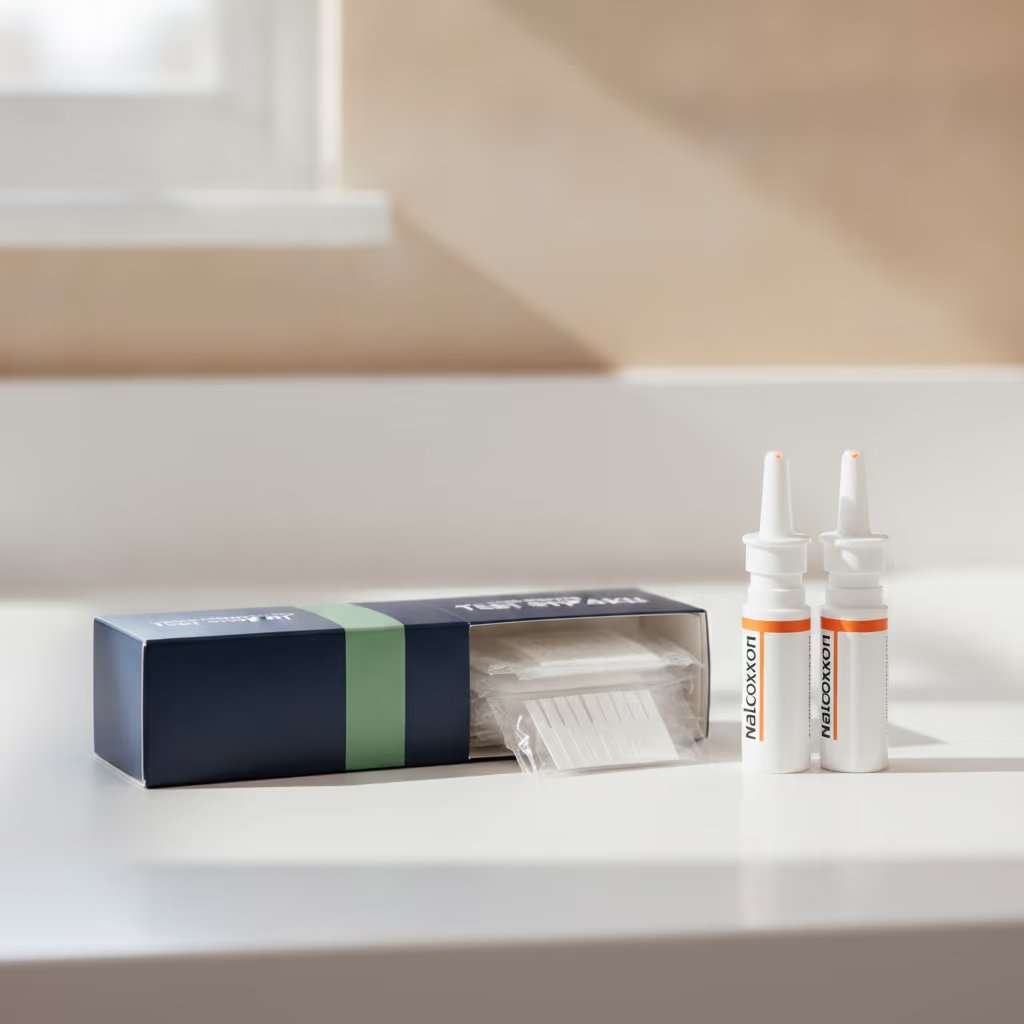
- Test your supply. Fentanyl and xylazine test strips are available for free from most Connecticut harm-reduction programs and public health departments.
- Use with others present. Overdoses are medical emergencies.
- Carry naloxone. Naloxone reverses fentanyl and fentanyl analogs but does not reverse xylazine or benzodiazepines.
- Know the supply is changing.
- Treatment works. If you're struggling with opioid use, medication-assisted treatment remains the most effective option. Lantana Recovery's New Milford, CT treatment center offers outpatient care in a harm-reduction framework.
Connecticut's drug supply continues to evolve. Staying current with what's actually circulating is how people who use drugs stay alive.
Sources
- Connecticut Office of the Chief Medical Examiner — Statisticshttps://portal.ct.gov/ocme/statistics
- Connecticut DMHAS / Western CT Coalition — 2024-25 Regional Priority Report: Region 5https://portal.ct.gov/-/media/dmhas/publications/region-5-priority-report_final.pdf
Reviewed by
Warren PhillipsCo-Founder, LMSW · Editorial Reviewer
Warren Phillips is a Co-Founder of Lantana Recovery and a Licensed Master Social Worker (LMSW) specializing in substance abuse and mental health treatment. He previously worked in various capacities at Turnbridge Addiction Treatment and Clearpoint Recovery Center before co-founding Lantana Recovery. Warren's clinical approach draws on a strengths-based perspective, Twelve Step philosophies, Cognitive Behavioral Therapy, and Motivational Interviewing. He brings both personal and professional experience to his work — as a person in long-term recovery from alcohol and illicit substances, he has used that experience to help shape Lantana's treatment programming. Warren grew up in Memphis, TN and St. Louis, MO, attended college in Mississippi, and lived in California and Connecticut before relocating to Charleston. He now lives in Mount Pleasant with his wife, Angela, and their two young children, Hall and Sam.
Written by the Lantana Recovery Editorial Team and reviewed for clinical accuracy before publication.