Building a life full of genuine alternatives to substance use supports lasting recovery. Explore real activities across categories that actually help.
Jump to a section
Recovery isn't just about removing substance use — it's about building a life full enough that the substitute activities genuinely matter. This article covers real, specific alternatives across physical, creative, social, and purposeful categories that support lasting recovery.
Key Takeaways on Healthy Alternatives to Drug Use
- Having specific, ready alternatives — not just a vague plan to "stay busy" — makes recovery more sustainable.
- Physical activity directly supports the brain's reward system in ways that help offset early recovery's dopamine deficit.
- Building new social connections around substance-free activities reduces isolation, a major relapse risk factor.
- A sense of purpose — through work, creativity, or contribution — fills a role substance use often occupied.
Physical Activities
- Regular exercise — supports the brain's natural dopamine and endorphin systems, directly relevant to recovery.
- Team sports or recreational leagues — combine physical activity with social connection.
- Outdoor activities — hiking, biking, or simply time in nature support both physical and mental health.
- Yoga or martial arts — build both physical discipline and stress management skills.
Creative and Intellectual Pursuits
- Learning a new skill — an instrument, a language, a craft — gives the brain genuine new challenge and reward.
- Writing or journaling — processes emotion in a way that supports recovery directly.
- Art in any form — painting, music, or other creative outlets provide healthy emotional expression.
Social Connection
- Support groups — build community specifically around shared recovery goals.
- Volunteering — connection combined with a sense of contribution and purpose.
- Rebuilding or deepening existing relationships — investing time in connections substance use may have strained.
Purpose and Structure
- Returning to or building a career — structure and purpose that substance use often disrupted.
- Setting concrete personal goals — gives recovery forward momentum beyond just "not using."
- Mentoring others in early recovery — for those further along, this often reinforces their own recovery meaningfully.
Why This Approach Works
Recovery that focuses only on what to avoid tends to feel hollow and is harder to sustain than recovery built around what to actively pursue. A genuinely full life — physically, socially, and purposefully — reduces the void substance use previously occupied, rather than leaving it unfilled. Lantana Recovery's treatment programs build these alternatives directly into the recovery process, and our guide on fun activities without alcohol offers more specific ideas for alcohol-free social life.
FAQ: Alternatives to Drug Use
How many alternative activities should I try to build into recovery?
What if none of these activities feel appealing at first?
Is exercise really an effective substitute for substance use?
Bottom Line
Building a life full of genuine alternatives — physical, creative, social, purposeful — supports recovery more effectively than focusing solely on avoidance. Specific, ready activities across multiple categories give recovery real staying power. For alcohol-specific alternatives, see things to do instead of drinking, and for what changes physically, brain recovery after quitting weed covers a similar process for a different substance. Lantana Recovery's outpatient rehab program often builds these same activities into a structured treatment plan.

Sources
- SAMHSA — Recovery and Recovery Supporthttps://www.samhsa.gov/find-help/recovery
- NIDA — Drugs, Brains, and Behavior: The Science of Addictionhttps://nida.nih.gov/publications/drugs-brains-behavior-science-addiction
Reviewed by
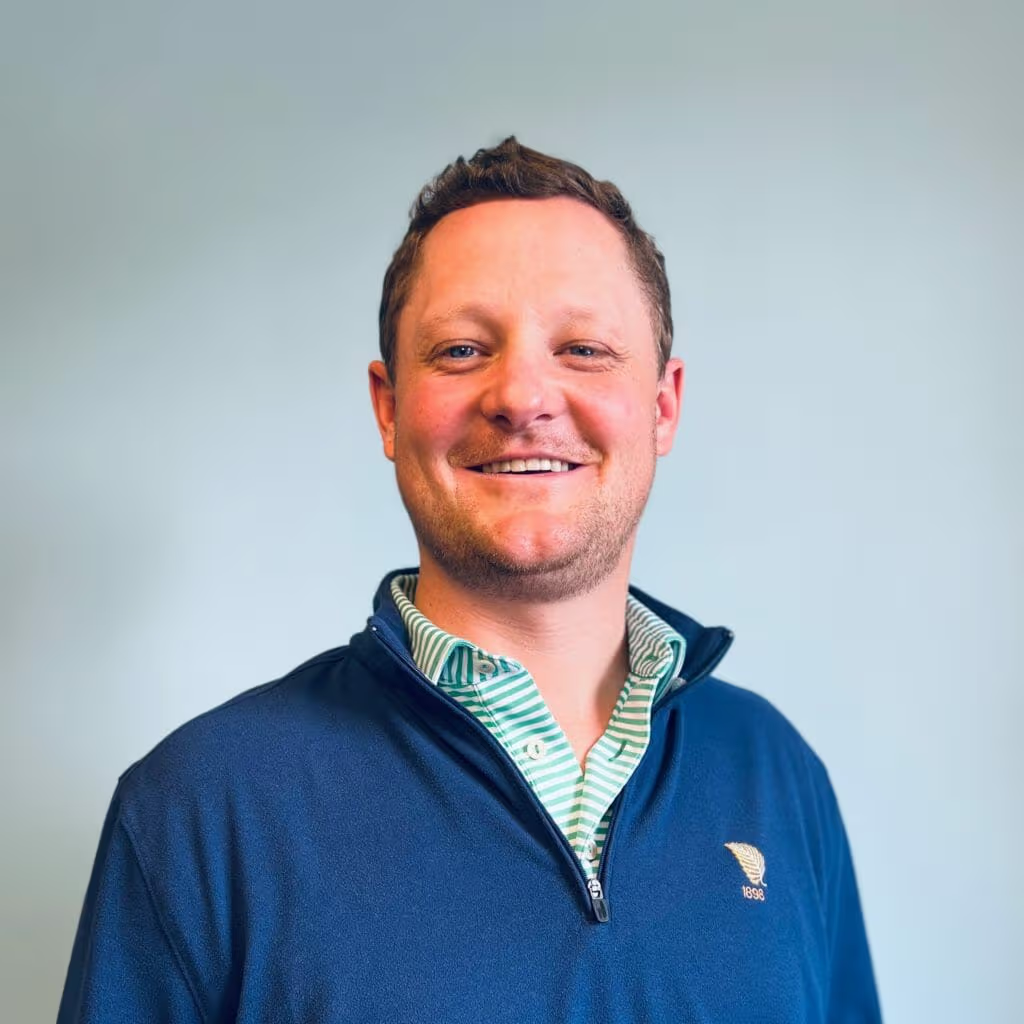
Warren PhillipsCo-Founder, LMSW · Editorial Reviewer
Warren Phillips is a Co-Founder of Lantana Recovery and a Licensed Master Social Worker (LMSW) specializing in substance abuse and mental health treatment. He previously worked in various capacities at Turnbridge Addiction Treatment and Clearpoint Recovery Center before co-founding Lantana Recovery. Warren's clinical approach draws on a strengths-based perspective, Twelve Step philosophies, Cognitive Behavioral Therapy, and Motivational Interviewing. He brings both personal and professional experience to his work — as a person in long-term recovery from alcohol and illicit substances, he has used that experience to help shape Lantana's treatment programming. Warren grew up in Memphis, TN and St. Louis, MO, attended college in Mississippi, and lived in California and Connecticut before relocating to Charleston. He now lives in Mount Pleasant with his wife, Angela, and their two young children, Hall and Sam.
Written by the Lantana Recovery Editorial Team and reviewed for clinical accuracy before publication.