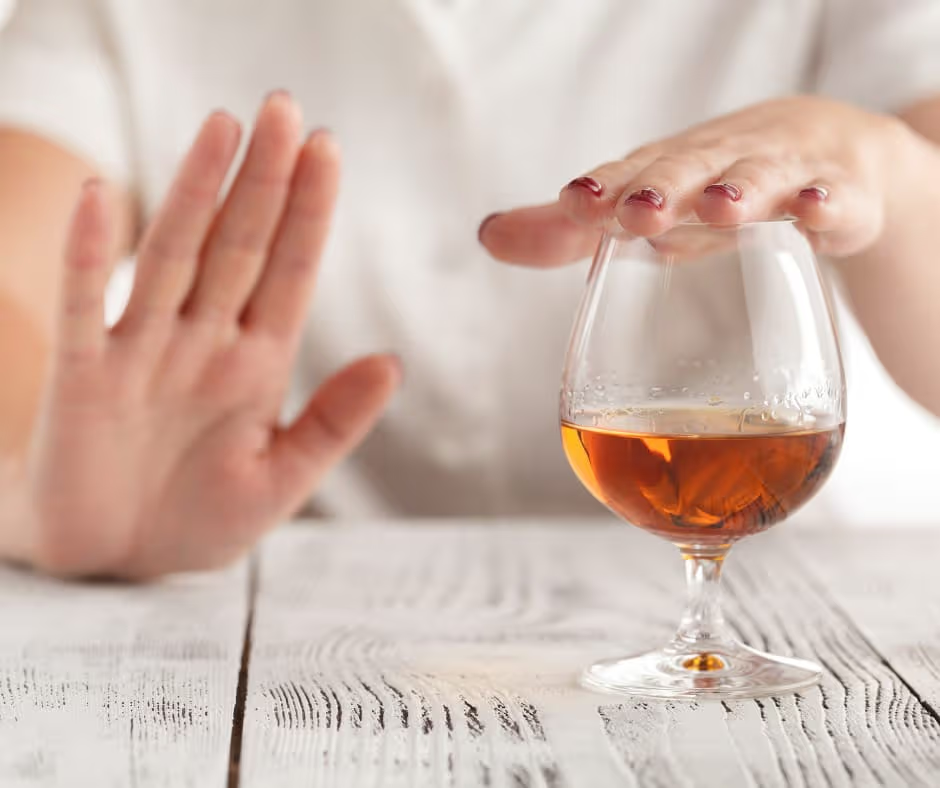
Whether cutting back or quitting entirely, having real alternatives to drinking makes the change easier. Explore 15 practical, specific options.
Jump to a section
Whether you're reducing your drinking, taking a break, or stopping entirely, having specific, practical alternatives ready makes the change significantly easier to sustain. This article covers 15 concrete options across hobbies, fitness, mindfulness, and social experiences.
Key Takeaways: Alternatives to Drinking
- Specific, ready alternatives are more effective than a vague intention to "just not drink."
- A mix of solo, social, and physically active options gives more flexibility across different situations.
- Mindfulness and routine-based options can directly replace the "wind-down" role alcohol often occupies.
- New activities also create opportunity for genuinely new social connections.
Engaging Hobbies
- Cooking a new, involved recipe — a sensory, engaging replacement for evening drinking rituals.
- Learning an instrument — provides ongoing challenge and a genuine sense of progress.
- Reading fiction you've been meaning to get to — a low-pressure evening replacement.
Fitness and Movement
- A structured workout program — gives evenings or weekends real purpose and physical benefit.
- Joining a recreational sports league — combines activity with social connection.
- Outdoor walks or hikes — simple, accessible, and genuinely restorative.
Mindful Routines
- An evening wind-down ritual — tea, stretching, or journaling as a genuine substitute for the "relaxing" role alcohol often played.
- Meditation or breathing practice — directly addresses the stress-relief function alcohol served for many people.
- A consistent sleep routine — supports the broader physical recovery process.
Social Experiences
- Trivia or game nights — increasingly common at venues not centered on alcohol.
- Coffee or tea meetups — a genuine alternative to the "drinks" default for catching up with friends.
- Volunteering — connection combined with a sense of purpose and contribution.
Creative and Personal Growth
- Journaling — processes emotion in a way that supports genuine reflection.
- Taking a class in something new — art, language, or a skill you've wanted to learn.
- Setting and tracking personal goals — gives change forward momentum beyond just avoidance.
Why Specific Alternatives Matter
Having concrete options ready — rather than a vague plan to "keep busy" — significantly improves the odds of sustaining a change in drinking habits. Lantana Recovery's alcohol addiction treatment program and our related guide to fun things to do without drinking offer additional support and ideas for building this kind of full, engaged life.
FAQ: Alternatives to Drinking
How many alternative activities should I try?
What if these activities don't feel appealing at first?
Is it necessary to completely avoid alcohol-centered social events?
Bottom Line
Specific, ready alternatives across hobbies, fitness, mindfulness, and social connection make reducing or stopping drinking significantly more sustainable than relying on avoidance alone. For a longer list of ideas, see 100 things to do instead of drugs and why alcohol feels socially easier in the first place. Many people also notice real changes by the time they reach 3 months without alcohol.

Sources
- NIAAA — Rethinking Drinking: Alcohol and Your Healthhttps://www.rethinkingdrinking.niaaa.nih.gov/
- SAMHSA — Recovery and Recovery Supporthttps://www.samhsa.gov/find-help/recovery

Reviewed by
Warren PhillipsCo-Founder, LMSW · Editorial Reviewer
Warren Phillips is a Co-Founder of Lantana Recovery and a Licensed Master Social Worker (LMSW) specializing in substance abuse and mental health treatment. He previously worked in various capacities at Turnbridge Addiction Treatment and Clearpoint Recovery Center before co-founding Lantana Recovery. Warren's clinical approach draws on a strengths-based perspective, Twelve Step philosophies, Cognitive Behavioral Therapy, and Motivational Interviewing. He brings both personal and professional experience to his work — as a person in long-term recovery from alcohol and illicit substances, he has used that experience to help shape Lantana's treatment programming. Warren grew up in Memphis, TN and St. Louis, MO, attended college in Mississippi, and lived in California and Connecticut before relocating to Charleston. He now lives in Mount Pleasant with his wife, Angela, and their two young children, Hall and Sam.
Written by the Lantana Recovery Editorial Team and reviewed for clinical accuracy before publication.