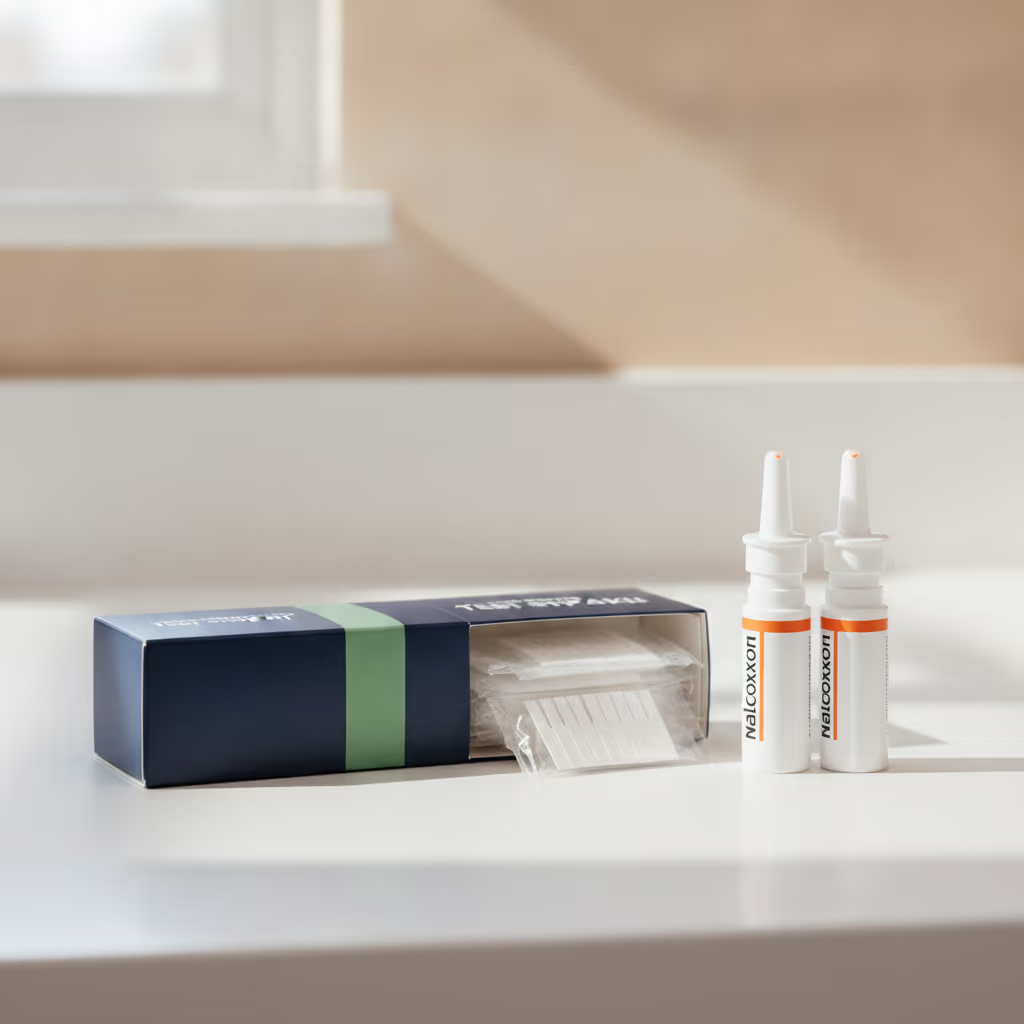
Kratom acts on opioid receptors and causes dependence in some users. Here is what withdrawal involves and why leaf and 7-OH are not the same.
Jump to a section
Kratom is a plant whose leaves contain compounds that activate the same opioid receptors morphine does, and about 1.7 million Americans aged 12 and over reported using it in a year. It produces real physical dependence and real withdrawal in regular users. It is also in the middle of a regulatory split that most coverage misses entirely: federal agencies have moved against concentrated 7-hydroxymitragynine products while explicitly leaving natural kratom leaf alone. This article covers how kratom works, what withdrawal involves, why that leaf-versus-extract distinction matters more than the legality question, and how dependence is treated.
Key Takeaways on Kratom
- Kratom's main alkaloids, mitragynine and 7-hydroxymitragynine, activate mu-opioid receptors, though NIDA notes the effects only partially compare to those of opioids.
- Users commonly report stimulant-like effects at smaller doses and opioid- or sedative-like effects at larger ones, a pattern research has not definitively established.
- An estimated 0.6% of Americans aged 12 and over — about 1.7 million people — reported past-year kratom use as of 2021.
- A minority of regular users report withdrawal symptoms, described as mild to moderate, and a smaller minority report substance use disorder symptoms.
- Concentrated 7-OH products are the current regulatory target. The DEA began temporary scheduling of 7-OH above a threshold in July 2026, explicitly not covering natural leaf.
What is kratom and how does it work?
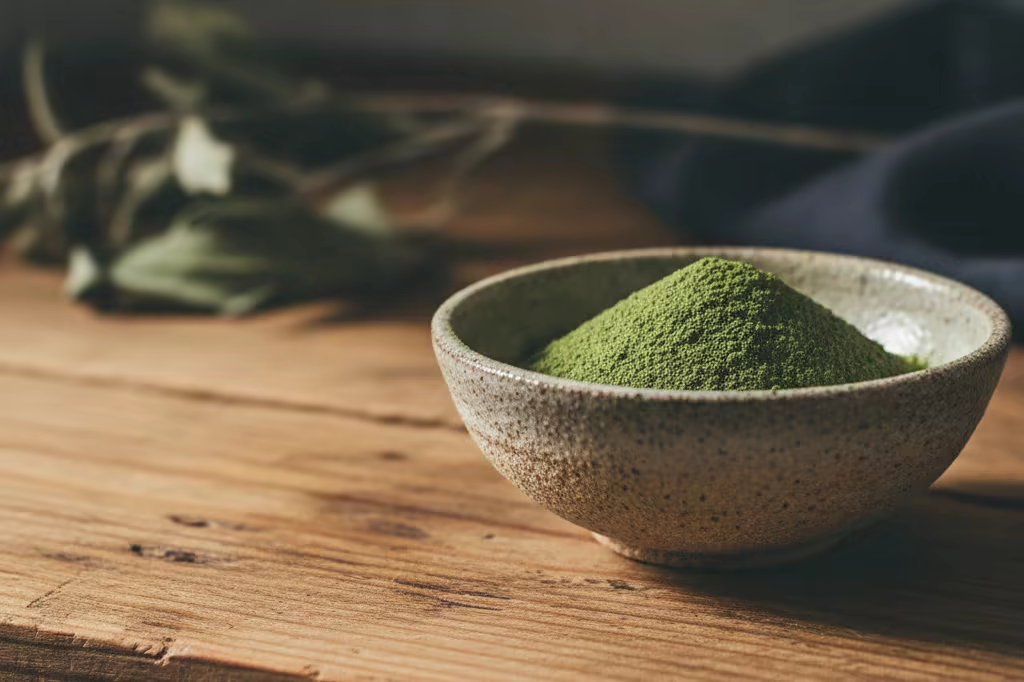
Kratom comes from Mitragyna speciosa, a tree native to Southeast Asia, where the leaves have been chewed and brewed for generations. In the United States it is sold as powder, capsules, extracts and drinks.
Two alkaloids do most of the work. Mitragynine is the most abundant, and 7-hydroxymitragynine is present in trace amounts in the raw leaf but is far more potent at the receptor. Both activate mu-opioid receptors — the same target as morphine, oxycodone and heroin — which is why kratom relieves pain, produces euphoria at higher doses, and generates dependence with sustained use.
The dose-dependence people describe is the source of much of the confusion around it. Many users report that smaller doses produce stimulant-like effects and larger doses produce opioid- or sedative-like effects, although NIDA is careful to note that studies have not definitively established that pattern. It does explain why kratom is used for opposite purposes — energy and focus in the morning, pain relief and sedation at night — sometimes by the same person.
Kratom leaf versus 7-OH products: the distinction that matters
This is the most important thing to understand about kratom in 2026, and most articles on the subject predate it or flatten it.
Natural kratom leaf contains only trace levels of 7-hydroxymitragynine. But products have appeared that concentrate or synthesize 7-OH directly — tablets, gummies, drink mixes and shots — which delivers a far more potent opioid agonist than anything the plant produces on its own.
Regulators have drawn a line at exactly that point. The FDA issued warning letters to firms marketing concentrated 7-OH products and recommended scheduling action, and on July 1, 2026 the DEA began the temporary scheduling process for 7-OH above a specified threshold along with three synthetic derivatives. Both agencies stated the action targets concentrated and synthetic 7-OH, not natural kratom leaf containing only naturally occurring trace levels.
The practical consequence for anyone buying kratom: "kratom" on a label no longer tells you what is in the package. A leaf powder and a 7-OH shot are pharmacologically different products sold in the same aisle, and the second carries opioid risk closer to a conventional opioid than to a cup of tea.
Is kratom legal?
Natural kratom is legal federally and accessible online and in stores across much of the United States, though the DEA lists it as a drug of concern. Several states and municipalities ban it outright, so legality depends on where you are.
Legal availability is doing a lot of persuasive work that it should not. Kratom has never been approved by the FDA for any medical use, is not manufactured to pharmaceutical standards, and its potency varies between products and between batches of the same product. Legal means unregulated here, not tested.
Does kratom cause dependence and withdrawal?
Yes, though the picture is more measured than either side of the public argument tends to allow.
NIDA's summary is that a minority of people report kratom-related withdrawal symptoms and a smaller minority report substance use disorder symptoms, with mild to moderate withdrawal when regular use stops. That is neither "kratom is harmless" nor "kratom is heroin in a bag." It is a substance that produces dependence in some regular users, at a rate lower than conventional opioids.
What raises the risk is the same as with any opioid: frequency, dose, duration, and using it to manage something — pain, anxiety, opioid withdrawal itself — rather than occasionally. Many people first take kratom precisely to self-manage opioid withdrawal or to taper off opioids, which is an understandable strategy that frequently substitutes one dependence for another.
What does kratom withdrawal involve?
It resembles opioid withdrawal in character and is generally described as milder. Users report:
- Muscle aches and joint pain
- Runny nose, watery eyes, sweating and chills
- Nausea, stomach cramps and diarrhea
- Insomnia and restlessness
- Irritability, anxiety and low mood
- Strong cravings
Research on the timeline is genuinely thin — NIDA notes substantial research gaps — so anyone quoting a precise hour-by-hour schedule is extrapolating from opioid withdrawal rather than reporting kratom data. What is consistent is the shape: symptoms begin within roughly a day of the last dose, are worst in the first several days, and resolve over about a week, with sleep and mood taking longest.
The clinical point that matters more than the timeline: kratom withdrawal is uncomfortable rather than dangerous in most cases, but it is severe enough that people resume use to stop it. That is the mechanism that converts a supplement bought for energy into a daily requirement.
What are the health risks?
Serious adverse effects are rare but documented — psychiatric, cardiovascular and gastrointestinal problems among them. NIDA notes that a very small number of deaths have been linked to kratom products, and that nearly all involved other drugs or contaminants.
That last clause deserves attention rather than reassurance. Kratom products have been subject to contamination and adulteration, potency is inconsistent, and the combination risk is real: kratom taken alongside other central nervous system depressants — alcohol, benzodiazepines, opioids — compounds respiratory depression. Since kratom is an opioid agonist, an overdose involving it is an opioid overdose, and naloxone is the appropriate emergency response.
How is kratom dependence treated?
The same way opioid dependence is, which is the most practical thing to know about it.
Because kratom acts on mu-opioid receptors, medication-assisted treatment with buprenorphine is used for kratom dependence and works on the same principle it does for other opioids. Withdrawal management handles the acute phase with supportive medication for the symptoms — nausea, cramping, insomnia — where a full taper is not needed.
The part that determines whether it holds is what came before. A large share of people using kratom daily started for a reason: chronic pain, an opioid taper, anxiety, or fatigue. If that reason is still unaddressed when the kratom stops, something else fills the space. Opioid use disorder treatment and intensive outpatient care at Lantana work on both at once, and understanding how opioid tolerance and dependence develop tends to make the pattern recognizable in retrospect.
One thing worth saying to anyone using kratom to stay off stronger opioids: that is a harm-reduction decision with a real logic to it, and it is also a reason to be in contact with a clinician rather than managing it alone. Buprenorphine does the same job with known dosing, known purity, and overdose protection.

The Bottom Line
Kratom activates opioid receptors, about 1.7 million Americans use it, and a minority of regular users develop dependence with mild to moderate withdrawal. The sharper issue in 2026 is not whether kratom is legal but what is actually in the package: concentrated and synthetic 7-OH products are now the target of FDA warning letters and DEA temporary scheduling, while natural leaf is explicitly excluded. If you are using kratom daily and would struggle to stop, that is opioid dependence regardless of the label, and it responds to the same treatment.
FAQ: Kratom Dependence, Withdrawal, and Regulation
Is kratom an opioid?
Is kratom addictive?
What does kratom withdrawal feel like?
Is kratom legal in the United States?
What is 7-OH and why is it being restricted?
Does naloxone work on a kratom overdose?
Sources
- National Institute on Drug Abuse — Kratom research topic: mitragynine and 7-hydroxymitragynine at mu-opioid receptors, dose-dependent effects, 1.7 million past-year users (0.6% aged 12+, 2021), withdrawal and substance use disorder findings, adverse events and legal statushttps://nida.nih.gov/research-topics/kratom
- U.S. Food and Drug Administration — Hiding in Plain Sight: 7-OH Products (concentrated 7-hydroxymitragynine tablets, gummies, drink mixes and shots)https://www.fda.gov/news-events/public-health-focus/hiding-plain-sight-7-oh-products
- Drug Enforcement Administration (July 1, 2026) — DEA to Temporarily Schedule 7-OH and Related Substances to Protect Public Safety (threshold-based scheduling that excludes natural kratom leaf)https://www.dea.gov/press-releases/2026/07/01/dea-temporarily-schedule-7-oh-and-related-substances-protect-public
- U.S. Food and Drug Administration — FDA Issues Warning Letters to Firms Marketing Products Containing 7-Hydroxymitragyninehttps://www.fda.gov/news-events/press-announcements/fda-issues-warning-letters-firms-marketing-products-containing-7-hydroxymitragynine

Reviewed by
Warren PhillipsCo-Founder, LMSW · Editorial Reviewer
Warren Phillips is a Co-Founder of Lantana Recovery and a Licensed Master Social Worker (LMSW) specializing in substance abuse and mental health treatment. He previously worked in various capacities at Turnbridge Addiction Treatment and Clearpoint Recovery Center before co-founding Lantana Recovery. Warren's clinical approach draws on a strengths-based perspective, Twelve Step philosophies, Cognitive Behavioral Therapy, and Motivational Interviewing. He brings both personal and professional experience to his work — as a person in long-term recovery from alcohol and illicit substances, he has used that experience to help shape Lantana's treatment programming. Warren grew up in Memphis, TN and St. Louis, MO, attended college in Mississippi, and lived in California and Connecticut before relocating to Charleston. He now lives in Mount Pleasant with his wife, Angela, and their two young children, Hall and Sam.
Written by the Lantana Recovery Editorial Team and reviewed for clinical accuracy before publication.