Sex and porn addiction are related but distinct compulsive behavior patterns. Learn the differences, overlapping symptoms, and treatment approaches.
Jump to a section
Sex addiction and porn addiction are often used interchangeably, but they're distinct patterns of compulsive sexual behavior with different triggers and treatment considerations. This article clarifies what separates them, where they overlap, and how treatment addresses each.
Key Takeaways: Sex Addiction vs. Porn Addiction
- Sex addiction involves compulsive real-world sexual behavior; porn addiction centers on compulsive consumption of pornographic content.
- Both fall under the broader clinical category of compulsive sexual behavior disorder (ICD-11).
- Porn addiction is often accessible in isolation and can escalate in tolerance and content extremity over time.
- Treatment approaches overlap significantly but address different behavioral triggers and consequences.
Defining Sex Addiction
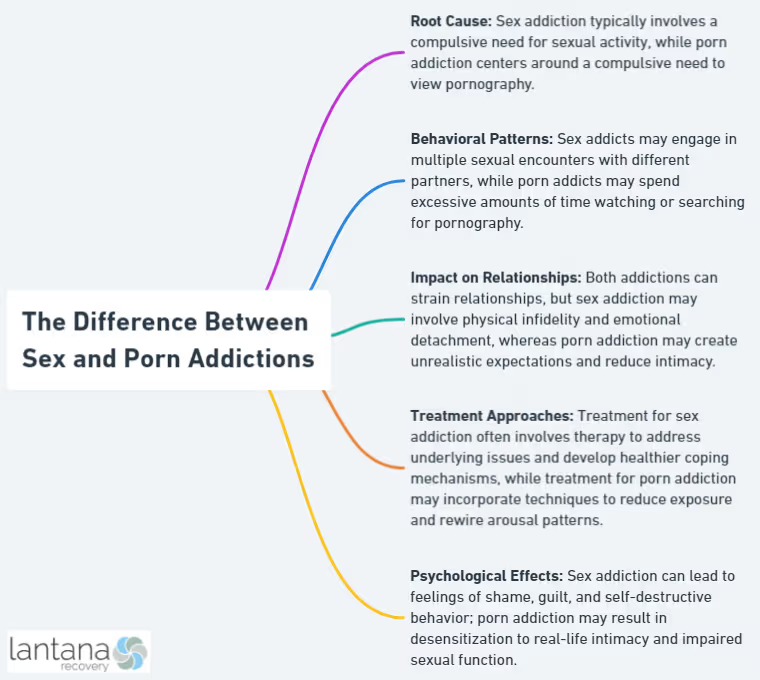
Sex addiction is compulsive, repeated real-world sexual behavior — including with partners, casual encounters, or paid services — that continues despite negative consequences to relationships, work, or health. It typically involves interpersonal dynamics that porn addiction, by its solitary nature, doesn't.
Defining Porn Addiction
Porn addiction is compulsive consumption of pornographic content, often characterized by escalating time spent, tolerance requiring more extreme content to achieve the same effect, and continued use despite it interfering with relationships, work, or self-image. Its accessibility and privacy can make it easier to hide and, for some, easier to escalate than behaviors requiring another person.
Key Differences
| Attribute | Sex Addiction | Porn Addiction |
|---|---|---|
| Involves another person | Yes — partners, casual encounters, or paid services | No — typically solitary |
| Accessibility | Requires real-world logistics | Instant, private access — can accelerate compulsive patterns faster |
| Relationship impact | Directly risks infidelity and relationship rupture | More often causes secrecy and intimacy avoidance within existing relationships |
| Added risk factors | STIs, legal or financial consequences | Typically fewer physical/legal risks, but real escalation risk |
Where They Overlap
Both are recognized under the broader clinical category of compulsive sexual behavior disorder, both are driven by the same underlying reward-seeking mechanism, and both frequently co-occur — porn use often escalates alongside or into compulsive real-world sexual behavior, and vice versa.
Treatment Approaches
Both conditions respond to structured behavioral therapy focused on identifying triggers, rebuilding healthy coping mechanisms, and — where relevant — repairing relationship trust. Lantana Recovery's addiction treatment programs address compulsive sexual behavior alongside any co-occurring substance use, which is common. See our related guide on sexual addiction withdrawal symptoms for what the cessation process actually involves, and our outpatient programs for a treatment path that fits around work and daily responsibilities.
FAQ: Sex Addiction vs. Porn Addiction
Can someone have porn addiction without sex addiction?
Are both formally recognized clinical conditions?
Does porn addiction require different treatment than sex addiction?
Bottom Line
Sex addiction and porn addiction are related but distinct patterns of compulsive sexual behavior, both treatable through structured therapy. The difference matters for understanding your own or a loved one's pattern, but both deserve the same seriousness in seeking help. Compulsive sexual behavior fits within the broader framework of the 4 Cs of addiction and the DSM-5 criteria for behavioral addiction, both useful for understanding where a specific pattern falls.
Sources
- World Health Organization, ICD-11 — Compulsive Sexual Behaviour Disorder classificationhttps://icd.who.int/browse11/l-m/en#/http%3a%2f%2fid.who.int%2ficd%2fentity%2f1630268048
- SAMHSA National Helpline — behavioral health treatment referral servicehttps://www.samhsa.gov/find-help/national-helpline

Reviewed by
Warren PhillipsCo-Founder, LMSW · Editorial Reviewer
Warren Phillips is a Co-Founder of Lantana Recovery and a Licensed Master Social Worker (LMSW) specializing in substance abuse and mental health treatment. He previously worked in various capacities at Turnbridge Addiction Treatment and Clearpoint Recovery Center before co-founding Lantana Recovery. Warren's clinical approach draws on a strengths-based perspective, Twelve Step philosophies, Cognitive Behavioral Therapy, and Motivational Interviewing. He brings both personal and professional experience to his work — as a person in long-term recovery from alcohol and illicit substances, he has used that experience to help shape Lantana's treatment programming. Warren grew up in Memphis, TN and St. Louis, MO, attended college in Mississippi, and lived in California and Connecticut before relocating to Charleston. He now lives in Mount Pleasant with his wife, Angela, and their two young children, Hall and Sam.
Written by the Lantana Recovery Editorial Team and reviewed for clinical accuracy before publication.