Sober living provides structure, not clinical care. Abstinence rose from 17% to 49% across 18 months, and social network mattered more than time.
Jump to a section
A sober living home is a substance-free residence where people in recovery live together under a set of house rules, usually after treatment and before living independently. It is housing rather than treatment, and the research on it is better than most people expect: in an 18-month study of 245 residents, abstinence rose from 17% at entry to 45.5% at six months and 49.1% at twelve. This article covers how sober living works, the four recognized levels, the rules, what the outcome data shows, and the one factor that predicted results better than anything else.
Key Takeaways on Sober Living Homes
- Sober living is housing with structure and accountability, not clinical treatment — though some residences add treatment on top.
- Recovery residences are classified in four levels, from democratically peer-run houses to residences that include clinical addiction treatment on site.
- In an 18-month study of 245 residents, abstinence went from 17% at entry to 45.5% at 6 months, 49.1% at 12 months and 43.1% at 18 months; arrests fell from 41.9% to 27.6%.
- The strongest predictor of good outcomes was the composition of a resident's social network — specifically, having fewer people who drink or use in it.
- In that study, length of stay had no significant relationship with 18-month outcomes, which contradicts how sober living is usually sold.
What is a sober living home?
A sober living home — also called a recovery residence or sober house — is a shared residence where everyone living there has committed to staying free of alcohol and drugs. Residents pay rent, keep jobs or attend school, do chores, follow a curfew, and submit to drug testing. Breaking the abstinence rule usually means leaving.
What it is not is treatment. There is no therapy in a typical sober living home, no medical care, and usually no clinical staff. What it provides is a structured environment, immediate accountability, and a household of people with the same goal — which is a different intervention from therapy and, for many people, the missing one.
The gap it fills is specific. Someone leaves treatment with new skills and returns to the apartment, the roommates, and the routines that surrounded their drinking or using. Sober living changes the environment during the period when the environment matters most.
What are the levels of recovery residence?
The National Alliance for Recovery Residences defines four levels, and the differences are substantial enough that "sober living home" alone tells you very little.
| Level | Type | What it looks like |
|---|---|---|
| Level I | Peer-run | Democratically governed, substance-free homes run by the residents themselves, using house guidelines and peer accountability. No paid staff. |
| Level II | Monitored | What most people mean by "sober living." House rules and peer accountability, with a senior resident appointed as house manager. |
| Level III | Supervised | Weekly structured programming — recovery groups, personal recovery plans, life skills such as job readiness and budgeting — with trained or credentialed staff. |
| Level IV | Clinical | Integrates social and medical models with supervised peer and professional staff, and offers clinical addiction treatment on site. |
Asking which level a residence operates at is the single most useful question when comparing options, because it determines whether you are buying housing, structure, or care.
How is it different from rehab or a halfway house?
Versus treatment. Rehab delivers clinical care — assessment, therapy, medication, a treatment plan. Sober living delivers an environment. Many people do both at once, living in a sober home while attending intensive outpatient treatment during the day, which is a common and well-supported combination.
Versus a halfway house. The terms get used interchangeably, but a halfway house is typically tied to the criminal justice system, time-limited, and often state-licensed and court-mandated. Sober living is generally voluntary, privately operated, and open-ended: you stay while it is useful and while you follow the rules.
Lantana itself began as structured sober living in Charleston in 2018, and added clinical programming in 2020 — which is roughly the path the whole field has taken, from housing toward integrated care.
What are the rules?
They vary by house, but the core set is consistent:
- Complete abstinence from alcohol and non-prescribed drugs
- Random drug and alcohol testing
- Curfew, often earlier for new residents and relaxed over time
- Employment, school, or structured activity within a set period of moving in
- Attendance at meetings or other recovery activity, in most houses
- Household responsibilities — chores, shared meals, house meetings
- Guest and overnight restrictions
- Rent paid on time
The rules are the intervention, not administrative overhead. Structure, accountability and a reason to be somewhere at a set time are exactly what is missing in the first months after treatment.
Does sober living actually work?
The best evidence comes from an 18-month study of 245 residents entering sober living houses, measured at entry and at 6, 12 and 18 months. Average length of stay was 166 days, about five and a half months.
| Measure | At entry | 6 months | 12 months | 18 months |
|---|---|---|---|---|
| Abstinent | 17.0% | 45.5% | 49.1% | 43.1% |
| Arrested | 41.9% | 26.0% | 22.0% | 27.6% |
Two honest readings of that table. The improvement is large and holds up well past the point most residents had moved out — abstinence nearly tripled and arrests fell by a third. And more than half of residents were not abstinent at any follow-up, which is worth stating plainly rather than burying.
Related work found that even residents who did relapse showed significant improvement between entry and six months on percent days abstinent, psychiatric symptoms, employment problems and housing stability. Relapse and benefit are not mutually exclusive here.
What actually predicts whether it works?
This is the part worth knowing before choosing a house, and it is not what the marketing emphasizes.
The strongest predictor across almost every measure was social network composition — specifically, having fewer people who drink or use drugs in your network. Twelve-step involvement also predicted fewer arrests and lower substance use.
And length of stay showed no significant relationship with 18-month outcomes in that study. That finding cuts against the standard sales pitch, and it reframes what a sober living home is actually for: it is not a container where time accrues benefit, it is a place where a different social network gets built. A resident who stays nine months without changing who they spend time with has bought time rather than change.
The practical version: pick a house where you will actually connect with the other residents, and use the time to build relationships that outlast the lease. That is the mechanism. The bed is the delivery system.
How do you choose one?
Questions worth asking, in rough order of how much the answer tells you:
- What NARR level is it, and is it certified? Certification signals an operator held to published standards rather than one renting bedrooms.
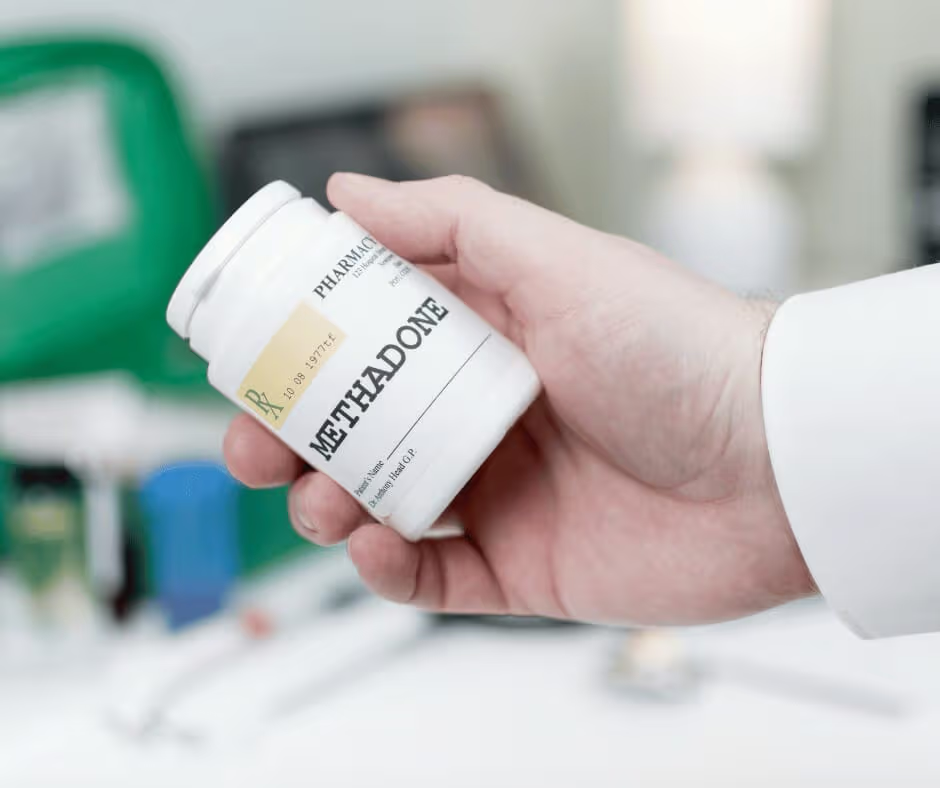
- What is the policy on medication for addiction treatment? This matters enormously. Some houses exclude residents taking buprenorphine or methadone, which means excluding people using the treatment with the strongest evidence behind it. A house that does this is not neutral about your care.
- What happens after a relapse? Immediate expulsion into homelessness, or a defined process with a path back?
- Who is in charge, and are they trained? A house manager who is a resident is a different arrangement from credentialed staff.
- What is required of residents — meetings, employment, curfew, testing frequency?
- What does rent cover, and what happens if someone loses a job?
Sober living is generally private pay, priced like local rent rather than like treatment, and typically not covered by health insurance because it is housing rather than a clinical service. Some operators offer scholarships or sliding scales — worth asking directly.
Is it right for you?
It tends to fit best when the home environment is part of the problem — people using in the house, easy access, a routine built around drinking — or when someone leaving treatment has nowhere stable to go. The 18-month data reflects that: homelessness among residents fell from 16% to 4% and stable housing rose from 13% to 27%.
It fits less well when someone needs clinical care they would not be getting, or when they are not yet at a point where abstinence is the goal at all — which is a question about where someone is in the stages of change rather than about the house.
Most often it works as one component: sober living for the environment, treatment for the clinical work, and something like the 12 Steps or another mutual-help program for the network the data says matters most.
The Bottom Line
Sober living homes provide structure, accountability, and a substance-free environment during the months when environment matters most — and the outcome data is genuinely good, with abstinence rising from 17% to around 45-49% and arrests falling by a third across 18 months. But the strongest predictor of success was not how long residents stayed. It was how many people in their social network still drank or used. Choose the house where you will actually build relationships, ask directly about its policy on addiction medication, and treat the bed as the beginning rather than the intervention.
FAQ: Recovery Residences, Rules, and Results
What is a sober living home?
How long do people stay in sober living?
What is the difference between a sober living home and a halfway house?
Does insurance cover sober living?
Can you take addiction medication in a sober living home?
What happens if someone relapses in sober living?
Sources
- Polcin, Korcha, Bond & Galloway (2010), Journal of Substance Abuse Treatment — Sober Living Houses for Alcohol and Drug Dependence: 18-Month Outcomes (245 residents; abstinence, arrest and housing outcomes; average 166-day stay; social network as the strongest predictor)https://pmc.ncbi.nlm.nih.gov/articles/PMC2860009/
- Housing Status, Psychiatric Symptoms, and Substance Abuse Outcomes Among Sober Living House Residents over 18 Months — homelessness and stable housing trajectorieshttps://pmc.ncbi.nlm.nih.gov/articles/PMC5646694/
- National Alliance for Recovery Residences — Recovery Residence Levels of Support (Levels I to IV: peer-run, monitored, supervised and clinical)https://narronline.org/wp-content/uploads/2024/05/NARR-Levels-of-Support.pdf
- Outcomes among Sober Living House Residents Who Relapse: Role of Recovery Capital — improvement on abstinence days, psychiatric symptoms, employment and housing despite relapsehttps://pmc.ncbi.nlm.nih.gov/articles/PMC10724373/

Reviewed by
Warren PhillipsCo-Founder, LMSW · Editorial Reviewer
Warren Phillips is a Co-Founder of Lantana Recovery and a Licensed Master Social Worker (LMSW) specializing in substance abuse and mental health treatment. He previously worked in various capacities at Turnbridge Addiction Treatment and Clearpoint Recovery Center before co-founding Lantana Recovery. Warren's clinical approach draws on a strengths-based perspective, Twelve Step philosophies, Cognitive Behavioral Therapy, and Motivational Interviewing. He brings both personal and professional experience to his work — as a person in long-term recovery from alcohol and illicit substances, he has used that experience to help shape Lantana's treatment programming. Warren grew up in Memphis, TN and St. Louis, MO, attended college in Mississippi, and lived in California and Connecticut before relocating to Charleston. He now lives in Mount Pleasant with his wife, Angela, and their two young children, Hall and Sam.
Written by the Lantana Recovery Editorial Team and reviewed for clinical accuracy before publication.