THC is stored in fat, so detection runs days for occasional use and weeks for daily use. A positive test shows past use, not impairment.
Jump to a section
How long weed stays in your system depends more on how often you use it than on how much you used last time. THC is fat-soluble, so it accumulates in body tissue and releases slowly — which is why an occasional user can test clean in a few days while a daily user can stay positive for weeks. This article covers the measured detection windows for urine, blood, saliva and hair, why frequency matters so much more than dose, and the single most misunderstood point: a positive THC test is not evidence of impairment.
Key Takeaways on THC Detection Times
- THC is stored in fat and released gradually, so detection windows stretch with repeated use rather than resetting between sessions.
- After a single cannabis cigarette, measured urine detection averaged about 34 hours at one THC strength and about 89 hours at a higher one.
- In one documented case of a long-term heavy user, urine remained positive up to 67 days after last use.
- Blood THC clears in roughly 3.5 to 5.5 hours in occasional users, but has been detected up to 13 days later in chronic users with highly sensitive methods.
- Detection is not impairment. The relationship between blood THC concentration and impairment is described in the pharmacology literature as imperfect and controversial — unlike blood alcohol.
Why does weed stay in your system so much longer than other drugs?
Because of where it goes. THC is highly lipophilic — fat-soluble — so after absorption it distributes into fatty tissue rather than staying in the bloodstream to be filtered out. From there it releases back into circulation slowly over days or weeks.
Two consequences follow. First, elimination is not a clean curve: THC leaves in a long, low tail rather than a steep drop. Second, and more importantly, repeated use loads the tissue reservoir. Someone who uses daily is not starting each day from zero; they are adding to a store that has not emptied.
Most drug tests do not even look for THC itself. They look for THC-COOH, an inactive metabolite that persists far longer than the compound that produces the effect — which is the technical reason a test can be positive long after any effect has ended.
How long does weed stay in your urine?
Urine is the standard screening sample, and the published windows vary enormously by use pattern — which is exactly the point.
In controlled research using a 15 ng/mL GC/MS cutoff, occasional users who smoked a single cannabis cigarette had mean last-positive urine detection times of about 33.7 hours for a 1.75% THC cigarette and about 88.6 hours for a 3.55% one, with individual ranges running from 8 to 122 hours.
Chronic use changes the picture completely. The same body of research documents a heavy user of more than ten years testing positive up to 67 days after last exposure. That is an extreme case rather than a typical one, but it illustrates the mechanism: the tissue reservoir has to empty before the metabolite stops appearing.
Worth noting that today's cannabis is considerably more potent than the 1.75% and 3.55% material used in those studies, which shifts windows longer rather than shorter.
What are the detection windows for each test?
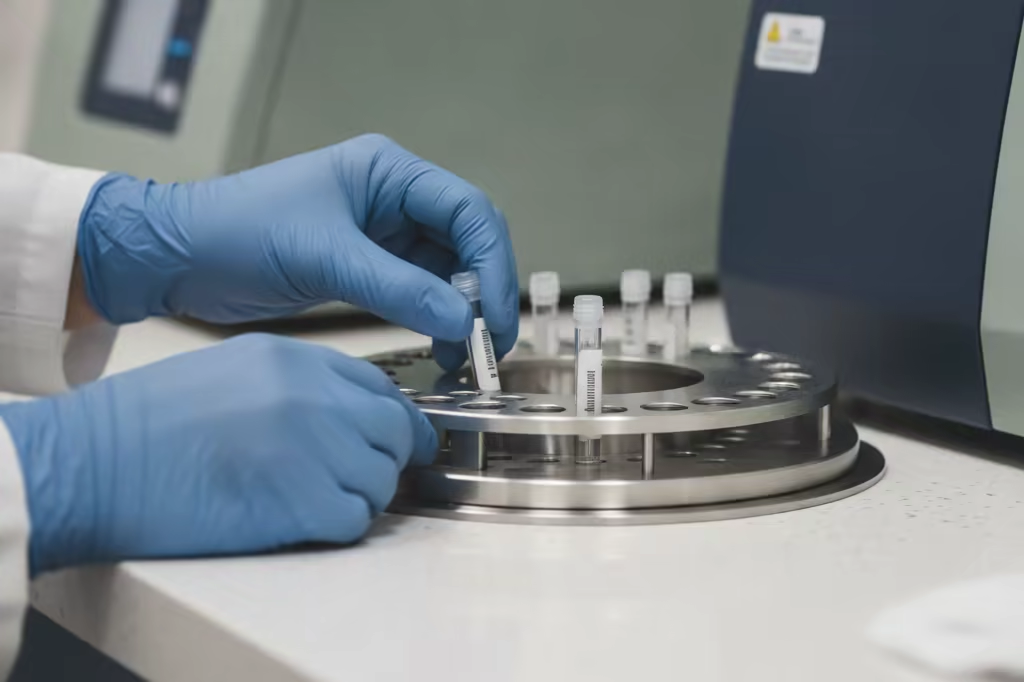
| Test | Occasional use | Chronic use |
|---|---|---|
| Urine (THC-COOH) | Roughly 1 to 5 days after a single use | Weeks; up to 67 days documented in a long-term heavy user |
| Blood (THC) | About 3.5 to 5.5 hours | Detected up to 13 days with highly sensitive methods |
| Oral fluid | Most positives within about 13 hours; up to 34 hours | Longer, with ongoing oral contamination from recent use |
| Hair | Months of cumulative use; reflects a pattern, not a single session | |
Every one of these also moves with the laboratory's cutoff. A more sensitive threshold extends the window; a less sensitive one shortens it. When two sources disagree about "how long weed stays in your system," the cutoff is usually the reason.
Why does frequency matter more than how much you smoked?
Because dose determines the peak and frequency determines the baseline. A single heavy session raises THC concentrations sharply and then they fall. Daily use raises the floor those peaks start from, and the floor comes down slowly.
This is why the question "how long after one joint?" has a reasonably tight answer — one to a few days — while "how long for a daily user?" has an answer measured in weeks with wide individual variation. It is also why someone who quits after years of daily use and tests positive two weeks later has not relapsed. They are still clearing a reservoir.
Body composition contributes for the same reason. Since THC is stored in fat, body fat percentage affects both how much is stored and how slowly it releases. Exercise can transiently raise blood THC by mobilizing fat stores — one of the few circumstances where activity makes a test more likely to be positive rather than less.
Does a positive THC test mean you were high?
No, and this is the most consequential misunderstanding on the topic. With alcohol, blood concentration tracks impairment closely enough to support a legal per-se limit. With cannabis, it does not.
The pharmacology literature links recent exposure within roughly 6 to 8 hours and possible impairment to plasma THC above about 2 to 3 ng/mL, but emphasizes broad individual variation and describes the relationship as imperfect and controversial. A chronic user can carry measurable blood THC while fully sober; an occasional user can be significantly impaired at a concentration a chronic user shows routinely.
For urine testing the gap is larger still, since urine screens detect an inactive metabolite that can persist for weeks. A positive urine test establishes past use within a window. It says nothing about the last hour.
Can you flush THC out of your system faster?
Not meaningfully. Detox drinks, cranberry juice, niacin, and heavy water intake do not accelerate the release of THC from fat. Diluting urine can lower metabolite concentration below a cutoff, but laboratories routinely check specimen creatinine and specific gravity and report over-diluted samples as invalid rather than negative.
Exercise, as noted, can work against you in the short term by mobilizing stored THC into the bloodstream. Over weeks, reduced body fat plausibly shortens the tail — but that is a months-long change, not a strategy for a test on Friday.
The only reliable variable is time since last use.
What about cannabis dependence and withdrawal?
Cannabis use disorder is a recognized diagnosis, and withdrawal is real: irritability, sleep disruption and vivid dreams, decreased appetite, restlessness, and low mood, typically beginning within a day or two of stopping and easing over one to two weeks. Sleep disturbance often lasts longest, and it is the symptom that most often prompts a return to use.
Because THC clears so slowly, the withdrawal timeline and the detection timeline are not the same thing — someone can feel entirely normal while still testing positive, and someone can feel unwell while their blood levels are already low. Our guides to the quitting weed timeline and what recovers after quitting cover what that period actually feels like.
Where use has become difficult to control — using more than intended, failed attempts to cut down, continuing despite consequences — cannabis use disorder treatment and outpatient care address it with behavioral treatment, since no medication is approved for it. Understanding how cannabis acts on the brain is a useful starting point, and the testing questions tend to resolve themselves once use stops.

The Bottom Line
For an occasional user, weed clears urine in a few days — measured at roughly 34 to 89 hours after a single cannabis cigarette in controlled studies. For a daily user it can take weeks, with one documented case reaching 67 days, because THC is stored in fat and released slowly. Nothing you drink shortens that. And a positive test is evidence of past use, not of being high: unlike alcohol, cannabis concentration and impairment do not track each other reliably.
FAQ: THC Testing, Frequency, and Clearance
How long does weed stay in your urine after one time?
How long does THC stay in your system for a daily smoker?
Does drinking water flush THC out faster?
Does a positive weed test mean you are impaired?
Does exercise help you pass a THC test?
How long does weed stay in your blood?

Sources
- Huestis (2007), Chemistry & Biodiversity — Human Cannabinoid Pharmacokinetics: urine THC-COOH detection times after single cannabis cigarettes, the 67-day chronic-user case, blood and oral-fluid windows, and the limits of inferring impairment from plasma THChttps://pmc.ncbi.nlm.nih.gov/articles/PMC2689518/
- Bonnet & Preuss (2017), Substance Abuse and Rehabilitation — The cannabis withdrawal syndrome: current insights (symptom profile, onset and course, and outpatient management)https://pmc.ncbi.nlm.nih.gov/articles/PMC5414724/

Reviewed by
Warren PhillipsCo-Founder, LMSW · Editorial Reviewer
Warren Phillips is a Co-Founder of Lantana Recovery and a Licensed Master Social Worker (LMSW) specializing in substance abuse and mental health treatment. He previously worked in various capacities at Turnbridge Addiction Treatment and Clearpoint Recovery Center before co-founding Lantana Recovery. Warren's clinical approach draws on a strengths-based perspective, Twelve Step philosophies, Cognitive Behavioral Therapy, and Motivational Interviewing. He brings both personal and professional experience to his work — as a person in long-term recovery from alcohol and illicit substances, he has used that experience to help shape Lantana's treatment programming. Warren grew up in Memphis, TN and St. Louis, MO, attended college in Mississippi, and lived in California and Connecticut before relocating to Charleston. He now lives in Mount Pleasant with his wife, Angela, and their two young children, Hall and Sam.
Written by the Lantana Recovery Editorial Team and reviewed for clinical accuracy before publication.