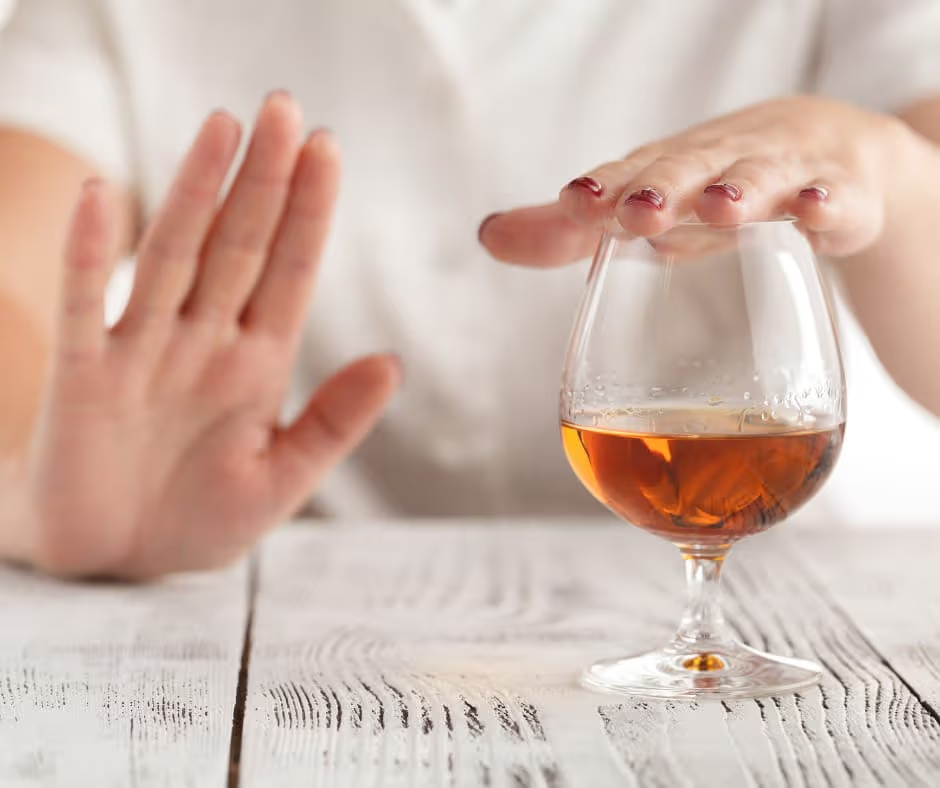
Sober life doesn't mean boring life. Explore real activities, social outings, and adventures that don't involve alcohol.
Jump to a section
One of the most common worries about cutting back on drinking is losing fun — but a genuinely full social and personal life doesn't require alcohol, and plenty of activities are actually better without it. This article covers real, specific ideas across creative, social, and outdoor categories.
Key Takeaways on Sober Fun
- Many activities people associate with drinking work just as well, or better, alcohol-free.
- Building a new set of go-to activities early makes early sobriety easier to sustain.
- Social connection doesn't require alcohol — it requires shared activity and genuine engagement.
- Novelty and physical activity both support mood in ways alcohol actually undermines over time.
Creative and Indoor Activities
- Cooking or baking something new — a genuinely engaging, sensory activity with a tangible payoff.
- Painting, pottery, or a craft class — many studios offer BYO-nothing sessions specifically built around the activity itself.
- Board game or trivia nights — increasingly common at venues that aren't bar-centric.
- Learning an instrument or a new skill — gives early sobriety a genuine sense of forward progress.
Active Social Outings
- Group fitness classes — build both physical health and a new social circle simultaneously.
- Sports leagues — recreational leagues exist for nearly every activity level and interest.
- Hiking or walking groups — combine movement, nature, and connection.
- Dance classes — genuinely fun, and better executed without impairment.
Date Night Ideas Without Alcohol
- Escape rooms or puzzle experiences — shared problem-solving builds real connection.
- A new restaurant focused on the food, not the bar menu — many now build genuinely great non-alcoholic drink programs.
- A day trip somewhere new — novelty is a genuine relationship booster, alcohol or not.
Outdoor Adventures
- Camping or a weekend outdoors — a full reset from routine.
- Kayaking, paddleboarding, or biking — physical activity that's simply incompatible with drinking anyway.
- Local parks and trails — often underused, free, and genuinely restorative.
Why This Matters for Early Recovery
Having real, specific alternatives ready — rather than a vague sense of "staying busy" — makes early sobriety significantly more sustainable. Building a life that's genuinely full without alcohol is a core part of what makes sobriety last, not just a way to pass time until it feels normal. Lantana Recovery's alcohol addiction treatment program helps build these skills directly, and our outpatient rehab program supports that process without disrupting work or daily responsibilities.
FAQ: Fun Without Drinking
Is it possible to have a full social life without drinking?
What if my friends only want to socialize around drinking?
How do I handle social pressure to drink at events?
Bottom Line
A genuinely fun, connected life doesn't require alcohol — creative, social, and outdoor activities all work just as well, often better, without it. Building a real list of go-to alternatives is one of the most practical tools for making sobriety sustainable. For more ideas, see things to do instead of drinking and this longer list of 100 things to do instead of drugs. Understanding why alcohol feels socially easier in the first place helps explain why these alternatives matter.

Sources
- NIAAA — Rethinking Drinking: Alcohol and Your Healthhttps://www.rethinkingdrinking.niaaa.nih.gov/
- SAMHSA — Recovery and Recovery Supporthttps://www.samhsa.gov/find-help/recovery

Reviewed by
Warren PhillipsCo-Founder, LMSW · Editorial Reviewer
Warren Phillips is a Co-Founder of Lantana Recovery and a Licensed Master Social Worker (LMSW) specializing in substance abuse and mental health treatment. He previously worked in various capacities at Turnbridge Addiction Treatment and Clearpoint Recovery Center before co-founding Lantana Recovery. Warren's clinical approach draws on a strengths-based perspective, Twelve Step philosophies, Cognitive Behavioral Therapy, and Motivational Interviewing. He brings both personal and professional experience to his work — as a person in long-term recovery from alcohol and illicit substances, he has used that experience to help shape Lantana's treatment programming. Warren grew up in Memphis, TN and St. Louis, MO, attended college in Mississippi, and lived in California and Connecticut before relocating to Charleston. He now lives in Mount Pleasant with his wife, Angela, and their two young children, Hall and Sam.
Written by the Lantana Recovery Editorial Team and reviewed for clinical accuracy before publication.