From AA/NA literature to library resources, learn where to find free or low-cost addiction recovery reading material.
Jump to a section
Recovery literature — from clinical guides to peer-support texts like the AA Big Book and NA Basic Text — is widely available for free or low cost through several legitimate channels. This article covers where to actually find it.
Key Takeaways on Accessing Recovery Literature
- SAMHSA publishes free, downloadable, evidence-based recovery and prevention literature.
- AA and NA literature is widely available through local meetings, often at low or no cost.
- Public libraries carry addiction recovery books and can often source additional titles through interlibrary loan.
- Treatment providers frequently offer educational materials directly as part of treatment.
SAMHSA's Free Educational Resources
SAMHSA (Substance Abuse and Mental Health Services Administration) publishes extensive, free, downloadable literature on addiction, recovery, and mental health — evidence-based and written for both individuals and families, covering everything from understanding addiction to navigating recovery support.
12-Step Literature Through AA and NA
The AA Big Book and NA Basic Text are available at low cost through local meetings, and many local groups have literature available for free or by donation. Local intergroup or area service offices can also help connect people with literature access, including for those who can't easily attend meetings.
Public Libraries
Public libraries carry addiction recovery titles and can often source additional books through interlibrary loan systems at no cost — an underused resource for accessing both clinical and personal-account literature on recovery.
Resources Through Treatment Providers
Many treatment programs, including Lantana Recovery, incorporate educational materials directly into treatment, giving patients and families access to relevant literature as part of the care process rather than requiring separate sourcing. Lantana Recovery's treatment programs include education as a core component, and our guide on addiction education resources for prevention and recovery covers what effective educational content actually includes.
Online Resources
NIDA and SAMHSA both maintain extensive free online libraries of evidence-based content, useful for anyone seeking accurate information without needing physical books at all.
FAQ: Accessing Recovery Literature
Is AA or NA literature really free?
What's the best free source for evidence-based recovery information?
Can I get recovery books through my local library even if they don't have them in stock?
Bottom Line
Free and low-cost addiction recovery literature is widely accessible through SAMHSA's publication library, 12-step meetings, public libraries, and treatment providers — resources worth knowing about whether you're starting recovery or supporting someone who is. Pairing free literature with structure helps it stick — see the LDS Addiction Recovery Program as one faith-based example, and SMART goals for recovery for a practical framework. Lantana Recovery's continuum of care program is built around this same idea of layered, ongoing support.
Sources
- SAMHSA — Publications and Educational Materialshttps://store.samhsa.gov/
- Narcotics Anonymous World Services — Literaturehttps://www.na.org/
Reviewed by
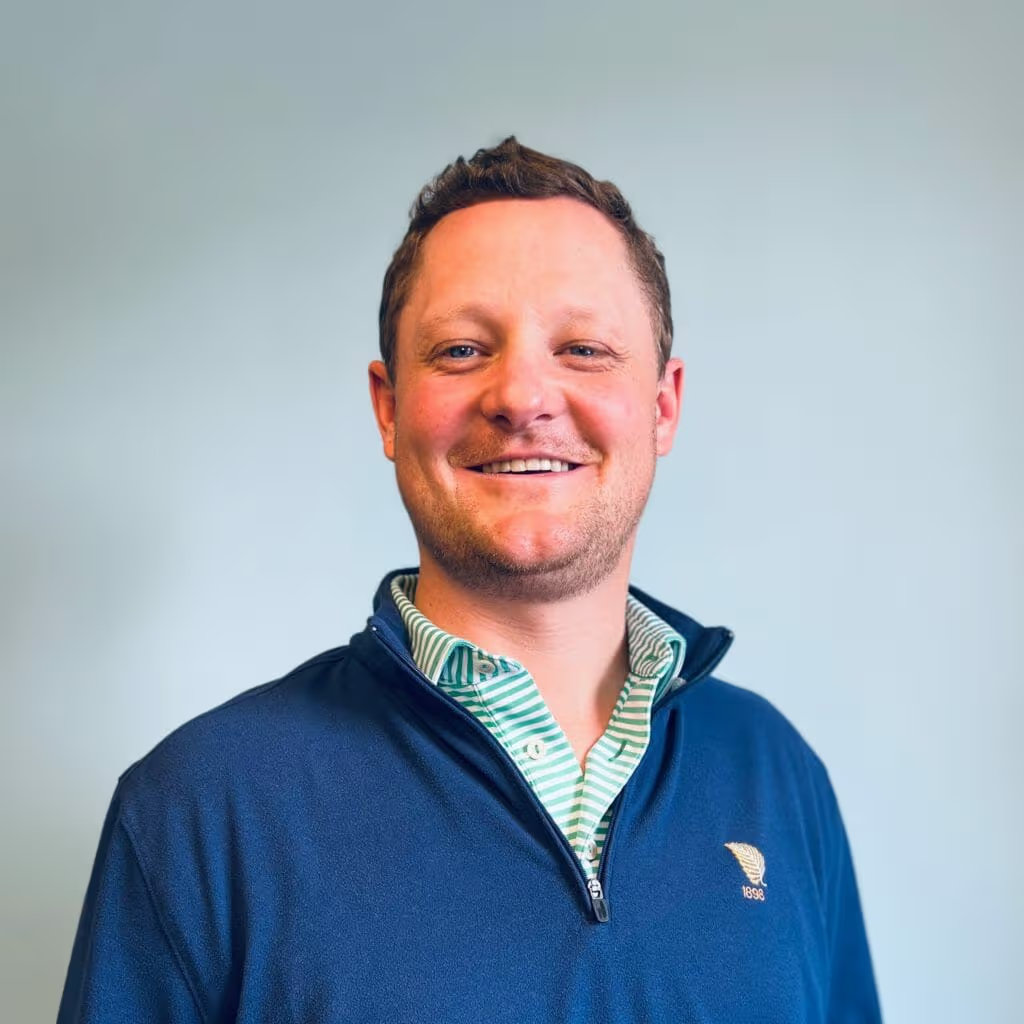
Warren PhillipsCo-Founder, LMSW · Editorial Reviewer
Warren Phillips is a Co-Founder of Lantana Recovery and a Licensed Master Social Worker (LMSW) specializing in substance abuse and mental health treatment. He previously worked in various capacities at Turnbridge Addiction Treatment and Clearpoint Recovery Center before co-founding Lantana Recovery. Warren's clinical approach draws on a strengths-based perspective, Twelve Step philosophies, Cognitive Behavioral Therapy, and Motivational Interviewing. He brings both personal and professional experience to his work — as a person in long-term recovery from alcohol and illicit substances, he has used that experience to help shape Lantana's treatment programming. Warren grew up in Memphis, TN and St. Louis, MO, attended college in Mississippi, and lived in California and Connecticut before relocating to Charleston. He now lives in Mount Pleasant with his wife, Angela, and their two young children, Hall and Sam.
Written by the Lantana Recovery Editorial Team and reviewed for clinical accuracy before publication.