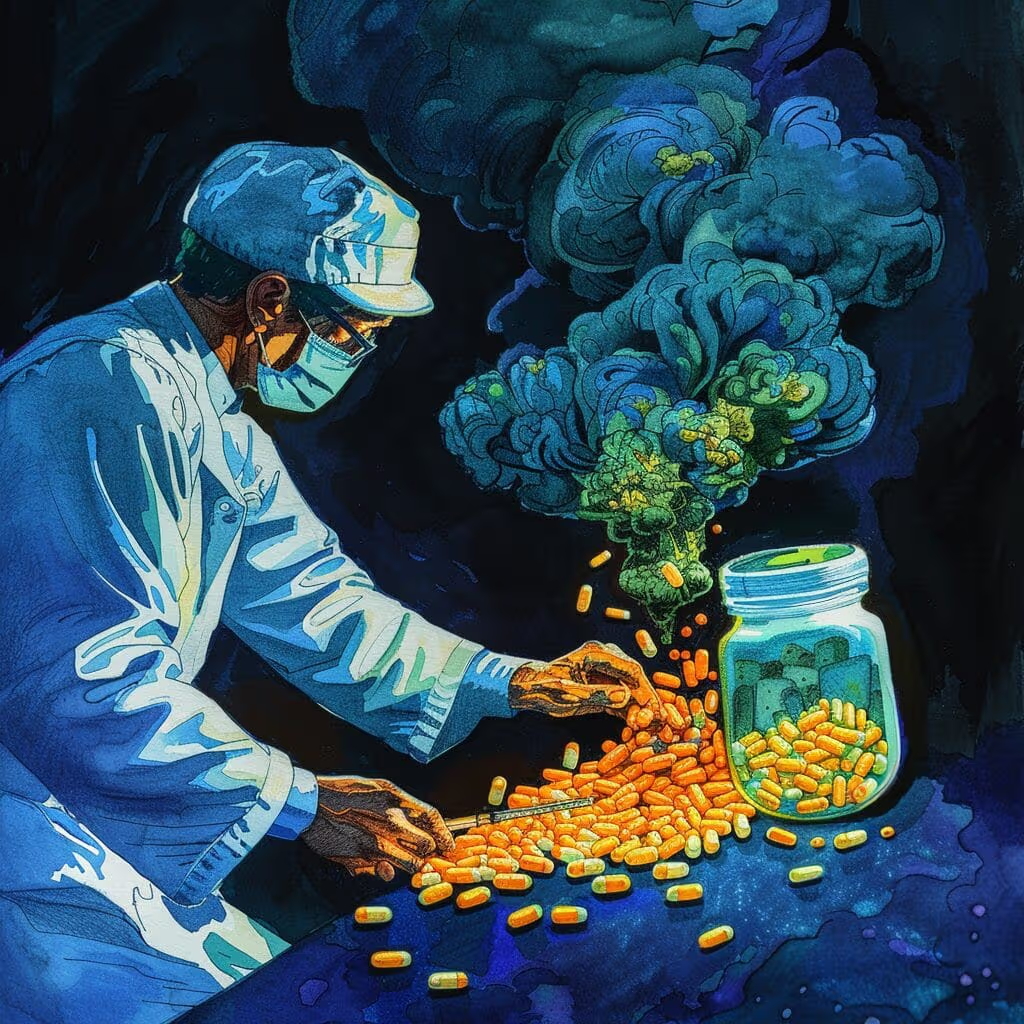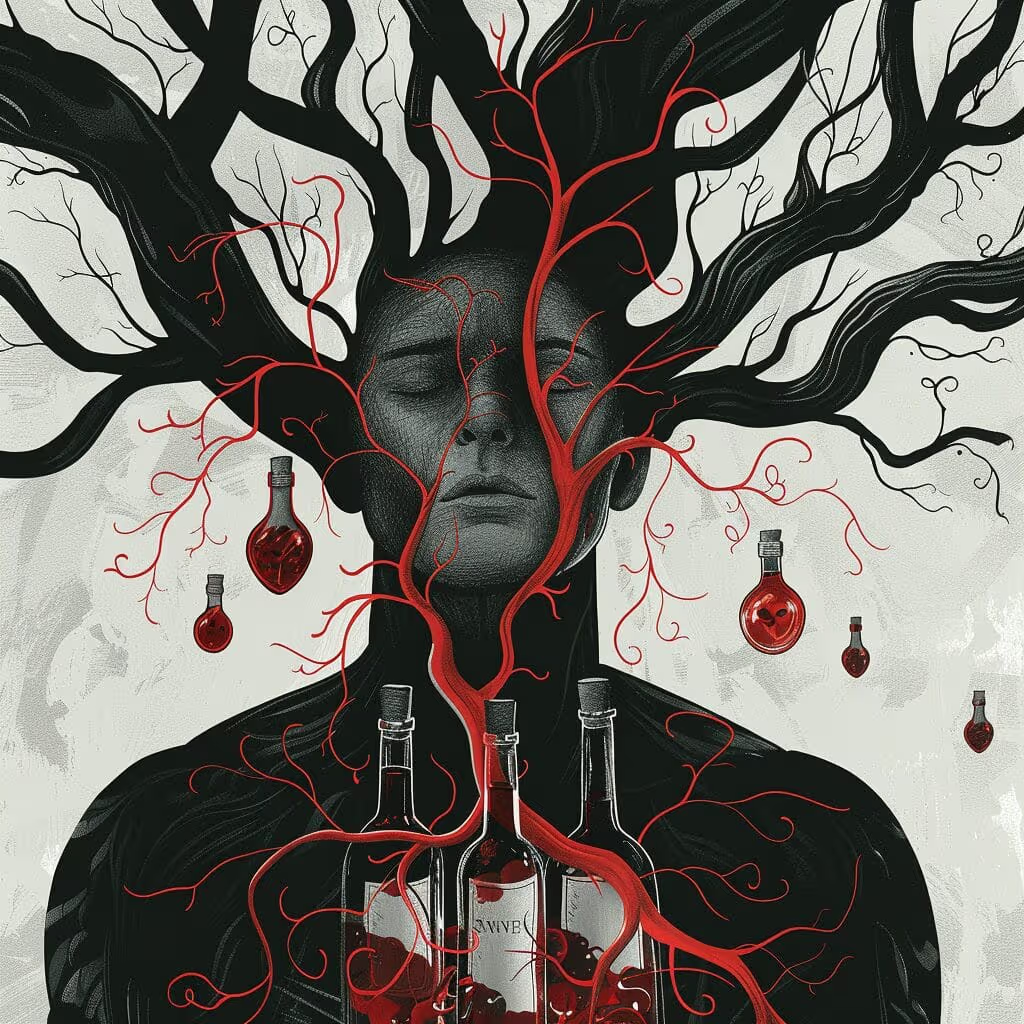
Educational resources on addiction and recovery support both prevention and healing. Learn what effective addiction education actually covers.
Jump to a section
Effective addiction education serves two purposes at once — preventing substance use before it starts and supporting people already in recovery with accurate, practical understanding. This article covers what strong addiction education actually includes and where to find credible resources.
Key Takeaways on Addiction Education
- Effective prevention education focuses on accurate risk information and coping skills, not fear-based messaging, which research shows is less effective.
- Recovery-focused education helps individuals and families understand addiction as a treatable brain disease.
- Age-appropriate, evidence-based curricula exist for schools, families, and community organizations.
- Credible sources — SAMHSA, NIDA, and clinical treatment providers — should anchor any addiction education content.
What Makes Addiction Education Effective
Research consistently shows that fear-based "scared straight" messaging is less effective than education that builds accurate risk understanding, decision-making skills, and healthy coping mechanisms. Effective prevention programs address the real reasons substance use starts — peer pressure, stress, curiosity — rather than relying on scare tactics alone.
Prevention Education for Young People
- Accurate, age-appropriate information — about how substances actually affect the developing brain.
- Refusal and coping skills — practical tools for navigating peer pressure and stress without substances.
- Addressing underlying risk factors — family environment, mental health, and social influences that shape early use risk.
- Parent and educator involvement — consistent messaging across home and school settings strengthens prevention outcomes.
Education for Those in Recovery and Their Families
- Understanding addiction as a brain disease — reframes recovery away from willpower and toward evidence-based treatment.
- Recognizing relapse patterns — helps families and individuals respond constructively rather than with shame.
- Understanding treatment options — knowing what levels of care exist (detox, PHP, IOP, outpatient) helps people make informed decisions.
- Family systems education — helps families understand their own role in the recovery process.
Where to Find Credible Resources
SAMHSA and NIDA both maintain extensive, evidence-based educational resources on substance use, prevention, and treatment, and are strong starting points for anyone seeking accurate information rather than anecdotal or fear-based content. Lantana Recovery's treatment programs incorporate education directly into the treatment process, and our guide on the 4 C's of addiction offers an accessible framework useful for both prevention and recovery education.
FAQ: Addiction Education Resources
Is fear-based addiction education effective?
What's the best age to start addiction prevention education?
Where can families find credible information about addiction and recovery?
Bottom Line
Effective addiction education — for prevention or recovery — focuses on accurate information and practical skills rather than fear alone. Grounding any addiction education in credible sources like SAMHSA and NIDA ensures it's genuinely useful rather than just well-intentioned. These resources work well alongside SMART goal-setting for recovery and free recovery literature by mail. For families looking to apply this education directly, Lantana Recovery's family program builds those same skills in a guided setting.

Sources
- SAMHSA — Prevention of Substance Use and Mental Health Disordershttps://www.samhsa.gov/find-help/national-helpline
- NIDA — Preventing Drug Use Among Children and Adolescentshttps://nida.nih.gov/publications/preventing-drug-use-among-children-adolescents

Reviewed by
Warren PhillipsCo-Founder, LMSW · Editorial Reviewer
Warren Phillips is a Co-Founder of Lantana Recovery and a Licensed Master Social Worker (LMSW) specializing in substance abuse and mental health treatment. He previously worked in various capacities at Turnbridge Addiction Treatment and Clearpoint Recovery Center before co-founding Lantana Recovery. Warren's clinical approach draws on a strengths-based perspective, Twelve Step philosophies, Cognitive Behavioral Therapy, and Motivational Interviewing. He brings both personal and professional experience to his work — as a person in long-term recovery from alcohol and illicit substances, he has used that experience to help shape Lantana's treatment programming. Warren grew up in Memphis, TN and St. Louis, MO, attended college in Mississippi, and lived in California and Connecticut before relocating to Charleston. He now lives in Mount Pleasant with his wife, Angela, and their two young children, Hall and Sam.
Written by the Lantana Recovery Editorial Team and reviewed for clinical accuracy before publication.