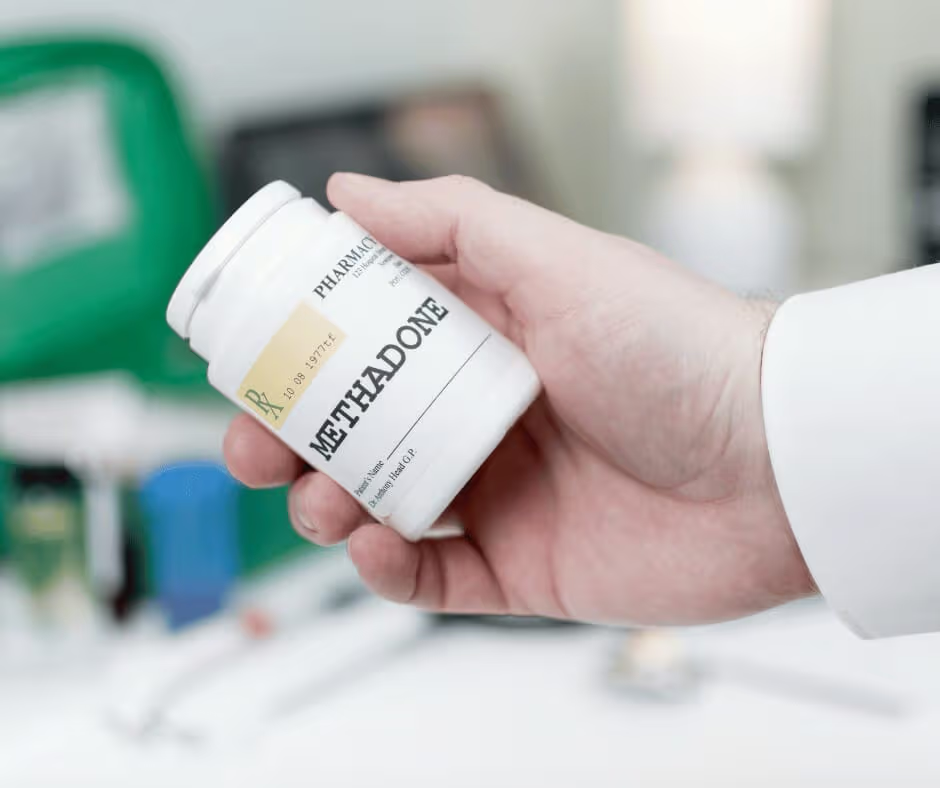
A dose this far above standard limits carries serious cardiovascular and overdose risk. Learn why, and what to do if this reflects your current use.
Jump to a section
90mg of Adderall within 12 hours is far above the standard FDA-labeled maximum for most patients — a level associated with serious cardiovascular strain and real overdose risk. This article covers exactly why this level is dangerous and what to do if it reflects your current use pattern.
Key Takeaways: 90mg of Adderall in 12 Hours
- This dose is far beyond the standard labeled maximum of around 30-40mg/day for most patients.
- At this level, the risk of serious cardiovascular events rises substantially.
- This pattern is a strong indicator of stimulant use disorder, not just "aggressive" prescribed treatment.
- Stopping abruptly at this level of use also carries its own risks and should be medically supervised.
How Far Above Standard Limits This Is
A dose of 90mg of Adderall in 12 hours is roughly two to three times the FDA-labeled daily maximum of 30–40mg. FDA labeling generally supports a maximum daily Adderall dose around 30-40mg for most adult patients, reached gradually through titration. A dose of 90mg within 12 hours is more than double even the upper end of that range — a level that would not be reached through standard, medically supervised prescribing for typical ADHD treatment.
Serious Risks at This Dose Level
- Severe cardiovascular strain — dangerously elevated heart rate and blood pressure, with real risk of heart attack, stroke, or arrhythmia.
- Hyperthermia — dangerously elevated body temperature, a serious stimulant overdose complication.
- Psychosis — paranoia, hallucinations, and severe agitation become substantially more likely at this level.
- Seizure risk — a recognized danger at high stimulant doses.
- Fatal overdose — a real possibility at doses this far above the therapeutic range.
What This Pattern Usually Reflects
Consistently taking a dose this far beyond standard prescribing limits typically reflects significant tolerance built up over time, combined with stimulant use disorder — a genuine, treatable condition, not simply "aggressive" ADHD management. Recognizing this honestly is an important first step, not a source of shame.
Why Stopping Abruptly Also Carries Risk
At this level of use, stopping suddenly can trigger a severe crash, including significant depression and, in some cases, safety concerns related to that depressive episode. This is why medically supervised tapering and treatment — not an abrupt, unsupported stop — is the safer path.
Getting Immediate and Ongoing Help
If this dose level reflects your current use, or you're supporting someone who's at this level, this is a serious medical situation warranting professional evaluation, not something to address alone. Lantana Recovery's Adderall addiction treatment program and our medically supervised detox program provide the structured, safe support this level of use requires. If there are any signs of overdose — chest pain, severe confusion, seizure — call 911 immediately. Our guides on Adderall's actual labeled dose limits and recognizing overdose warning signs cover related ground.
FAQ: High-Dose Adderall Use
Could a doctor legitimately prescribe this much Adderall?
Is it dangerous to stop this level of use abruptly?
What should I do if I suspect an overdose at this dose level?
Bottom Line
90mg of Adderall in 12 hours is far beyond safe prescribing limits and carries serious cardiovascular, psychiatric, and overdose risk. This pattern typically reflects genuine stimulant use disorder, and medically supervised treatment — not an unsupported abrupt stop — is the safe path forward.

Sources
- DailyMed (NIH) — Adderall prescribing information and maximum dose guidancehttps://dailymed.nlm.nih.gov/dailymed/drugInfo.cfm?setid=6f3c8c65-4a51-46e6-9908-2e60a0c33e59
- American Association of Poison Control Centers — Poison Helphttps://poisonhelp.org/

Reviewed by
Warren PhillipsCo-Founder, LMSW · Editorial Reviewer
Warren Phillips is a Co-Founder of Lantana Recovery and a Licensed Master Social Worker (LMSW) specializing in substance abuse and mental health treatment. He previously worked in various capacities at Turnbridge Addiction Treatment and Clearpoint Recovery Center before co-founding Lantana Recovery. Warren's clinical approach draws on a strengths-based perspective, Twelve Step philosophies, Cognitive Behavioral Therapy, and Motivational Interviewing. He brings both personal and professional experience to his work — as a person in long-term recovery from alcohol and illicit substances, he has used that experience to help shape Lantana's treatment programming. Warren grew up in Memphis, TN and St. Louis, MO, attended college in Mississippi, and lived in California and Connecticut before relocating to Charleston. He now lives in Mount Pleasant with his wife, Angela, and their two young children, Hall and Sam.
Written by the Lantana Recovery Editorial Team and reviewed for clinical accuracy before publication.