Pill appearance varies by manufacturer and counterfeits exist. Learn the safe, official way to verify an Adderall tablet's identity.
Jump to a section

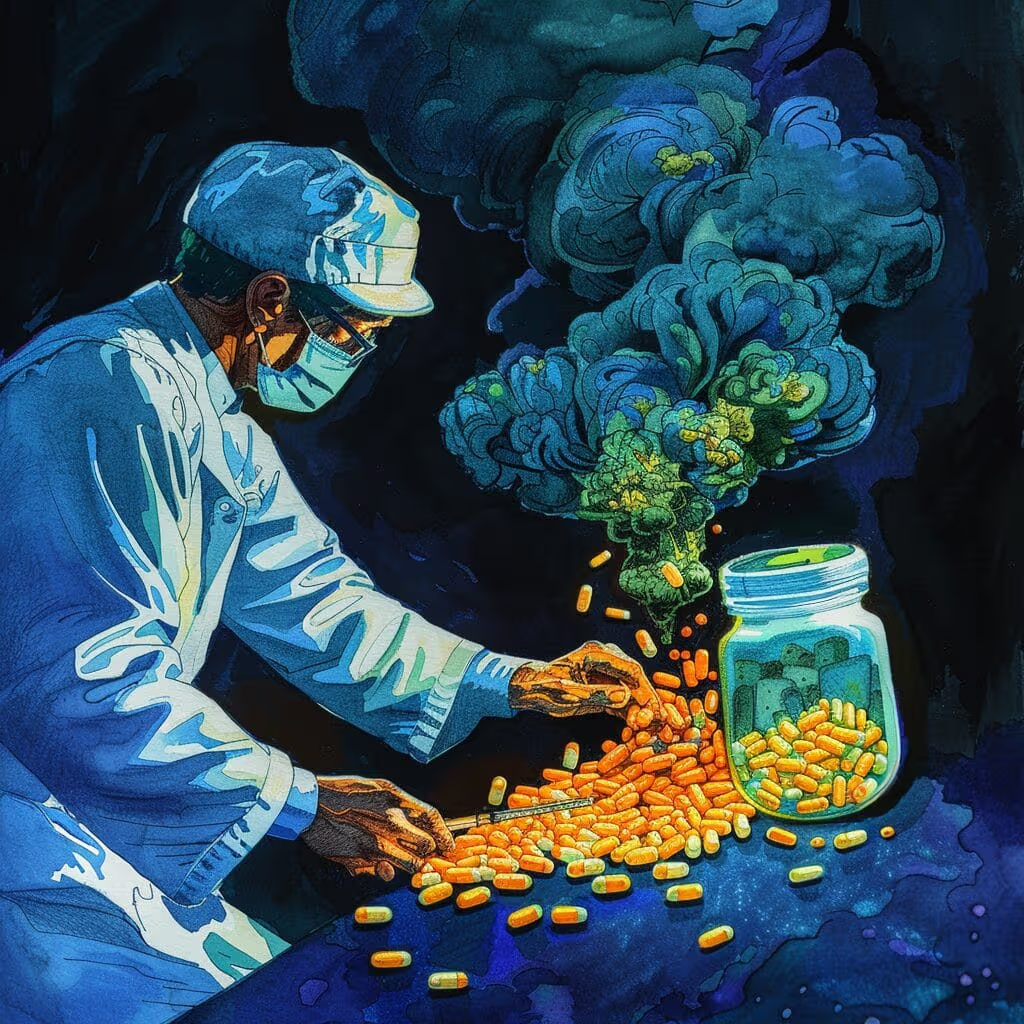
Adderall's appearance varies by manufacturer and dose, and relying on color or shape alone to confirm what a pill actually is isn't reliable — and it matters more than ever given how common counterfeit pills have become. This article explains why appearance-based identification falls short and what the safe, official way to verify a pill actually is.
Key Takeaways on Verifying Adderall Pills
- Adderall's color, shape, and markings differ across manufacturers and generic versions, so appearance alone isn't a reliable identifier.
- Counterfeit pills made to resemble prescription stimulants are a real and growing risk, sometimes containing fentanyl or other unknown substances.
- The only reliable way to confirm a pill's identity is the official FDA National Drug Code (NDC) database using the imprint code, not general appearance.
- Any pill obtained outside a licensed pharmacy carries real risk regardless of how it looks.
Why Appearance Alone Isn't a Reliable Identifier
Adderall is manufactured by multiple companies, each producing tablets with different colors, shapes, and imprint codes for the same dosage strength. A 5 mg tablet from one manufacturer can look completely different from a 5 mg tablet from another — which means color and shape alone can't confirm what a pill is, or that it's genuine at all.
The Growing Risk of Counterfeit Pills
Counterfeit pills made to visually mimic prescription medications, including stimulants, have become a serious public health concern — some contain fentanyl or other substances entirely unrelated to the medication they're designed to resemble. This is precisely why relying on visual appearance to "confirm" a pill is genuine can be dangerous rather than just imprecise.
The Safe Way to Verify a Pill
- Use the imprint code, not just appearance — genuine pharmaceutical Adderall carries a specific alphanumeric imprint tied to its manufacturer and dose.
- Check the FDA's National Drug Code directory — the official source for verifying a pill's imprint against its true identity.
- Only take medication from a licensed pharmacy — this is the most reliable safety step, more reliable than any visual check after the fact.
- Never assume a pill is safe based on where it came from — even pills from a trusted source can be counterfeit if the source itself wasn't a licensed pharmacy.
If You're Unsure About a Pill's Origin
If you have a pill you can't confidently verify through official channels, the safest choice is not to take it. This is especially relevant if you or someone you know has obtained stimulant medication outside a prescription — that pattern carries both counterfeit risk and the underlying risks of stimulant misuse itself. Our guides on Adderall's actual labeled dose limits and what high-dose misuse looks like cover related risk patterns. Lantana Recovery's Adderall addiction treatment program addresses stimulant misuse directly, and our guide to Adderall overdose warning signs is worth reading if you're concerned about a specific situation.
FAQ: Identifying Adderall Pills
Can I identify a pill just by its color?
What's the most reliable way to confirm a pill is genuine Adderall?
Are counterfeit stimulant pills common?
Bottom Line
Adderall's appearance isn't a reliable way to confirm what a pill actually is — manufacturers vary, and counterfeits are a real risk. The only dependable verification is the official NDC imprint lookup or direct confirmation from a licensed pharmacy.
Sources
- DEA — Counterfeit Pills: One Pill Can Killhttps://www.dea.gov/onepill
- FDA National Drug Code Directory — official pill identification toolhttps://www.accessdata.fda.gov/scripts/cder/ndc/

Reviewed by
Warren PhillipsCo-Founder, LMSW · Editorial Reviewer
Warren Phillips is a Co-Founder of Lantana Recovery and a Licensed Master Social Worker (LMSW) specializing in substance abuse and mental health treatment. He previously worked in various capacities at Turnbridge Addiction Treatment and Clearpoint Recovery Center before co-founding Lantana Recovery. Warren's clinical approach draws on a strengths-based perspective, Twelve Step philosophies, Cognitive Behavioral Therapy, and Motivational Interviewing. He brings both personal and professional experience to his work — as a person in long-term recovery from alcohol and illicit substances, he has used that experience to help shape Lantana's treatment programming. Warren grew up in Memphis, TN and St. Louis, MO, attended college in Mississippi, and lived in California and Connecticut before relocating to Charleston. He now lives in Mount Pleasant with his wife, Angela, and their two young children, Hall and Sam.
Written by the Lantana Recovery Editorial Team and reviewed for clinical accuracy before publication.