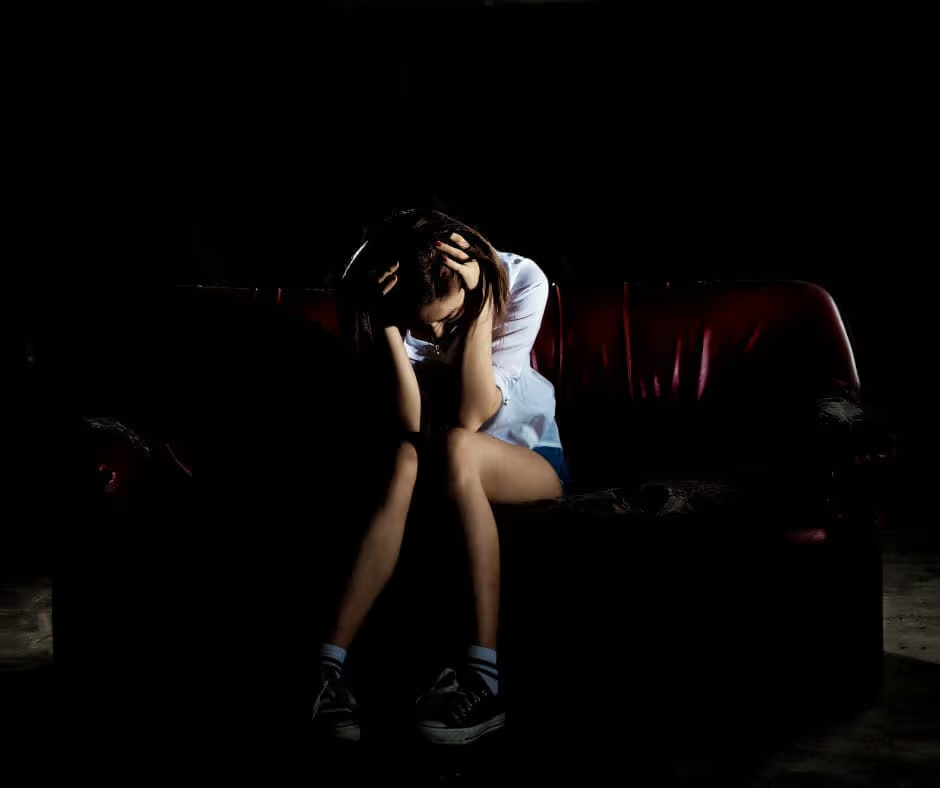
Feeling regret or low mood after a one-night stand is common. Learn healthy coping strategies and when these feelings signal something deeper.
Jump to a section
Feeling regret, sadness, or even a short depressive dip after a one-night stand is a common emotional response, not a character flaw. This article covers why these feelings arise, healthy ways to process them, and when they point to something worth addressing more directly.
Key Takeaways on Regret After a One-Night Stand
- Post-encounter regret or low mood is a common, well-recognized emotional response, not unusual or shameful.
- Hormonal shifts and misaligned expectations both contribute to this "let-down" feeling.
- Reflection without self-judgment is more useful than dwelling in shame.
- Persistent or recurring patterns of regret tied to sexual decisions may benefit from deeper support.
Why Regret and Low Mood Happen
Post-sexual-encounter mood dips have a real physiological basis — hormonal shifts following sexual activity can contribute to a temporary "crash" in mood for some people, on top of any psychological factors like mismatched expectations, values conflict, or vulnerability hangover.
Common Emotional Responses
- Regret — a sense of disappointment about the decision itself, distinct from regret about the person.
- Shame or self-criticism — often disproportionate to the actual situation, shaped by internalized expectations rather than the encounter itself.
- Anxiety — about judgment from others, or about what the encounter "means" about you.
- Low mood or sadness — sometimes tied to the hormonal shift, sometimes to unmet emotional needs the encounter didn't fill.
Healthy Coping Strategies
- Separate regret from shame — regretting a choice doesn't mean something is wrong with you as a person.
- Reflect without judgment — ask what you actually wanted from the encounter, without a self-critical lens.
- Give the feeling time — hormonal-linked mood dips are often short-lived and pass within a day or two.
- Talk to someone you trust — processing out loud, rather than ruminating alone, often reduces the intensity of shame specifically; individual therapy offers the same benefit with professional support.
When These Feelings Point to Something Deeper
Occasional regret is a normal human experience. A repeating pattern — consistently feeling depressed or self-critical after casual encounters, or using sex to manage difficult emotions — is worth exploring further, since it can reflect underlying anxiety, low self-worth, or compulsive behavior patterns.
Getting Support
If regret after intimate encounters is a recurring pattern rather than an occasional feeling, or if it's tangled up with substance use — a common combination, since alcohol and drugs often lower inhibition around sexual decisions people later regret — it's worth addressing both together. Lantana Recovery's dual diagnosis program treats co-occurring mental health and substance use conditions, and our guide on compulsive sexual behavior patterns is a useful related read if these encounters feel less like choice and more like compulsion.
FAQ: Regret and Mood After a One-Night Stand
Is it normal to feel sad after casual sex?
How long does this kind of regret usually last?
Does feeling regret mean I made the wrong choice?
Bottom Line
Regret and low mood after a one-night stand are common, often hormonally influenced responses — not evidence something is broken in you. If the pattern repeats or feels tangled with substance use or compulsive behavior, that's worth exploring with real support, not just riding out alone.
Sources
- National Institute of Mental Health — Understanding Mood and Emotional Regulationhttps://www.nimh.nih.gov/health
- SAMHSA National Helpline — behavioral health support and referralhttps://www.samhsa.gov/find-help/national-helpline

Reviewed by
Warren PhillipsCo-Founder, LMSW · Editorial Reviewer
Warren Phillips is a Co-Founder of Lantana Recovery and a Licensed Master Social Worker (LMSW) specializing in substance abuse and mental health treatment. He previously worked in various capacities at Turnbridge Addiction Treatment and Clearpoint Recovery Center before co-founding Lantana Recovery. Warren's clinical approach draws on a strengths-based perspective, Twelve Step philosophies, Cognitive Behavioral Therapy, and Motivational Interviewing. He brings both personal and professional experience to his work — as a person in long-term recovery from alcohol and illicit substances, he has used that experience to help shape Lantana's treatment programming. Warren grew up in Memphis, TN and St. Louis, MO, attended college in Mississippi, and lived in California and Connecticut before relocating to Charleston. He now lives in Mount Pleasant with his wife, Angela, and their two young children, Hall and Sam.
Written by the Lantana Recovery Editorial Team and reviewed for clinical accuracy before publication.