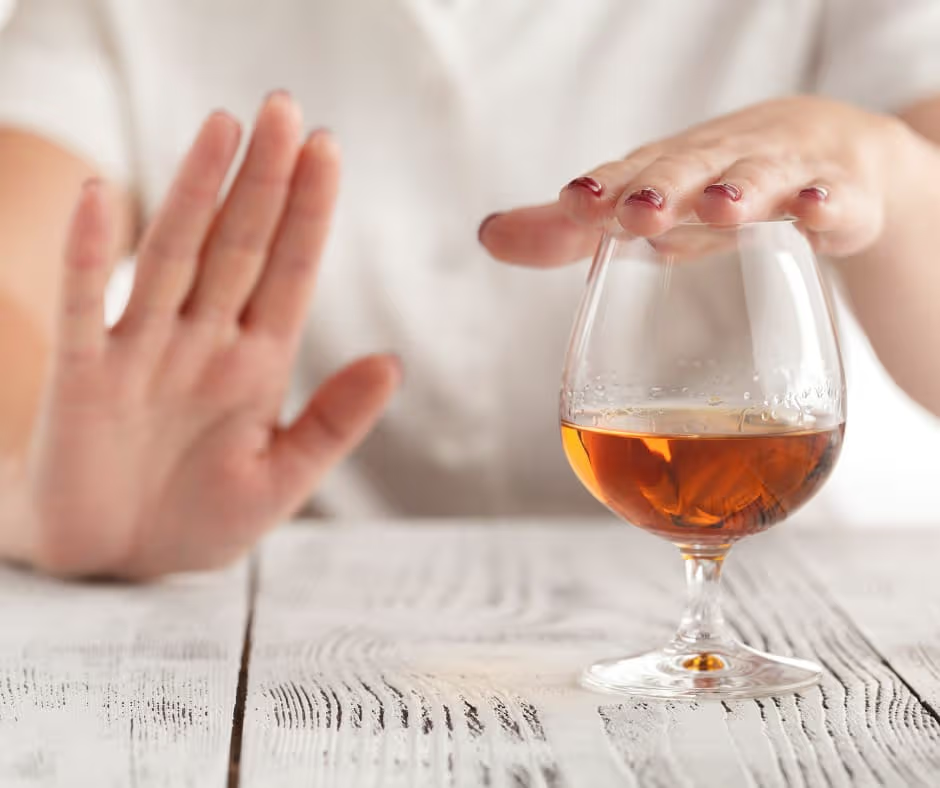
Alcohol leaves the blood at about 0.015% BAC per hour, roughly one drink. Breath, urine, saliva and hair tests each detect it for different windows.
Jump to a section
How long alcohol stays in your system depends on which test is looking for it. Alcohol leaves the bloodstream at a steady, largely fixed rate — roughly one standard drink per hour — but urine, saliva, breath, and hair tests each measure something slightly different and each has its own detection window. This article covers how the body breaks alcohol down, how long alcohol remains detectable on each type of test, what actually changes the timeline, and what a repeatedly difficult clearance says about your drinking.
Key Takeaways on Alcohol Detection Times
- The liver removes alcohol at a near-constant rate of about 0.015 percentage points of blood alcohol concentration (BAC) per hour — roughly one standard drink per hour.
- A blood test detects alcohol for about 6 to 12 hours; a breath or saliva test only for as long as alcohol is still in your blood.
- Urine EtG tests are marketed as detecting drinking for up to 80 hours, but a 2020 study found the standard 500 ng/mL cutoff reliably caught drinking only within about 24 hours.
- Nothing speeds elimination up. Coffee, water, cold showers, and exercise change how awake you feel, not how fast your liver works.
- Needing to time your drinking around a test is itself a signal worth paying attention to.
How does your body process alcohol?
Alcohol is a central nervous system depressant, and ethanol — the alcohol in every drink — is metabolized primarily in the liver. The National Institute on Alcohol Abuse and Alcoholism describes the process plainly: the body begins to metabolize alcohol within seconds of ingestion and proceeds at a steady rate, regardless of how much a person drinks. That last clause is the whole reason detection windows are predictable. Drinking more does not make your liver work faster; it only extends how long the same fixed rate has to run.
What counts as one standard drink?
In the United States, a standard drink contains 14 grams — about 0.6 fluid ounces — of pure ethanol (NIAAA). That works out to roughly 12 ounces of regular beer at 5% ABV, 5 ounces of wine at 12% ABV, or 1.5 ounces of distilled spirits at 40% ABV. A 16-ounce craft IPA at 7% is closer to two standard drinks than one, which is why people routinely underestimate how long they need to clear.
Which enzymes actually break alcohol down?
Two enzymes do most of the work. Alcohol dehydrogenase (ADH) converts ethanol into acetaldehyde, a toxic intermediate. Aldehyde dehydrogenase (ALDH) then converts acetaldehyde into acetate, which the body disposes of as carbon dioxide and water. A third pathway, CYP2E1, plays a smaller role and becomes more active with heavy, sustained drinking. Acetaldehyde is what produces the flushing, nausea, and racing heart some people feel after very little alcohol — a common inherited ALDH variant slows the second step, so the toxic intermediate lingers.
How long does alcohol stay in your blood?
Alcohol is detectable in blood for roughly 6 to 12 hours after drinking, and the exact figure is something you can calculate rather than guess. Blood alcohol concentration falls at about 0.015 percentage points per hour; a 2023 pharmacokinetic analysis in Toxics measured elimination at 0.138 to 0.15 grams per liter per hour and placed the published range across individuals at roughly 0.084 to 0.168 grams per liter per hour — about 0.008 to 0.017 BAC points per hour.
Run the arithmetic on a real night. Binge drinking is defined as reaching a BAC of 0.08, which typically takes four drinks for a woman or five for a man within about two hours (NIAAA). At 0.015 per hour, a BAC of 0.08 takes a little over five hours to reach zero. Double it to 0.16 and you are looking at roughly eleven hours — which is why someone who stopped drinking at 2 a.m. can still be over the legal limit driving to work at 8 a.m.
How long does alcohol stay in your urine?
This question has two answers, because urine tests come in two kinds and they measure different molecules.
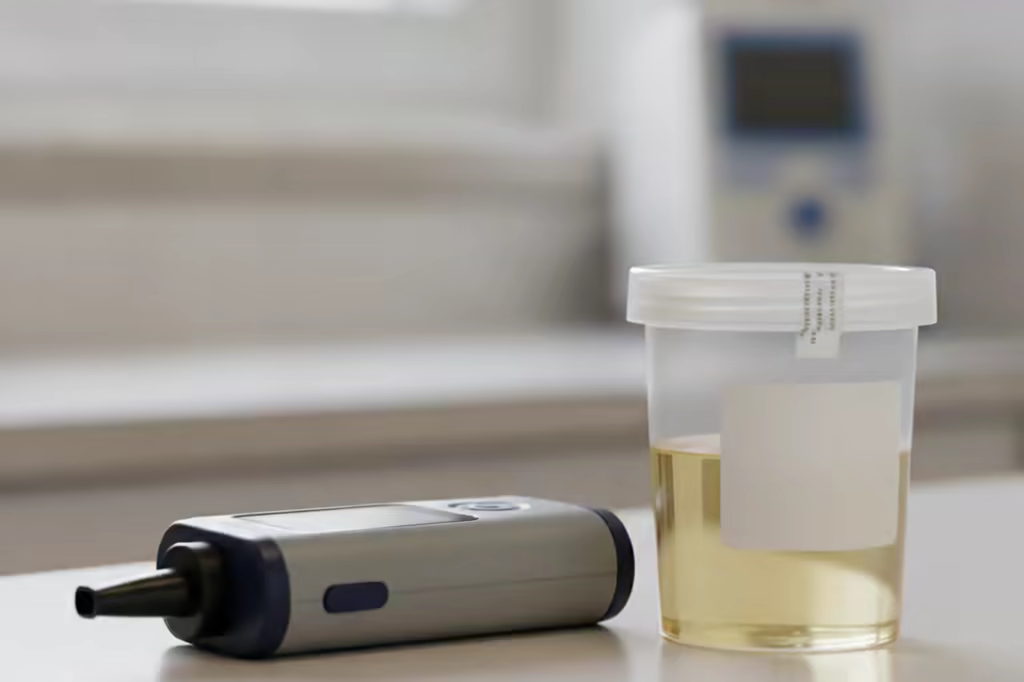
A traditional urine test looks for ethanol itself, so its window closes not long after your BAC returns to zero — generally within about 12 hours of the last drink. An EtG test looks for ethyl glucuronide, which is a metabolite of ethanol rather than ethanol itself. Because the body keeps producing and excreting EtG after the alcohol is gone, that window is longer.
How much longer is where the marketing and the evidence diverge. Commercial EtG tests using the standard 500 ng/mL cutoff advertise detection for up to 80 hours. When Grodin and colleagues tested that claim in heavy drinkers in 2020, the test identified past-day drinking with about 74% sensitivity, but sensitivity fell to roughly 44% for drinking within the past three days. Their conclusion was that the 500 ng/mL threshold is not sensitive enough to reliably detect alcohol use much beyond about 24 hours.
The practical reading: a positive EtG result is meaningful evidence of recent drinking, but a negative result three days out proves much less than the 80-hour number implies.
What are the detection windows for each type of alcohol test?
Different tests answer different questions. Breath and saliva tests estimate what your blood alcohol concentration is right now. Urine EtG asks whether you drank in the recent past. Hair testing asks about a pattern over months, not about a specific night.
| Test | Typical detection window | What it measures |
|---|---|---|
| Breath | Only while alcohol remains in the blood — about 12 hours after heavy drinking | Current blood alcohol concentration, estimated from breath |
| Blood | About 6 to 12 hours | Ethanol concentration directly |
| Saliva | Tracks blood alcohol, so a similar window | Ethanol that has diffused into saliva |
| Urine (ethanol) | About 12 hours | Unmetabolized ethanol |
| Urine (EtG) | Reliable to about 24 hours; marketed to 80 | Ethyl glucuronide, a metabolite |
| Hair | Months | Drinking pattern over time, not a single episode |
A breath test cannot detect drinking from two days ago, and an EtG test cannot tell you whether someone is impaired right now. When people describe conflicting results, the conflict is usually between two tests answering two different questions.
What makes alcohol clear faster or slower in some people?
The elimination rate is steady within one person but varies between people, and the published range above — a roughly twofold spread — is the measurable proof of that. Several factors drive it:
- Body water. Alcohol distributes through body water. Less body water means the same drink produces a higher peak BAC, and a higher peak takes longer to clear. This is the main reason women typically reach higher concentrations than men from identical drinks.
- Food. Eating before or while drinking slows absorption from the small intestine, lowering the peak. It does not change the rate at which your liver removes what did get absorbed.
- Genetics. Inherited ADH and ALDH variants change how quickly each step of the conversion runs. A 2005 human study found that about 15% of participants showed a pronounced first-pass effect, absorbing markedly less alcohol into the bloodstream than the rest.
- Liver health. A liver damaged by years of heavy drinking, hepatitis, or fatty liver disease metabolizes alcohol less efficiently.
- Medications. Drugs processed through the same pathways can slow metabolism or amplify alcohol's effects. This is worth asking a pharmacist about specifically, not guessing at.
- Drinking history. Sustained heavy drinking upregulates CYP2E1, modestly increasing elimination. Tolerance of that kind is a sign of physical adaptation, not of safety.
Can you speed up how fast alcohol leaves your system?
No. There is no way to speed up alcohol elimination, because the liver's rate is fixed and enzyme-limited rather than demand-driven. Coffee, cold showers, exercise, energy drinks, and large volumes of water all change how alert you feel without changing your BAC by a single point. A person who drinks four cups of coffee after six drinks is a caffeinated person with the same blood alcohol concentration — which is precisely what makes "sobering up" strategies dangerous when someone decides to drive on the strength of feeling more awake.
Hydration and food are still worth doing. They ease hangover symptoms and slow absorption of anything not yet in your bloodstream. They just do not touch the clock.
When is worrying about alcohol detection times a sign of a bigger problem?
Timing your drinking around a test, needing to count backward from tomorrow morning, or finding that yesterday's alcohol is still measurably with you are all worth taking seriously. So is what happens when the alcohol is fully gone. If stopping produces tremors, sweating, a racing heart, insomnia, nausea, or dizziness, your body has adapted to alcohol's presence, and that adaptation is a medical issue rather than a willpower one. Anxiety after quitting drinking and brain fog that lingers for weeks follow the same pattern.
Severe alcohol withdrawal can be dangerous and should not be managed alone at home. Medically supervised withdrawal management provides monitoring and medication through the highest-risk window, and Lantana coordinates a higher level of medical care when someone's history calls for it. From there, intensive outpatient treatment and alcohol use disorder treatment address what the detox itself does not: why the drinking started and what replaces it. Understanding how alcohol affects the brain and body over the long term is usually the more useful question than how long it takes to clear one night of it.

The Bottom Line
Alcohol leaves your bloodstream at roughly 0.015 BAC points per hour — about one standard drink per hour — and no strategy changes that rate. Blood, breath, and saliva tests close within hours; a urine EtG test reliably reaches back about a day, not the 80 hours often claimed. If you are calculating those windows often, or if the hours after your last drink bring physical symptoms rather than just a hangover, the useful question is no longer how long alcohol stays in your system. It is what your body is telling you about how much of it there has been.
FAQ: Alcohol in the Body and on Drug Tests
How long does it take for one drink to leave your system?
Can alcohol show up on a test 24 hours later?
Does drinking water flush alcohol out of your system faster?
How long after drinking can you pass a breathalyzer?
Why does alcohol affect some people longer than others?
Is a hangover the same as alcohol still being in your system?
Sources
- National Institute on Alcohol Abuse and Alcoholism — Core Resource on Alcohol, The Basics: Defining How Much Alcohol Is Too Much (standard drink, metabolism, binge-drinking BAC)https://www.niaaa.nih.gov/health-professionals-communities/core-resource-on-alcohol/basics-defining-how-much-alcohol-too-much
- Zekan et al. (2023), Toxics — Pharmacokinetic Analysis of Ethanol in a Human Study: New Modification of Mathematic Model (ethanol elimination rate and published range)https://pmc.ncbi.nlm.nih.gov/articles/PMC10534806/
- Grodin, Nguyen, Ho, Bujarski & Ray (2020), Addictive Behaviors Reports — Sensitivity and specificity of a commercial urinary ethyl glucuronide (EtG) test in heavy drinkershttps://pmc.ncbi.nlm.nih.gov/articles/PMC7244915/
- Uemura et al. (2005), Forensic Science, Medicine and Pathology — Individual differences in the kinetics of alcohol absorption and elimination: a human study (first-pass effect)https://pubmed.ncbi.nlm.nih.gov/25869833/

Reviewed by
Warren PhillipsCo-Founder, LMSW · Editorial Reviewer
Warren Phillips is a Co-Founder of Lantana Recovery and a Licensed Master Social Worker (LMSW) specializing in substance abuse and mental health treatment. He previously worked in various capacities at Turnbridge Addiction Treatment and Clearpoint Recovery Center before co-founding Lantana Recovery. Warren's clinical approach draws on a strengths-based perspective, Twelve Step philosophies, Cognitive Behavioral Therapy, and Motivational Interviewing. He brings both personal and professional experience to his work — as a person in long-term recovery from alcohol and illicit substances, he has used that experience to help shape Lantana's treatment programming. Warren grew up in Memphis, TN and St. Louis, MO, attended college in Mississippi, and lived in California and Connecticut before relocating to Charleston. He now lives in Mount Pleasant with his wife, Angela, and their two young children, Hall and Sam.
Written by the Lantana Recovery Editorial Team and reviewed for clinical accuracy before publication.