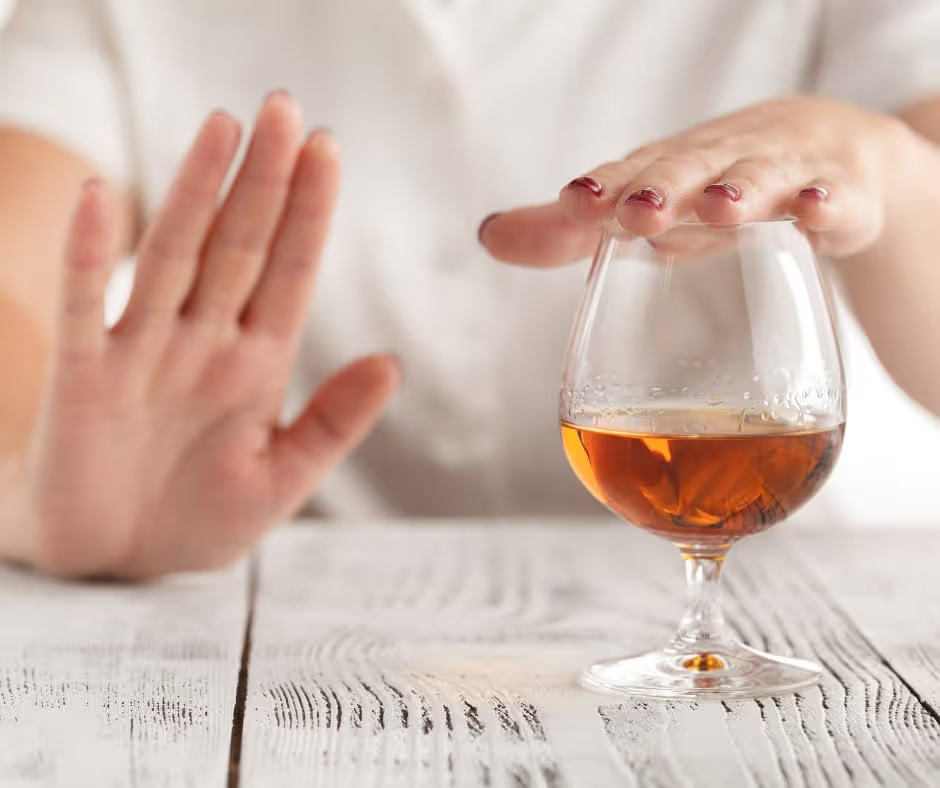
Hangover anxiety is neurochemical rebound, not just guilt. Here is the mechanism, why some people get it far worse, and when it signals risk.
Jump to a section
Hangxiety is the anxiety that arrives the morning after drinking — a knot of dread, replayed conversations, and a racing heart that has nothing obvious to attach itself to. It is not imagined and it is not only guilt. It is a short, mild version of alcohol withdrawal: the brain rebounding from a depressant it spent the night adapting to. This article covers the mechanism, why some people get it far worse than others, how long it lasts, what helps, and when it signals something worth acting on.
Key Takeaways on Hangover Anxiety
- Alcohol facilitates GABA, the brain's main inhibitory signal, and inhibits glutamate, its main excitatory one. Withdrawal reverses both, producing hyperexcitability.
- That rebound is the same mechanism as full alcohol withdrawal, just briefer and milder — hangxiety is withdrawal in miniature.
- Shy people get it worse. A naturalistic study of social drinkers found highly shy participants experienced markedly greater next-day anxiety.
- In that study, higher hangxiety was associated with higher AUDIT scores — a signal of alcohol use disorder risk, not just a bad morning.
- Drinking to relieve it works briefly and deepens the cycle, which is the specific path from social drinking to dependence.
Why does alcohol cause anxiety the next day?
Alcohol is a central nervous system depressant, and it works on two systems at once. It facilitates the inhibitory actions of GABA — the calming signal — and inhibits the excitatory effects of glutamate. That combination is why a drink relaxes you: the brakes are amplified and the accelerator is dampened.
The brain does not tolerate that imbalance passively. Over the course of an evening it compensates in the opposite direction, reducing GABA activity and increasing glutamate signaling to restore equilibrium. As long as alcohol is present, the two roughly cancel out.
Then the alcohol clears — and the compensation is still there, unopposed. Reduced GABA function plus overactive glutamate transmission produces hyperexcitability, and hyperexcitability in the emotional circuits of the brain feels like anxiety. Add the NIAAA's description of what happens alongside it — reward circuit activity falling while stress circuits activate, fueling anxiety, dysphoria and irritability — and the morning-after state stops being mysterious.
This is the same process that produces alcohol withdrawal. In someone physically dependent it lasts days and can be dangerous. In a social drinker it lasts hours and is merely awful.
What else is happening that morning?
The neurochemical rebound is the core, but several other things pile on:
- Disrupted sleep. Alcohol suppresses REM early in the night and produces fragmented, unrefreshing sleep in the second half. Sleep deprivation alone raises anxiety.
- Elevated heart rate. A pounding pulse is read by the brain as evidence something is wrong, and anxiety obligingly supplies a reason.
- Dehydration and low blood sugar, both of which produce shakiness and difficulty concentrating that are easy to interpret as dread.
- Memory gaps. Not remembering parts of the evening leaves space that anxious thinking fills with worst-case reconstructions.
That last one explains a common feature of hangxiety: the intensity of the dread often has no relationship to anything that actually happened.
Why do some people get it so much worse?
Because baseline temperament changes the size of the rebound. A naturalistic study of social drinkers examining shyness, alcohol use and hangover anxiety found that highly shy participants experienced substantially greater next-day anxiety than less shy participants after comparable drinking.
The explanation is not complicated. Someone who is shy or socially anxious experiences a larger relief effect from alcohol — the gap between how they feel sober in a social situation and how they feel after two drinks is simply bigger. A bigger swing in one direction produces a bigger rebound in the other.
The finding that matters clinically is what the same study associated with high hangxiety: higher AUDIT scores, a standard screening measure for alcohol use disorder. Severe next-day anxiety was not just an unpleasant trait. It tracked with risk.
How long does hangxiety last?
Usually it peaks in the morning as blood alcohol reaches zero, and eases through the day as GABA and glutamate signaling rebalance — most people are substantially better within 24 hours of the last drink.
Two patterns are worth noticing because they mean something different. Anxiety that persists for two or three days after drinking suggests either heavier consumption than intended or an underlying anxiety condition that alcohol was temporarily covering. And anxiety that begins before the alcohol has cleared — while still hungover but not yet sober — is early withdrawal rather than hangover, which is a more significant signal.
The clearance side is predictable: alcohol leaves the bloodstream at about 0.015 BAC points per hour, so the timing of the worst of it can be roughly calculated. Our guide to how long alcohol stays in your system covers that arithmetic.
What actually helps?
Nothing shortens the neurochemical rebound. What helps is not worsening it and not misreading it:
- Name it. "This is chemical rebound, not evidence" is genuinely effective, because the anxiety is looking for a target and denying it one shortens the spiral.
- Eat and hydrate. Neither fixes the mechanism, but low blood sugar and dehydration make everything feel worse.
- Get outside and move gently. Light activity and daylight help re-regulate sleep and mood.
- Sleep if you can, accepting that it will not be good sleep.
- Do not check your phone compulsively. Rereading messages feeds the reconstruction loop rather than resolving it.
- Do not drink. A morning drink resolves hangxiety within minutes by restoring the depressant, which is precisely why it is the most dangerous thing on this list.
That last point deserves more than a bullet, because it is the mechanism by which ordinary social drinking becomes something else.
The hair-of-the-dog trap
Drinking to relieve hangxiety works. That is the problem. It works because it re-suppresses the rebound directly, and the relief is immediate enough to be learned in a single repetition.
What follows is a loop: drink, rebound, drink to stop the rebound, rebound harder. Each cycle requires slightly more alcohol and produces slightly worse anxiety in the gap, because the compensatory changes deepen with repetition. Morning drinking to relieve anxiety is one of the clearer markers that the relationship with alcohol has changed structurally rather than just quantitatively.
The same loop runs at a larger scale for people who drink to manage social anxiety in the first place. Alcohol treats the symptom for a few hours and worsens the underlying condition over months, which is why treating anxiety and drinking together works better than addressing either alone. Cognitive behavioral therapy is first-line for anxiety disorders and does not have a rebound.
When is hangxiety worth acting on?
Some signals are worth more than the morning itself:
- Needing a drink to make the anxiety stop
- Anxiety that arrives before the hangover — shaking, sweating, or dread within hours of the last drink rather than the next morning
- Physical withdrawal symptoms such as tremor or dizziness between drinking occasions
- Anxiety that stays elevated for days after drinking, or that has become constant
- Drinking more than intended, repeatedly, despite planning otherwise
Anxiety that persists well past the drinking is a distinct and common experience in early sobriety — our post on anxiety after quitting drinking covers why it can get worse before it gets better, and why that is not a reason to go back. Alcohol use disorder treatment at Lantana starts with an assessment that looks at both the drinking and the anxiety, because in most cases they are not separate problems.
The Bottom Line
Hangxiety is alcohol withdrawal in miniature — GABA suppressed, glutamate overactive, stress circuits switched on while reward circuits are flat. It is worse in people who are shy or socially anxious, because they got more relief from the alcohol in the first place, and in one study that severity tracked with alcohol use disorder risk rather than just discomfort. It passes within a day. The one response that makes it stop immediately is the one that builds the loop, and noticing that you want to is more informative than the anxiety itself.
FAQ: Hangover Anxiety and What It Means
What causes hangxiety?
How long does hangover anxiety last?
Why do I get anxiety after drinking but my friends don't?
Does drinking more help hangxiety?
Is hangxiety the same as alcohol withdrawal?
Can hangxiety be a sign of a drinking problem?
Sources
- Marsh et al. (2019), Personality and Individual Differences — Shyness, alcohol use disorders and 'hangxiety': a naturalistic study of social drinkers (greater next-day anxiety in highly shy participants, associated with higher AUDIT scores)https://www.sciencedirect.com/science/article/abs/pii/S0191886918305762
- Neurochemical mechanisms of alcohol withdrawal — GABA and glutamate neuroadaptation and the hyperexcitability revealed on withdrawalhttps://pmc.ncbi.nlm.nih.gov/articles/PMC6943828/
- National Institute on Alcohol Abuse and Alcoholism — Core Resource on Alcohol, Neuroscience: The Brain in Addiction and Recovery (reward circuit decline and stress circuit activation producing anxiety, dysphoria and irritability)https://www.niaaa.nih.gov/health-professionals-communities/core-resource-on-alcohol/neuroscience-brain-addiction-and-recovery

Reviewed by
Warren PhillipsCo-Founder, LMSW · Editorial Reviewer
Warren Phillips is a Co-Founder of Lantana Recovery and a Licensed Master Social Worker (LMSW) specializing in substance abuse and mental health treatment. He previously worked in various capacities at Turnbridge Addiction Treatment and Clearpoint Recovery Center before co-founding Lantana Recovery. Warren's clinical approach draws on a strengths-based perspective, Twelve Step philosophies, Cognitive Behavioral Therapy, and Motivational Interviewing. He brings both personal and professional experience to his work — as a person in long-term recovery from alcohol and illicit substances, he has used that experience to help shape Lantana's treatment programming. Warren grew up in Memphis, TN and St. Louis, MO, attended college in Mississippi, and lived in California and Connecticut before relocating to Charleston. He now lives in Mount Pleasant with his wife, Angela, and their two young children, Hall and Sam.
Written by the Lantana Recovery Editorial Team and reviewed for clinical accuracy before publication.