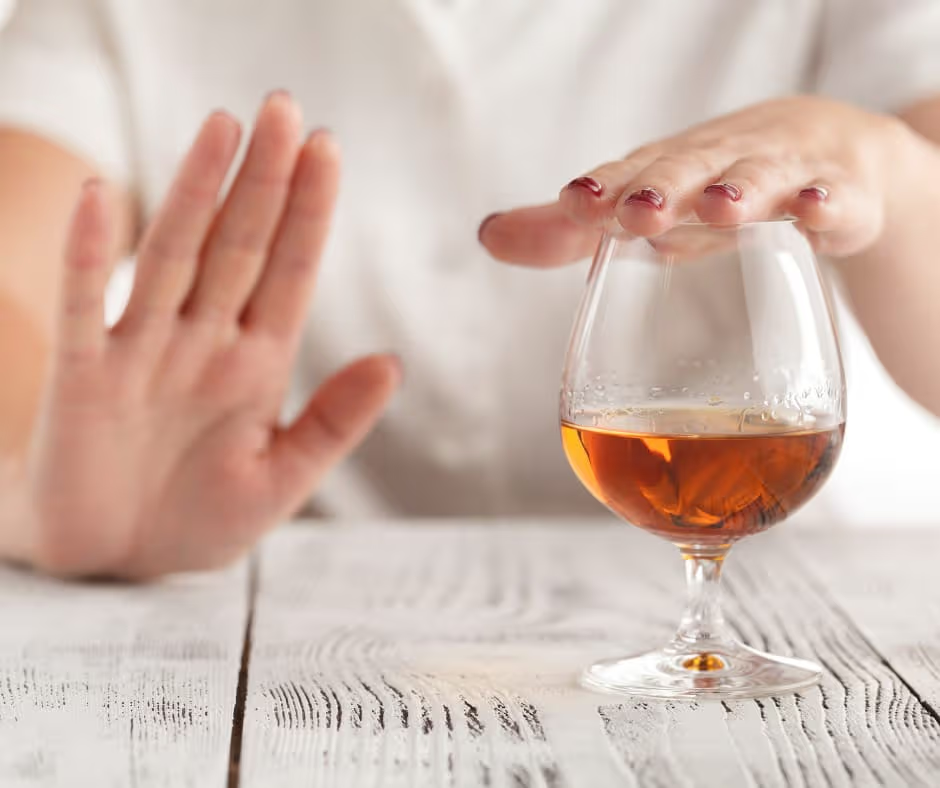
Explore how alcohol affects the body, mind, relationships, and society — plus prevention, intervention, and treatment options from Lantana Recovery.
Jump to a section
Alcohol is the most widely used addictive substance in the country, and its effects reach far beyond the person drinking — into relationships, workplaces, healthcare systems, and public safety. This article breaks down alcohol's physical and psychological effects on individuals, its ripple effects on society, and the prevention and treatment strategies that address both.
Key Takeaways on the Effects of Alcohol
- Alcohol affects nearly every organ system, from the liver and heart to the brain's decision-making and memory centers.
- Chronic use reshapes brain chemistry, driving the compulsive drinking pattern that defines alcohol use disorder.
- Beyond the individual, alcohol misuse drives measurable costs in healthcare, lost productivity, and impaired-driving injuries.
- Evidence-based treatment — not willpower alone — is what reliably changes the trajectory.
What Is Alcohol?
Alcohol (ethanol) is produced by fermenting sugars and is classified as a central nervous system depressant. It's legal and widely consumed for socializing and relaxation, but it's also the substance responsible for the largest share of substance-related deaths in the country when misuse and dependence are counted together.
Physical and Psychological Effects on Individuals
Physical effects
Short-term, alcohol impairs coordination, judgment, and reaction time. Long-term heavy use damages the liver (fatty liver, hepatitis, cirrhosis), raises blood pressure, weakens the immune system, and increases cancer risk — our guide on how this timeline actually plays out covers the mortality risk in more depth. It also disrupts sleep architecture even when it initially feels sedating.
Psychological and cognitive effects
Alcohol alters GABA and glutamate signaling in the brain, which is why chronic drinking gradually blunts the brain's own calming chemistry — leaving heavy drinkers more anxious, not less, between drinks. Memory, attention, and decision-making all measurably decline with sustained heavy use.
Social Consequences: Relationships and Behavior
Alcohol misuse is consistently linked to relationship strain, reduced work performance, and increased conflict at home. Because alcohol lowers inhibition, it's also a common factor in impulsive decisions and conflict that sober judgment would have avoided — a pattern families of people with alcohol use disorder describe as one of the hardest parts to live with.
Effects on Society: Healthcare, Crime, and the Economy
At a population level, alcohol misuse drives emergency room visits, chronic disease treatment costs, and a significant share of impaired-driving injuries and fatalities. Workplaces absorb the cost through lost productivity and absenteeism, and the criminal justice system through alcohol-involved offenses. These downstream costs are a large part of why public health agencies treat alcohol prevention as a population-level priority, not just an individual one.
Prevention and Intervention Strategies
- Education and awareness — accurate information about risk and dependence, delivered before problem drinking starts, measurably reduces early-onset misuse.
- Screening in primary care — brief screening tools catch risky drinking before it becomes dependence.
- Policy and legislation — pricing, availability, and impaired-driving enforcement all move population-level drinking outcomes.
- Treatment access — outpatient and residential programs give people already dependent a structured path out.
Treatment Options for Alcohol Use Disorder
Alcohol use disorder is treatable, and most people don't need to figure it out alone. Lantana Recovery's alcohol addiction treatment combines medically supervised care with therapy tailored to the severity of use. Our medically supervised detox manages the physical risk of early withdrawal, and our outpatient and PHP tracks build the coping skills that keep recovery sustainable once detox ends. For a deeper look at what alcohol withdrawal itself involves, see our guide to alcohol withdrawal symptoms and timeline.
FAQ About Alcohol's Effects
How much alcohol is considered risky drinking?
Can the effects of long-term alcohol use be reversed?
What's the first step toward treatment?
Bottom Line
Alcohol's effects extend from individual organ systems to family relationships to entire healthcare and justice systems. Understanding that scope is what makes prevention and early treatment worth taking seriously — and why structured, medically supervised care outperforms trying to cut back alone once dependence has set in.

Sources
- CDC — Alcohol Use and Your Healthhttps://www.cdc.gov/alcohol/about-alcohol-use.html
- NIAAA — Alcohol's Effects on the Bodyhttps://www.niaaa.nih.gov/alcohols-effects-health/alcohols-effects-body

Reviewed by
Warren PhillipsCo-Founder, LMSW · Editorial Reviewer
Warren Phillips is a Co-Founder of Lantana Recovery and a Licensed Master Social Worker (LMSW) specializing in substance abuse and mental health treatment. He previously worked in various capacities at Turnbridge Addiction Treatment and Clearpoint Recovery Center before co-founding Lantana Recovery. Warren's clinical approach draws on a strengths-based perspective, Twelve Step philosophies, Cognitive Behavioral Therapy, and Motivational Interviewing. He brings both personal and professional experience to his work — as a person in long-term recovery from alcohol and illicit substances, he has used that experience to help shape Lantana's treatment programming. Warren grew up in Memphis, TN and St. Louis, MO, attended college in Mississippi, and lived in California and Connecticut before relocating to Charleston. He now lives in Mount Pleasant with his wife, Angela, and their two young children, Hall and Sam.
Written by the Lantana Recovery Editorial Team and reviewed for clinical accuracy before publication.